
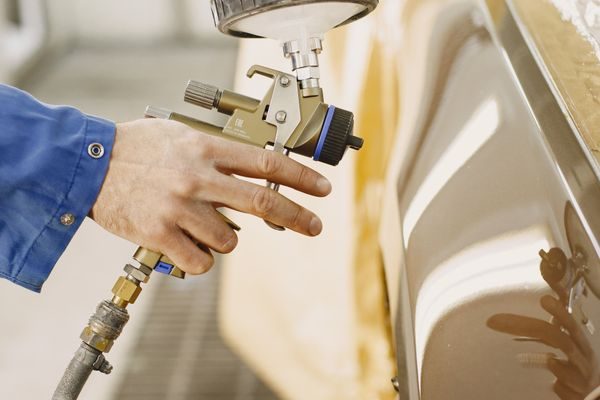
Whether the coating film is smooth and even is the most intuitive indicator of application quality. Waterborne coatings, due to the higher surface tension of water and volatilization rates that are greatly affected by the environment, are more likely to show orange peel, craters and brush marks after application. As a key additive for improving coating leveling, the leveling agent reduces system surface tension and regulates the surface state during volatilization, helping the film form a uniform and even interface before curing.
Mechanism: Regulating Surface Tension
After the coating is applied, the volatilization of solvent or water creates a surface tension gradient on the film, and the tension difference drives liquid flow; uneven flow produces defects such as orange peel. A leveling agent can migrate to the film surface, lowering and equalizing surface tension, easing the tension gradient and allowing the coating to complete self-leveling before it loses flowability.
Silicone and Acrylic, Each with Its Strengths
Silicone-based leveling agents have strong surface tension reduction ability and perform outstandingly in eliminating craters and improving slip; acrylic-based leveling agents are known for good compatibility and recoatability. The two types each have suitable scenarios, and selection needs to be judged against the specific formulation rather than pursuing one type across the board.
Compatibility Balance in Waterborne Systems
Waterborne systems place stricter demands on leveling agents than solventborne ones. The interactions among emulsifiers, film-forming aids and leveling agents are more complex; if the leveling agent has insufficient compatibility, it easily causes craters and haze; if compatibility is too strong, it struggles to migrate to the surface to perform its leveling function. Selecting a waterborne leveling agent stresses a balance that is just right.
From an application trend perspective, fields with extremely high demands on surface quality, such as new energy vehicle body coatings and 3C electronic coatings, are driving leveling agents toward high leveling ability and low impact on recoating, while low VOC and solvent-free formulations also raise higher requirements for their environmental performance. Choosing the right product according to system characteristics and setting the dosage precisely through gradient tests is an effective path to a smooth film and stable application.