
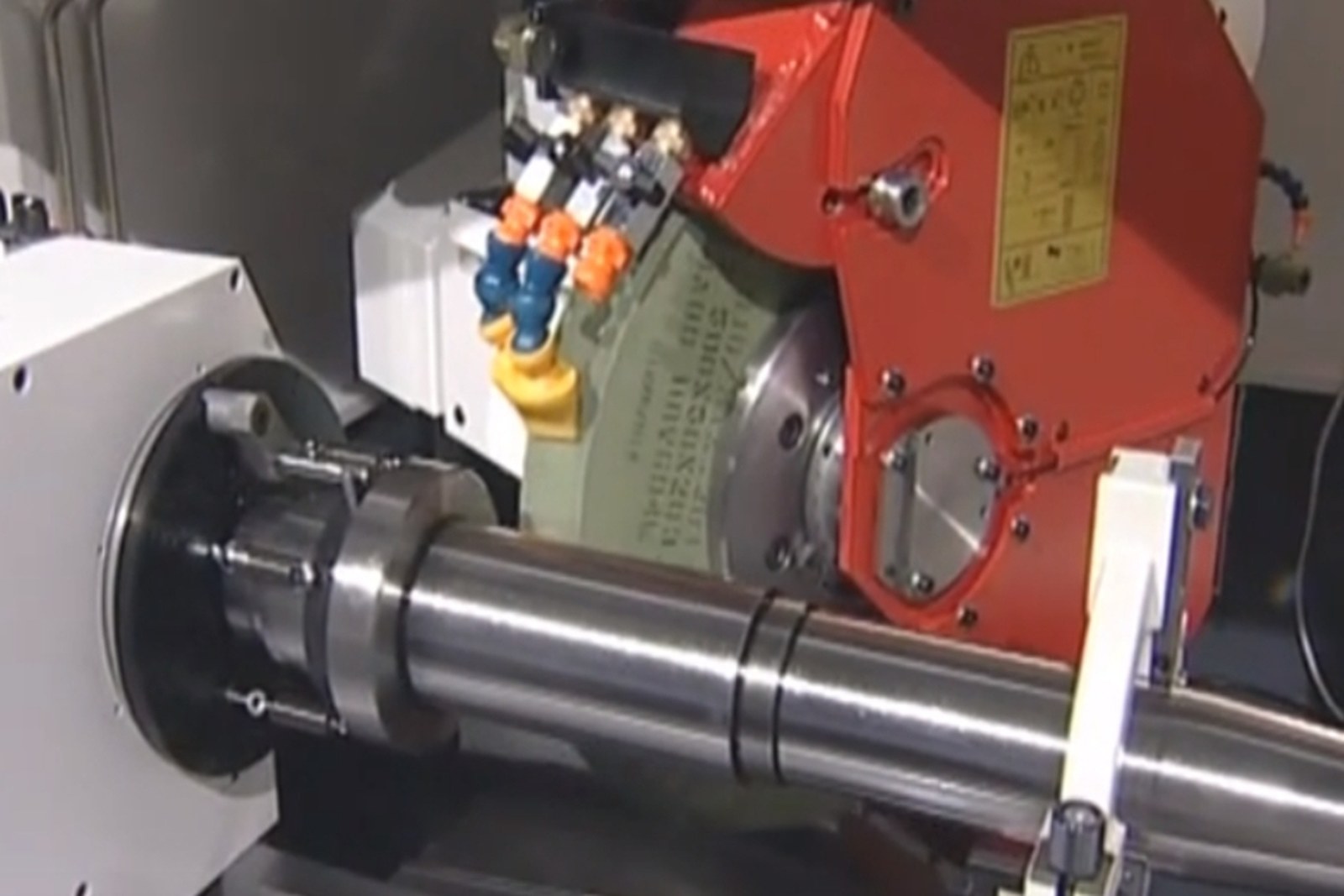
A cylindrical grinder grinding a shaft-type workpiece
Once the coolant in high-pressure grinding foams, the film in the grinding zone breaks first: burn marks and chatter marks climb onto the workpiece surface, the flow-meter reading swings without settling, and the hours lost to shutting down and checking the tank pile up one after another.
Chemi Tech supplies defoamers for grinding and heavy-cutting conditions, drawn from the KM-495 series; the dosage moves with the concentrate ratio, the circulation temperature and the pump circulation intensity. This grade is high-pressure resistant, high-temperature resistant and acid-alkali resistant, and its foam-suppression capacity does not decay under repeated shearing by the high-pressure jet; the customer sets the KM-495 dosage from the measured foam height on the tank surface and the residue on the workpiece surface.
Advantages of Chemi Tech Defoamers
Chemi Tech KM-495 series defoamer is built for the coolant circulation of high-pressure grinding. It is high-pressure resistant, so its defoaming capacity does not decay under pumped circulation and the high-pressure jet; heat resistant, so rising return-oil temperature in the grinding zone does not pull its foam suppression around; acid-alkali resistant, so the fluid does not break its emulsion or separate when the cutting-fluid pH swings; it can be added internally, sitting in the same tank as the concentrate without oil separation; and it defoams quickly — the tank-surface foam falls back within one circulation cycle, the tank does not overflow, and control stays good.
Industry Pain Points and Solutions
Foam in metalworking fluid under high-pressure conditions mostly comes from pumped-shear air entrainment added to an unbalanced emulsifier system, and the consequences land in two places: the tank-surface foam and the film in the grinding zone.
Raise the pump circulation intensity and the tank-surface foam is beaten up again and again by the high-pressure jet, and the level soon climbs past the sight glass. The KM-495 dosage is set by the pump circulation intensity, and the level falls back to the centre line with it.
Once the film breaks, the grinding zone goes wrong first. The film thickness for cooling and lubrication is no longer continuous, and residue and burn colour appear on the workpiece surface. On the grinding-zone side, the continuity of the film is decided by how long foam suppression lasts: KM-495 suppresses foam for a long time, and the residue on the workpiece surface falls with it.
The fluid-change account has to be laid out too. Foam and oil separation age the coolant ahead of time, and the whole tank is changed more and more often. Chemi Tech compares the concentrate ratio, the circulation temperature and the pump circulation intensity, and a longer fluid-change cycle cuts cost directly.
Typical Operating Conditions and Verification
Customer: an engineering machinery parts manufacturer in Hunan, for the coolant circulation system of deep-cut creep-feed crankshaft grinding.
After the grinder was pushed up to high pressure, foam poured out of the mist port and a layer of oily froth hung on the inside of the guard; burn colour appeared sporadically on the ground surface, and several shifts a month were spent shutting down to clean. After an on-site comparison, the plant settled on KM-495 as the grinding-fluid defoamer, with the dosage set by the pump circulation intensity. The level-gauge reading steadied first, with no more surging either side of the sight-glass centre line; no new burn colour appeared on the ground surface; the fluid-change cycle returned to its normal rhythm, and the tank-cleaning hours were reined in.
Frequently Asked Questions
With the instant foam of high-pressure grinding, does a foam-suppressing defoamer act in time?
Foam suppression works by spreading low-surface-energy sites ahead of foam formation; KM-495 has completed foam-suppression duration measurements at the high-pressure jet impact point, and within the recommended dosage range the tank surface does not overflow. The concentrate ratio, the circulation temperature and the pump circulation intensity need to be set together; Chemi Tech gives a dosage recommendation based on a parallel comparison of the tank-surface foam height and the residue on the workpiece surface.
As long as the film holds, everything in the grinding zone is open to discussion.