
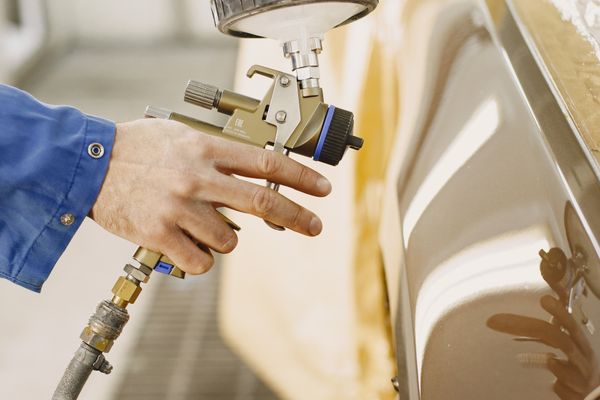
Orange peel rarely announces itself in the lab. It shows up on the finished part, in the glare of a showroom light or a phone camera, as a subtle wave across what was meant to be a mirror finish. In water-based coatings the cause is almost always surface tension, and the fix is rarely more resin or slower solvent. It is a leveling agent chosen for the job.
Why water levels poorly
Water's high surface tension means the film does not spread or self-heal the way a solvent system does. As water evaporates unevenly, the surface skins over while the body is still moving, locking in ripples before the film has a chance to flatten. Fast-drying spray and roll lines compress that window further, which is exactly where leveling agents do their work. Craters and pinholes, meanwhile, often come from a defoamer or wetting agent that is pulling tension in the wrong direction.
Silicone versus acrylic: two tools, one goal
Silicone leveling agents cut surface tension hard and fast, giving strong flow, slip and scratch resistance, which is why they dominate high-gloss and clearcoat lines. Acrylic leveling agents work differently: they even out local surface-tension differences without dropping the overall tension much, so they improve long-wave flow without hurting recoatability. On difficult plastic and metal substrates, the two are often paired, wetting first, then leveling.
Watch the dosage ceiling
More leveling agent is not better. Past a certain point, extra additive brings diminishing flow while inviting foam, gloss loss and intercoat adhesion problems. The classic trap is chasing a defect with more of the same agent instead of asking whether the real issue is substrate wetting or an over-strong defoamer. A small, deliberate dose, screened as part of the full additive package, beats a heavy hand every time. The same logic applies to the choice between silicone and acrylic, where compatibility with the resin usually decides the winner.
Where the modern applications are
The push toward water-based systems is sharpest where appearance is non-negotiable: 3C electronics casings, automotive interiors, and the coated films inside new-energy batteries. These parts demand low roughness and a defect-free surface at ultra-thin film builds, which raises the bar on leveling and makes the interaction between leveling agent, wetting agent and defoamer the difference between a pass and a reject.
Leveling in water-based coatings is a balancing act between tension, flow and drying speed. Choose the agent for the defect you actually have, dose it as a small part of a coherent additive package, and the orange peel stops being a surprise and becomes a solved variable. On appearance-critical parts, that single variable is often the difference between a premium finish and a rework order.