
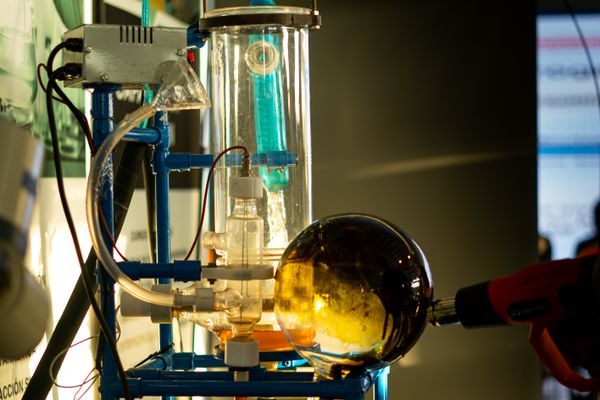
In a batch reactor the antifoam still holds the foam down during heat-up, but once the temperature passes 80°C the foam often comes back, and by the time the batch is ready for discharge it has almost completely failed. The first reaction on site is to increase the dose or switch to a more expensive product, yet the performance stays the same. In most cases the product itself is not the problem; the operating conditions have moved outside the range in which it can work stably. An antifoam's temperature resistance is not a dividing line but a gradually declining curve.
Gradual failure after heat-up means the conditions are outside the selection range
The typical sequence is: foam control is normal right after charging, foam returns once the temperature passes 80°C, and after a period of holding the foam height approaches that of a batch with no antifoam at all; switching to another product of the same type gives a similar result, indicating the problem lies not with one particular product but with the type itself. At high temperature the viscosity of the silicone oil drops and it is more easily emulsified and carried away by surface-active substances in the system; the hydrophobic silica particles lose their carrier and are gradually wetted, so their spreading ability declines, and under alkaline conditions the emulsion will also break and float oil.
Troubleshooting starts with the measured temperature curve
Troubleshooting starts with the measured temperature curve, and do not substitute the process setpoint, since the two often differ noticeably on site. At the same time, confirm whether the addition point falls in the low-temperature stage; waiting until the high-temperature stage to top up is usually too late. Then run a high-temperature ageing comparison, holding samples at the target temperature for several hours before retesting foam-suppression performance, and base the judgment on this data rather than on room-temperature data.
Treat the upper temperature limit and alkali resistance as hard criteria
Under high-temperature conditions, the upper temperature limit and alkali-resistance range should be the first screening criteria, not an additional reference point. A product rated to 130°C does not mean it can be used long-term in a 100°C system; prolonged high temperature accelerates consumption of the active component, so data after high-temperature ageing should still govern.
Chemitech's solution
For antifoam needs in high-temperature, high-shear and alkaline systems, Chemitech supplies silicone, polyether and composite antifoam products, with the type screened first against temperature resistance and alkali resistance.
Polyether products generally have better temperature resistance and suit batch processes with long high-temperature dwell times; silicone types break foam faster in the low-temperature stage and are suited to being added before heat-up to bring foam under control early; composite products are used in systems that need both break speed and high-temperature stability. Some silicone products will break and float oil in alkaline systems above pH 12, so dyeing and papermaking black liquor systems in particular need attention.
When selecting, first confirm the system's measured maximum temperature, high-temperature duration and pH range, because temperature resistance and alkali resistance are two independent criteria, and meeting one does not mean meeting the other.
Customers can provide the temperature curve, high-temperature dwell time, system pH and current additive information to the Chemitech technical team; we will give a selection direction and arrange high-temperature ageing verification. Sample testing first reproduces the high-temperature stage in the lab to confirm the rate of decline in foam-suppression performance before moving to production-line validation. For applicable conditions, compare our high-temperature high-shear system antifoam solutions and our alkali- and heat-resistant antifoam solutions.
Summary
Antifoam failure in high-temperature systems is mostly related to the product's selection range and has little to do with the dose. Measure the temperature curve first, then confirm the addition point and the high-temperature duration, then run a high-temperature ageing comparison; this order is more effective than repeatedly switching products. Chemitech can supply antifoam products and sample testing support for different temperature ranges and pH conditions, verifying through lab trials against actual operating conditions, which usually makes it easier to find a stable solution.