
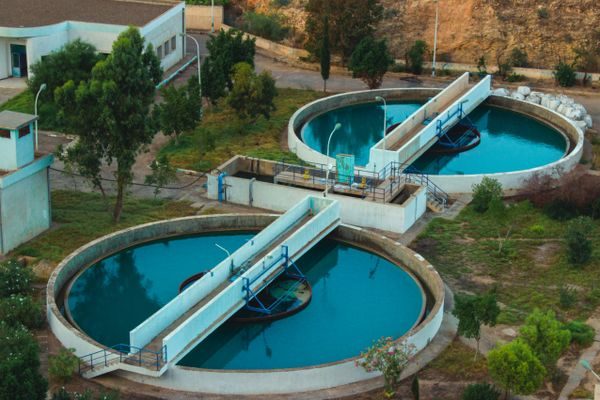
Once foam in an aeration tank spills over the tank wall, it not only affects the surrounding environment but also interferes with the readings of online instruments. In wastewater treatment by the activated sludge process, continuous aeration plus the surface-active substances produced by microbial metabolism already make foaming likely; if the influent also carries a relatively high concentration of detergents, grease or industrial surfactants, the foam problem becomes even more difficult. Dosing antifoam is a common way to keep the system running stably, but how to choose it and how to dose it require real care.
Passing the Microbial Safety Check First
The microbial community in activated sludge is quite sensitive to chemicals; if some antifoams contain inhibitory components, they can affect the efficiency of organic matter degradation and even cause fluctuations in effluent indicators. Antifoams used in biological tanks are generally required to be low in toxicity and readily degradable, so as to avoid long-term effects on sludge activity. When choosing, besides foam knockdown and foam inhibition performance, their effect on oxygen transfer and sludge settling performance should also be evaluated.
Dosing Method and Dosage: A Matter of Balance
Antifoam can be dosed as an emergency measure when foam is severe, or added continuously in small amounts with a metering pump. Overdosing not only increases cost but may also cause secondary pollution or interfere with downstream membrane units; underdosing cannot hold the foam down. In practice, it is common to start with a small trial dose and then adjust gradually according to changes in the foam, in order to find the balance point that neither harms effluent quality nor fails to control foam.
Special Requirements for Membrane Systems
In the reverse osmosis membrane pretreatment stage, if foam enters the membrane module with the water flow, it may affect water production flux and salt rejection, and even damage the membrane elements. Therefore, antifoams used ahead of membranes should have good water solubility and low residue characteristics, avoiding membrane fouling caused by oily substances. As zero liquid discharge of industrial wastewater and reuse of reclaimed water advance, demand in such demanding scenarios continues to grow.
In the end, defoaming in wastewater treatment is not simply a matter of adding a chemical; it requires comprehensive judgment based on water quality characteristics, process type and discharge requirements. Only with low toxicity, easy degradability and compatibility with the biological system, together with the right dosing method, can a balance be struck between foam control and stable effluent.