
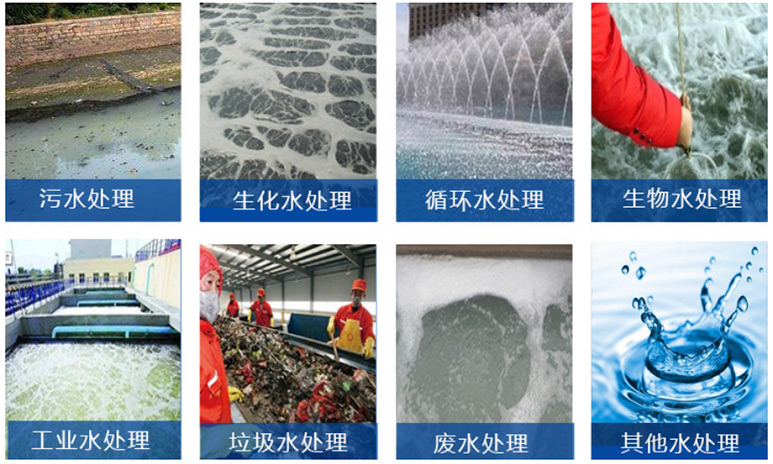
Three Root Causes of Wastewater Foaming
Foaming in wastewater treatment stems from:
Surfactants: Detergents, proteins, and oils reduce surface tension;
Mechanical actions: Aeration, agitation, or pumping introduces microbubbles;
Biological factors: Excessive filamentous bacteria growth in activated sludge producing hydrophobic EPS.
Foam accumulation can cause dissolved oxygen (DO) crashes and equipment damage. A petrochemical plant once suffered a 27% COD removal drop due to foam overflow, incurring losses over ¥800,000.
Defoaming Mechanisms & Technological Innovations
High-performance defoamers require dual functions:
Bubble breaking: Hydrophobic particles (e.g., modified silica) penetrate foam films;
Foam suppression: Form molecular barriers at gas-liquid interfaces.
Chemi Tech’s KM-8012 uses silicone-polyether block copolymer technology, achieving 50% faster defoaming than conventional products and maintaining 98% activity at pH 2-14 (Third-party test report: CT-2023-0456).\


Five Advantages of Chemi Tech Defoamers
Rapid action: ≥90% defoaming within 5 mins (GB/T 26527-2011);
Eco-friendly: 81% biodegradation in 28 days (ECHA certified);
Full-scenario adaptation: Works at pH 1-14;
Cost efficiency: Saves ¥0.15-1.2/ton;
Technical support: Free on-site debugging and foam diagnosis.