
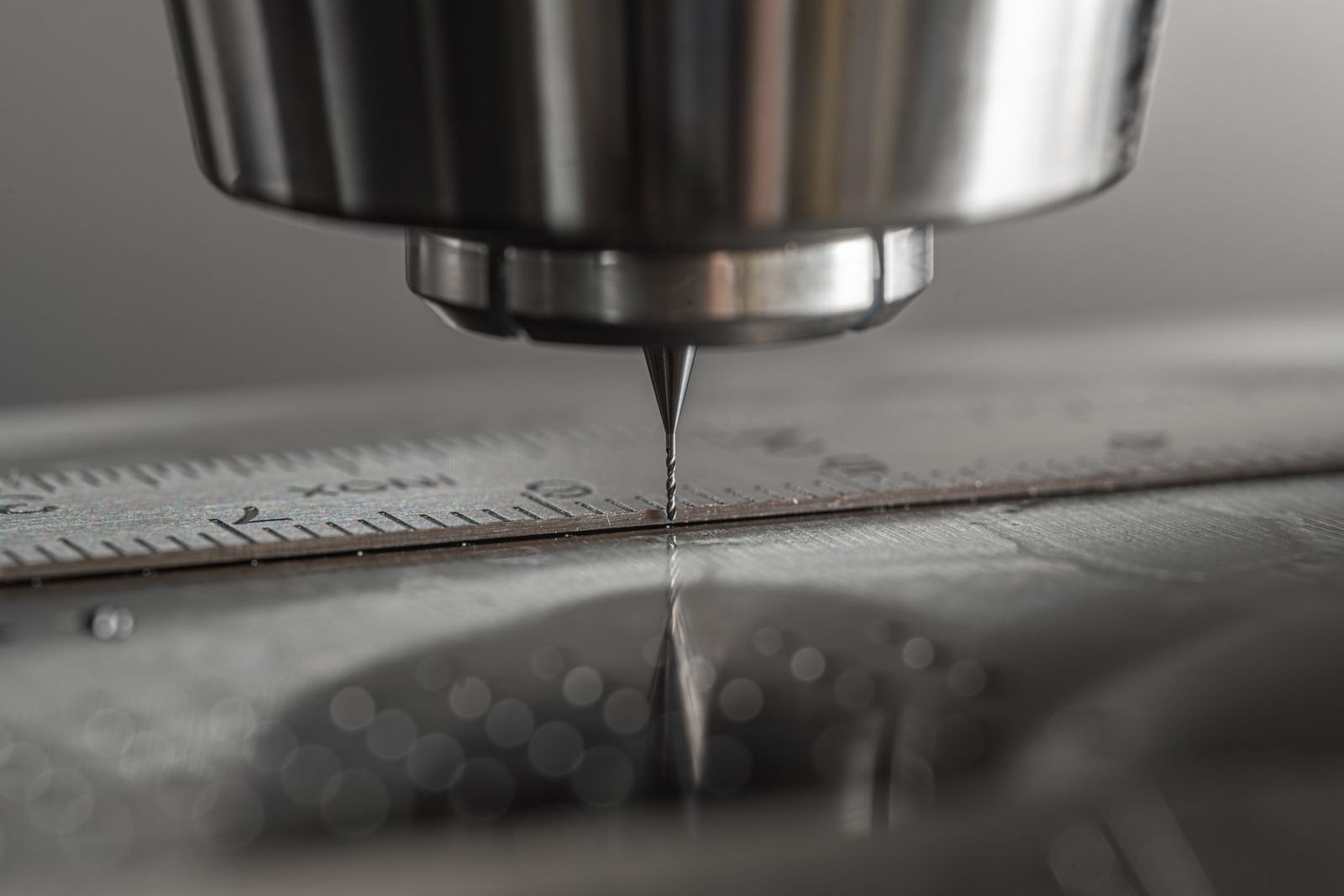
Live shot of precision machine-tool milling in operation
Once the cutting fluid heats up in the circulation tank, foam stacks layer upon layer along the surface, the level reading drifts, workpiece-surface residue and corrosion risk emerge, and the accuracy and finish of batch-machined parts both come under pressure.
Chemi Tech launches the KM-330 series defoamer for cutting-fluid circulation systems, with the addition level set flexibly against the concentrate ratio and cutting intensity. This grade is a silicone defoamer with fast defoaming and long-lasting foam suppression, resisting shear and high temperature; the diluted liquor stays uniform without separation and can be added internally. Using measured tank-surface foam height and workpiece-surface residue data, the suitable dosage of the KM-330 series can be fixed.
Chemi Tech Defoamer Advantages
The Chemi Tech KM-330 series defoamer is configured for cutting-fluid circulation systems. Defoaming is fast, clearing tank-surface foam before the level drifts; foam suppression lasts long, a single dose covering the whole cutting cycle; it resists shear and high temperature, holding its foam-breaking strength under high-speed cutting and heavy-duty grinding; compatibility with the cutting fluid is excellent, with no oil bleed or float-out and no residue on the workpiece; it can be added internally, dosed straight into the concentrate, and extending the fluid-change interval directly cuts cost.
Industry Pain Points and Solutions
Foaming in cutting-fluid circulation mostly shares one root cause: gas entrainment from high-speed cutting and defoamer components that cannot resist shear acting together, ending up in two places — level distortion and workpiece-surface residue.
Once the level distorts, make-up and ratio can only be guessed by experience and the concentrate concentration drifts. The KM-330 dosage is set against the concentrate ratio, holding the tank level stably within the gauge marks.
Foam carrying oily soil gathers on the surface, and workpiece residue and corrosion risk multiply. KM-330's foam breaking does not carry the oily soil back onto the workpiece, keeping the machined part's finish stable.
Rework from residue and frequent fluid changes both convert into tooling and oil cost. Against changes in concentrate ratio and cutting intensity, the dosage can be narrowed to an accountable range, directly cutting fluid-change and rework loss.
Typical Conditions and Verification
Customer: a precision machining enterprise in Jiangsu, applied to the circulating-supply section of its cutting fluid.
After this machine shop sped up its high-speed cutting line, foam in the circulation tank grew noticeably; workpiece surfaces occasionally showed oily residue and sampled finish fluctuated. From the comparison test of tank-surface foam height and workpiece-surface residue, Chemi Tech chose KM-330 as the cutting-fluid defoamer for this plant, with dosage set against the concentrate ratio. After deployment, the tank level fell back within the gauge marks; workpiece-surface residue dropped markedly; finish stayed stable and the fluid-change interval lengthened accordingly.
FAQ
Will adding a defoamer to the cutting fluid affect tool life and workpiece finish?
It all depends on whether the defoamer components resist shear and whether they carry oily soil back onto the workpiece. KM-330 has completed finish and residue comparison tests under high-speed cutting; within the recommended range it shows no oil bleed or float-out and leaves no residue on the workpiece. Actual dosage uses the concentrate ratio as the baseline, with cutting intensity and circulation speed as correction factors; Chemi Tech fixes the suitable dosage from the side-by-side comparison of tank-surface foam height and workpiece-surface residue.