
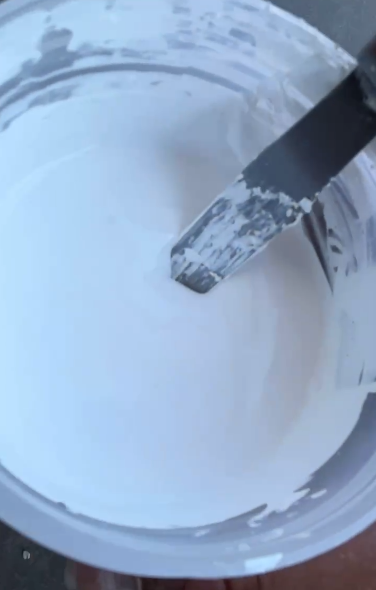
High-viscosity coatings (e.g., epoxy floor paints, conductive silver pastes) face significant defoaming challenges due to poor fluidity and slow bubble migration.
Entrapped bubbles cause:
Performance Failure: Insulating air pockets reduce conductivity in silver pastes;
Surface Defects: Bumps or craters compromise smoothness and gloss;
Weak Adhesion: Bubbles block coating-substrate contact, diminishing effective bonding area.
Chemi Tech Defoaming Strategy for High-Viscosity Systems
Deaerator-Defoamer Synergy
Deaerators: Contain hydrophobic silica and polymer carriers to merge micro-bubbles into larger ones, accelerating ascent. Ideal for viscosities >5000cP to shorten migration paths.
Defoamers: Modified silicone oils rapidly rupture surface bubbles. Recommended ratio: 2:1 (deaerator:defoamer) for comprehensive bubble removal.
Process Optimization
Vacuum Mixing: Apply vacuum (-0.08MPa~-0.1MPa) during production to extract dissolved gases;
Temperature Control: Pre-heat coatings to 40℃±5℃ before application, reducing viscosity to 2000~3000cP for faster bubble escape.
Technical Advantages of Chemi Tech
High-Penetration Formula
Defoamer particle size ≤5μm prevents agglomeration; polar groups in molecular chains ensure >98% resin compatibility without craters.
Dynamic Foam Suppression
Components adsorb onto nascent bubbles during high-shear processes (e.g., blade coating), inhibiting foam regeneration.
Case Study
A conductive silver paste client resolved microbubbles causing resistance fluctuations in flexible circuits by:
Adding 0.4% deaerator (KM-120) under vacuum (-0.09MPa, 20min);
Incorporating 0.2% defoamer (KM-190) during dilution;
Reducing bubbles by 90% and resistance fluctuation from ±15% to ±3%.
Conclusion
Defoaming high-viscosity coatings requires enhancing bubble mobility and rupture efficiency. Chemi Tech’s deaerator-defoamer synergy and process integration deliver reliable solutions for high-solids, viscous systems.