
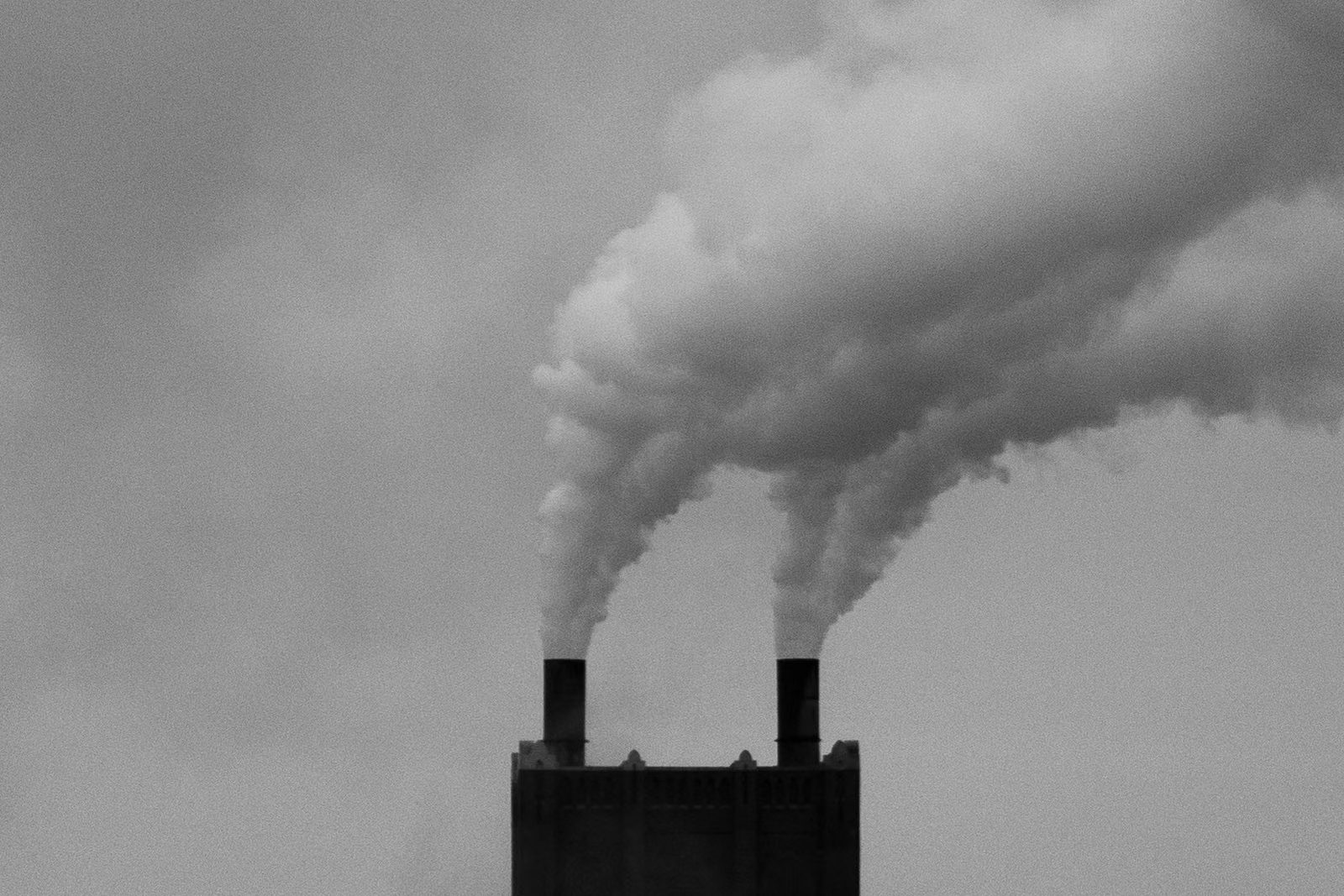
White smoke rises from several chimneys of an industrial installation and disperses under a pale sky
In the wet-process phosphoric acid extraction tank, the foam layer keeps thickening under agitation and acid-mist entrainment, the liquid-level reading rises falsely in step, the evaporation area of the concentration section is taken up by foam, phosphogypsum entrainment and acid loss climb shift by shift, and the material balance of the extraction and concentration sections is continuously deviated.
Chemi Tech supplies the KM-03 series of defoamers for the foam conditions in the wet-process phosphoric acid extraction and concentration sections; the dosage is adjusted flexibly by acid concentration, tank temperature and agitation intensity. This grade resists acid and high temperature; it neither breaks emulsion nor separates in a strong-acid extraction system, and causes no interference with the separation of phosphoric acid and phosphogypsum. The measured data on extraction-tank foam-layer thickness and concentration-section liquid-level readings are recorded side by side at the same operating condition, and the fitted dosage of the KM-03 series is determined accordingly; it is finalised only after the acid-concentration grades and the concentration temperature differences are checked separately.
Advantages of Chemi Tech Defoamers
The Chemi Tech KM-03 series defoamer is configured for the wet-process phosphoric acid extraction and concentration sections. It resists acid strongly, neither breaking emulsion nor separating in a strong-acid system; it resists high temperature, keeping its foam-suppressing duration stable under the temperature rise of concentration; it breaks foam fast, thinning the foam layer generated by acid-mist entrainment within a short time; its foam-suppressing ability is long-lasting, so no shift-by-shift top-up is needed in the extraction tank; its compatibility is excellent, causing no interference with the separation of phosphoric acid and phosphogypsum; and the dosage is economical, rated by acid concentration and agitation intensity, so the chemical consumption per tank can be accounted directly.
Industry Pain Points and Solutions
The root of foaming in wet-process phosphoric acid extraction lies mostly in the combined effect of acid-mist entrainment and air drawn in by agitation, while the temperature rise of concentration stabilises the fine bubbles inside the acid phase, finally concentrating in two places: the falsely high liquid level and acid-loss entrainment.
When the amount of acid-mist entrainment rises, the foam on the extraction-tank surface first thickens and a deviation appears between the liquid-level reading and the on-site gauge glass. KM-03 resists acid strongly; once the two readings of acid concentration and agitation intensity are cleared, its dosage is re-rated by the load of that tank, and the liquid-level reading and the gauge-glass reading converge.
After the concentration temperature rise continues upward, foam breaking and regeneration play against each other, and phosphogypsum entrained in the acid phase is carried into the concentration section with the foam. KM-03 resists high temperature; with the two grades of eighty degrees Celsius and ninety-five degrees Celsius compared side by side, the entrainment amount narrows from four point five kilograms per ton to one point eight kilograms per ton, and the dosage is rated to the fitted grade of that line.
The solids of the circulating mother liquor accumulate shift by shift, further extending the stable period of the foam. The KM-03 series adds no extra skimming frequency on this item; once acid concentration, tank temperature and solids content are all checked through, the precise dosage of that line is made clear and the extraction shift executes at that magnitude.
Typical Operating Conditions and Verification
Customer case: the wet-process phosphoric acid workshop of a phosphorus chemical enterprise in Hubei, applied to the defoaming stage of the extraction tank and the concentration section.
This plant originally skimmed foam twice per shift, the difference between the level meter and the gauge glass stayed steadily above two divisions, and the acid loss of the concentration section showed no difference between the day shift and the night shift. KM-03 was selected as the defoaming grade for that line after comparison against the two readings of acid concentration and tank temperature, with the dosage rated by agitation intensity and solids content. After commissioning, the difference between the level meter and the gauge glass narrowed to within half a division; foam skimming fell from twice per shift to once per day; acid-loss entrainment fell back, and the material balance of the extraction and concentration sections no longer deviated shift by shift.
Frequently Asked Questions
If the KM-03 series is dosed over the long term in a strong-acid extraction system, will it affect the separation of phosphoric acid and phosphogypsum?
It depends entirely on whether the acid concentration and the concentration temperature rise fall within the assessed range of that line. The KM-03 series resists acid and high temperature, neither breaking emulsion nor separating in a strong-acid system; the measured data on foam-layer thickness and acid-loss entrainment are given side by side by Chemi Tech from two sets of readings at the same extraction tank, and dosing at the rated magnitude does not disturb the separation of phosphogypsum. The actual dosage is corrected by solids content and agitation intensity; Chemi Tech gives the fitted dosage of that line through comparison of the two operating conditions.