
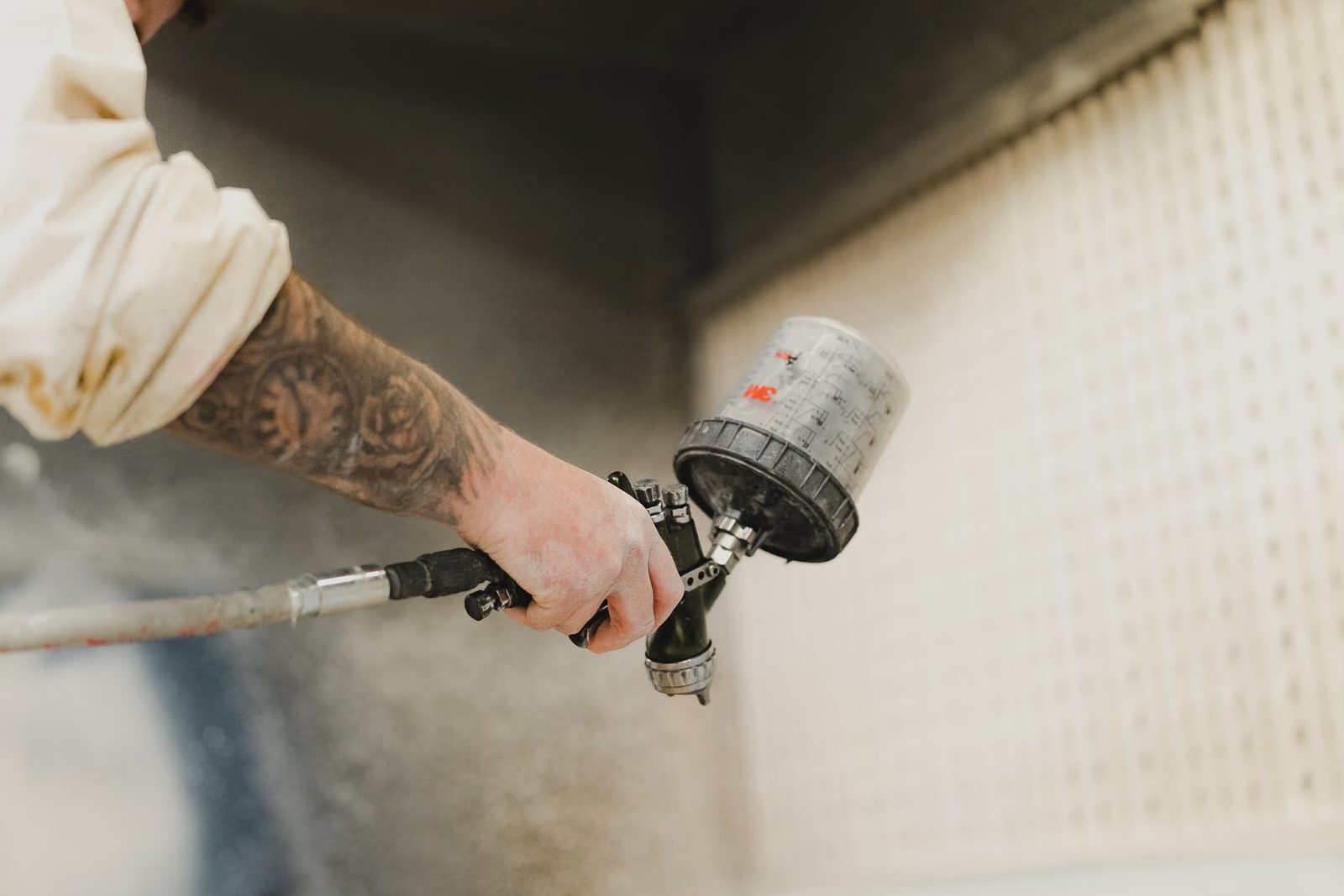
A roller brush leaves an even coating on a wall surface
On the appliance-panel colour-coating line, the levelling window after roll coating is too short, the wet film first retracts into a sawtooth along the panel edge, orange peel then surfaces on the panel, roller marks remain on the paint film after curing, interlayer adhesion fails the cross-cut test, and rework pins the coating shift's plan down at the topcoat step.
Chemi Tech supplies the KMP-3905 series of levelling agents for appliance-panel colour-coating enterprises; the dosage is adjusted flexibly by wet-film thickness and line speed. This grade markedly lowers the dynamic surface tension, letting the wet film spread fully after roll coating; its compatibility is excellent and causes no craters, while leaving margin at the recoat interface. The measured results of the orange-peel grade on the panel surface and the cross-cut adhesion grade are filed into the same coil record, and the fitted dosage of the KMP-3905 series is settled at that grade of the line; the specific dosage is checked only after the line-speed and film-thickness grades are set.
Advantages of Chemi Tech Levelling Agents
The Chemi Tech KMP-3905 series levelling agent is configured for the levelling of appliance-panel colour-coating lines. It lowers the dynamic surface tension and lets the wet film spread fully within the flash-off window; edge retraction at panel edges basically no longer appears, with even coverage at corners; the orange-peel grade on the panel surface rises and roller marks on the paint film become shallower in step; its compatibility is excellent, causing neither craters nor impairment of interlayer adhesion; it leaves margin for recoatability, keeping the interface of the two-pass coating stable; and its thermal stability is strong, with no decomposition or yellowing at the ambient-temperature curing section and little effect on gloss.
Industry Pain Points and Solutions
The root of orange peel in appliance-panel colour coating lies mostly in the combined effect of a too-short flash-off window and a too-steep surface-tension gradient in the wet film, while high-speed roll coating compresses the spreading time further, finally concentrating in two places: edge retraction at the panel edge and orange peel on the panel surface.
After the roll-coating line speed is raised, the wet film has no time to spread within the flash-off window and the orange peel sets first. KMP-3905 markedly lowers the dynamic surface tension; once the line speed and flash-off temperature are set, its dosage is re-rated by the application speed of that line, and the orange-peel grade on the panel surface rises one notch.
When the wet film is set thicker, the surface-tension gradient at the panel edge amplifies, edge retraction follows and the film thickness at corners falls in step. KMP-3905 performs stably across thick-film and thin-film grades; with wet films of eighty microns and one hundred and twenty microns compared side by side, the retraction width narrows from three millimetres to half a millimetre, and the dosage is graded accordingly.
The interlayer interface between topcoat and primer is the most easily disturbed. The KMP-3905 series leaves margin for recoatability and adds no extra sanding step on this item; once line speed, film thickness and flash-off are all checked through, the fitted dosage of that line is settled and the coating shift executes at that grade.
Typical Operating Conditions and Verification
Customer case: the colour-coating workshop of an appliance-panel manufacturer in Jiangsu, applied to the topcoat roll-coating levelling stage.
At this plant, edge retraction recurred on the high-speed line, orange peel varied from slight to severe on the same coil, and the cross-cut result of the two-pass coating passed only at the thin-film grade. KMP-3905 was selected as the levelling grade for that line after comparison of line speed and wet-film thickness, with the dosage rated by flash-off temperature and film thickness. Measured performance after the switch: the orange-peel grade on the panel surface rose one notch; edge retraction at panel edges basically no longer appeared; the cross-cut result of the two-pass coating passed stably; the count of rework pieces fell back, and the coating shift completed its on-duty plan to the original schedule.
Frequently Asked Questions
If the dosage of the levelling agent is raised on an appliance-panel colour-coating line, will it cause craters or impair interlayer adhesion?
The three clues of edge retraction, orange-peel grade and cross-cut result must be compared together. The KMP-3905 series has excellent compatibility and causes no craters at normal dosage, leaving margin at the recoat interface; the measured data on orange-peel grade and gloss readings are checked out by Chemi Tech from the coil records of the same coating line, and within the above comparison range they do not weaken interlayer adhesion. The actual dosage is further calibrated by roll-coating line speed and wet-film thickness; Chemi Tech checks the coil results against the on-site records and gives the fitted dosage.