
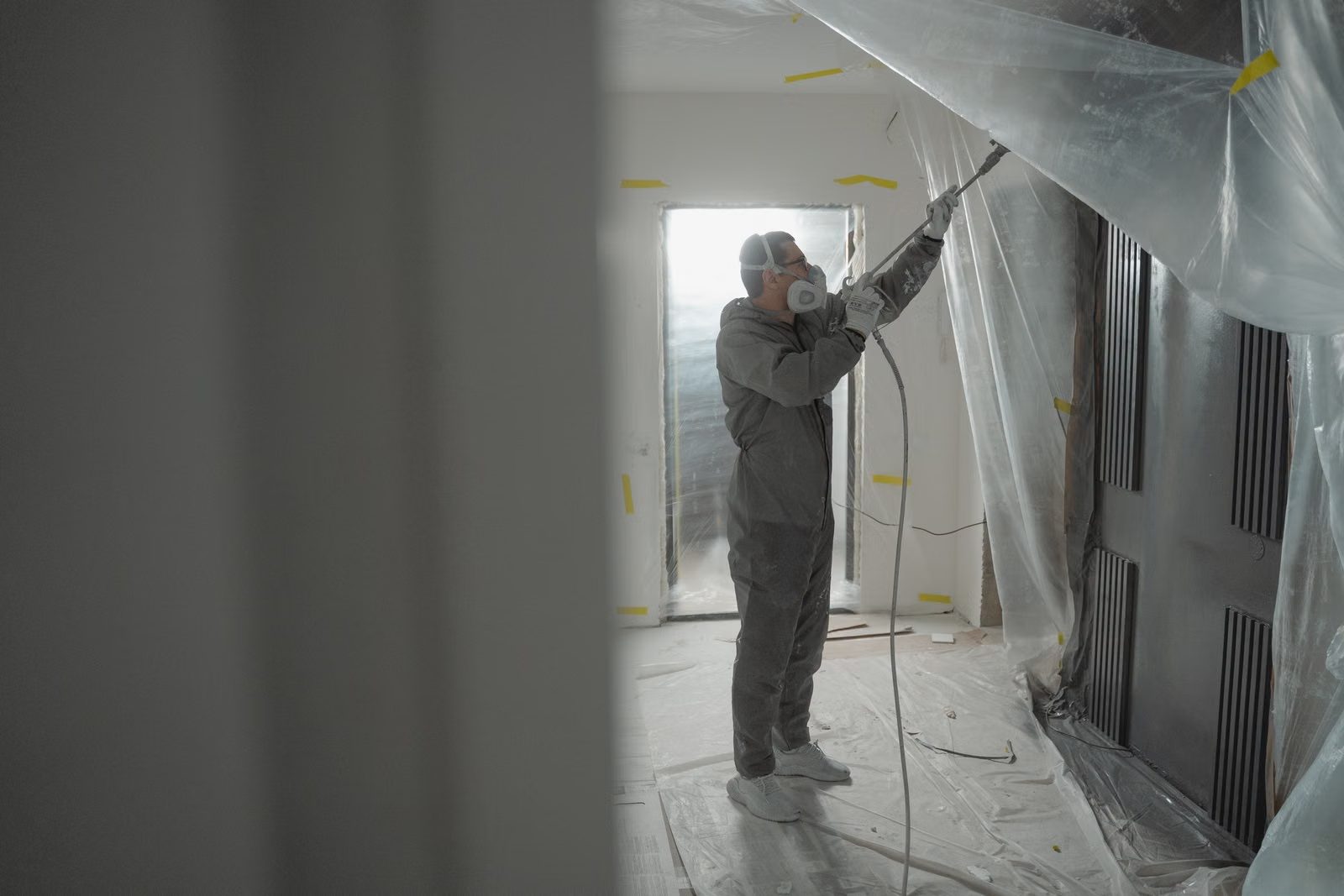
A paint worker treats a workpiece surface in a brightly lit workshop
Water-based plastic paint levels poorly after being sprayed onto injection-moulded parts: orange peel surfaces first on the wet film, the dry film then retracts into craters at the corners, the low surface energy of the plastic substrate compresses the paint film's spreading time, and rework and touch-up spraying pin the coating shift's on-duty plan down at the topcoat step.
Chemi Tech supplies the KMP-3804 series of levelling agents for enterprises spraying water-based plastic paint; the dosage is adjusted flexibly by wet-film thickness and spray tempo. This grade markedly lowers the dynamic surface tension, letting the wet film spread fully within the flash-off window; its compatibility is excellent and causes no craters, while leaving margin for adhesion to the plastic substrate and interlayer bonding. The measured results of the orange-peel grade and crater density on the panel surface are filed into the same test-panel record, and the fitted dosage of the KMP-3804 series is settled at that grade of the line; the specific dosage is checked only after the tempo and film-thickness grades are set, and product selection is made against the surface requirements of different plastic parts.
Advantages of Chemi Tech Levelling Agents
The Chemi Tech KMP-3804 series levelling agent is configured for the spray levelling of water-based plastic parts. It lowers the dynamic surface tension and lets the wet film spread fully within the flash-off window; coverage at corners is even and craters basically no longer appear; the orange-peel grade on the panel surface rises and the orange texture on the paint film becomes shallower in step; its compatibility is excellent, causing neither craters nor impairment of interlayer bonding; it leaves margin for recoatability, keeping the interface of the two-pass coating stable; and its thermal stability is strong, with no decomposition or yellowing in the ambient-temperature curing section and little effect on gloss.
Industry Pain Points and Solutions
The root of orange peel in water-based plastic paint spraying lies mostly in the combined effect of a too-short flash-off window and the low surface energy of the plastic substrate, while gun atomisation compresses the solvent-evaporation rhythm further, finally concentrating in two places: wet-film orange peel and craters at the corners.
Once the spray tempo is raised, the wet film has no time to spread within the flash-off window and the orange peel sets first. KMP-3804 markedly lowers the dynamic surface tension; once the tempo and flash-off temperature are set, its dosage is re-rated by the application speed of that part, and the orange-peel grade on the panel surface rises one notch.
When the wet film is set thicker, the tension gradient at the corners amplifies and craters follow, with corner film thickness falling in step. KMP-3804 performs stably across thick-film and thin-film grades; with wet films of eighty and one hundred and twenty microns compared side by side, the crater density falls from nine per panel to one, and the dosage is graded accordingly.
After the flash-off window is compressed, the interlayer interface between topcoat and primer is the most easily disturbed and spreading time is nearly exhausted. The KMP-3804 series leaves margin for recoatability and adds no extra sanding step on this item; once tempo, film thickness and flash-off are all checked through, the fitted dosage of that part is settled and the coating shift executes at that grade.
Typical Operating Conditions and Verification
Customer case: the injection-moulded-parts spray painting workshop of a plastic-products enterprise in Guangdong, applied to the spray levelling stage of the water-based topcoat.
At this plant craters at the corners of injection-moulded parts recurred on vertical surfaces, orange peel varied from slight to severe on the same test panel, and the interlayer bonding of the two-pass coating passed only at the thin-film grade. KMP-3804 was taken as the levelling grade for that line, with the dosage rated by flash-off temperature and wet-film thickness. Measured performance after the switch: the orange-peel grade on the panel surface rose one notch; craters at the corners basically no longer appeared; the interlayer bonding of the two-pass coating passed stably; the count of rework pieces fell back, and the on-duty plan of the coating shift was completed to the original schedule.
Frequently Asked Questions
When a levelling agent is added to water-based plastic paint, will a higher dosage cause craters or affect interlayer bonding?
Once the changes in the three readings of orange-peel grade, crater density and interlayer bonding are worked out, the boundary of the dosage is clear. The KMP-3804 series has excellent compatibility and causes no craters at normal dosage, leaving margin at the recoat interface; the measured data on orange-peel grade and gloss readings are checked out together by Chemi Tech from the test-panel records of the same coating line, and within the above comparison range they do not weaken interlayer bonding. The actual dosage is further calibrated by spray tempo and wet-film thickness; Chemi Tech checks the test-panel results against the on-site records and gives the fitted dosage.