
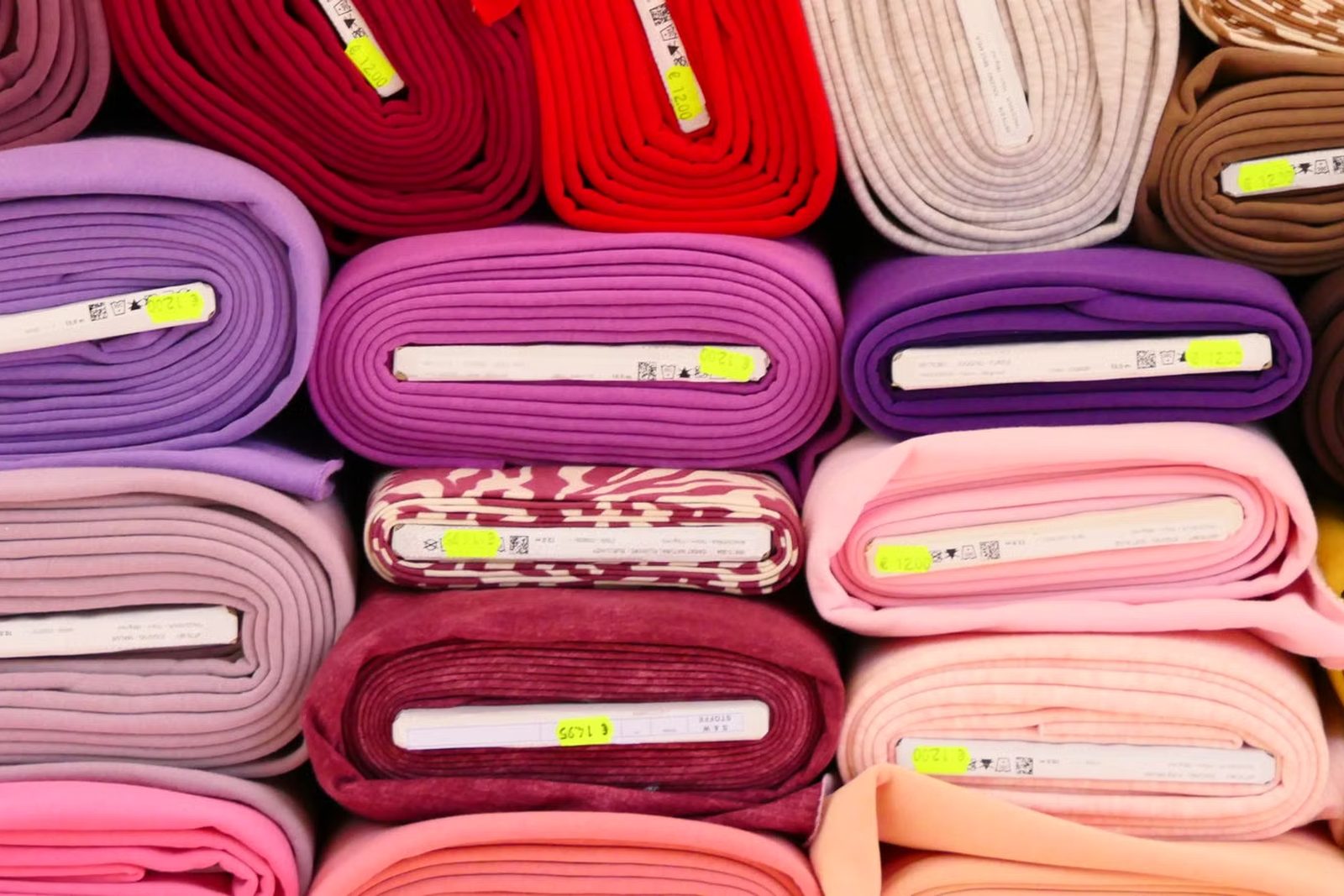
Coloured towels folded in layers are stacked along the shelf
After water-repellent finishing, the spray rating of footwear microfibre leather drops notch by notch through several rounds of washing, water droplets spread on the leather surface instead of rolling off, wet spots appear first at the seams of the upper and the tongue, and re-finishing and rework batches pin the finishing workshop's schedule down at the water-repellency step.
Chemi Tech supplies the KMF-2902 series of water repellents for the water-repellent finishing of footwear microfibre leather; the dosage is adjusted flexibly by leather weight and wet pick-up. This grade follows a continuous-film route, forming an even water-repellent layer on the fibre surface, balancing spray rating with hand feel, and is compatible in the same bath with common softeners and crosslinkers. The measured data of the spray rating and wash-fastness cycles are laid on the same finishing record, and the fitted dosage of the KMF-2902 series is graded accordingly; the finishing dosage is set only after the weight and curing conditions are checked through, and product selection is made against the water-repellency requirements of different footwear materials.
Advantages of Chemi Tech Water Repellents
The Chemi Tech KMF-2902 series water repellent is configured for the water-repellent finishing of footwear microfibre leather. It forms a continuous film on the fibre surface, keeping the spray rating in the pass grade; it is wash-fast, so rating decay slows after multiple rounds of washing; it has little effect on hand feel, leaving the leather neither stiff nor harsh; its compatibility in the same bath with common softeners and crosslinkers is excellent, so the finishing bath needs no separate formulation; its curing-temperature window is wide, so the footwear mill's existing curing conditions can be carried over directly; and the dosage is economical, rated by leather weight and wet pick-up, so the additive cost per batch of leather can be accounted.
Industry Pain Points and Solutions
The root of water-repellency decay on footwear microfibre leather lies mostly in the combined effect of a too-low wet pick-up and insufficient curing crosslinking, while bending and friction during wear weakens the integrity of the finishing film round by round, finally concentrating in two places: the spray rating and wet spots at the seams.
When the wet pick-up is too low, the film formed on the fibre surface is not continuous enough and the spray rating drops one notch after the first few rounds of washing. KMF-2902 forms a continuous film; once the wet pick-up and curing temperature are checked through, its dosage is re-rated by the leather and the spray rating stays in the pass grade.
When the curing temperature is set too low, crosslinking is insufficient, the spray rating falls with each round of washing, and spreading wet spots are left on the face of the tongue. KMF-2902 performs stably across microfibre leather and polyester fabric grades; with curing at one hundred and twenty and one hundred and fifty degrees Celsius compared side by side, rating decay narrows from three notches to one, and the finishing-bath concentration is graded accordingly.
Repeated bending of the footwear puts the finishing film through another test. The KMF-2902 series is wash-fast and adds no extra re-finishing rounds on this item; once leather weight, wet pick-up and curing temperature are all checked through, the fitted dosage of this batch of leather is made clear and the finishing workshop continues to use that magnitude.
Typical Operating Conditions and Verification
Customer case: the microfibre-leather finishing workshop of a footwear-material enterprise in Fujian, applied to the water-repellent curing stage.
At this plant the spray rating of the upper fell faster after washing than that of the body, wet-spot spreading was wider on the microfibre-leather batches than on the polyester batches, and re-finishing rounds rose month by month. KMF-2902 was chosen as the water-repellent grade for that batch of leather after comparison of weight and washing conditions; the finishing-bath concentration was rated by wet pick-up and curing temperature. Measured records after finishing: the rating decay of the upper converged with that of the body; wet spots no longer spread to the back of the leather; the spray rating stayed in the pass grade after multiple rounds of washing; re-finishing rounds decreased, and the finishing schedule was completed to the original plan.
Frequently Asked Questions
After multiple rounds of washing, can the rating decay of water-repellent microfibre leather finishing be predicted?
First see whether the three clues of wet pick-up, curing temperature and the number of washing rounds fall within the assessed range of that batch of leather. The KMF-2902 series forms a continuous film on the fibre surface and is wash-fast; the measured data of the spray rating and wet-spot rating are checked out together by Chemi Tech from the washing records of the same batch of leather, the decay trend can be plotted as a curve against the number of rounds, and the specific values are subject to the actual conditions of that finishing mill. The actual dosage is further fine-tuned by wet pick-up and curing temperature; Chemi Tech determines the fitted dosage by combining lab samples with production-line measurements.