
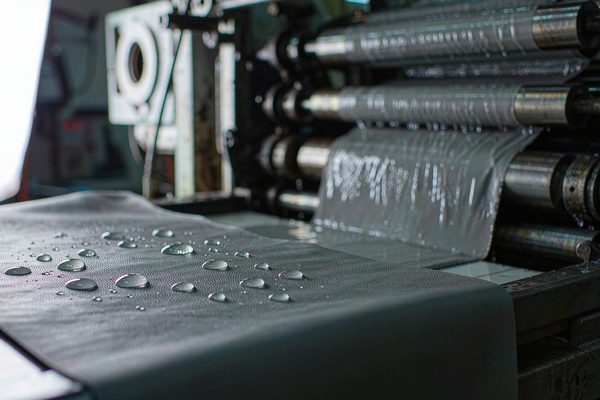
On the shoe upper finishing line, the water repellent concentration in the padding bath follows the established formula and the dried fabric passes the spray test, but after the shoe factory turns it into a finished shoe, a few flexing cycles start water penetration, and the upper also whitens and frosts. What the site usually does is raise the bath concentration; the hand becomes stiffer and the water repellency rating improves only slightly. The flex and wash durability of water repellency on shoe materials depends on whether film formation and crosslinking are complete, and pushing the concentration higher will not solve this.
Repellent right off the line but failing after a few days of wear points to film fastness
The fabric measured by the spray method right after finishing can reach grade 4, an immediate effect from the lowered surface energy. After being made into a shoe and subjected to flexing, rubbing and perspiration, the rating drops to grade 2 or even grade 1, indicating that the bond between the water repellent and the fiber surface is weak and the film layer is destroyed under mechanical action. For synthetic leather, the polyurethane coating on the base fabric also matters: the hydrophilic groups in the coating migrate to the surface in the presence of moisture.
Order of handling: check the bath first, then set the curing, and look at the crosslinker last
First recheck the concentration and pH of the padding bath; a slightly alkaline pH causes part of the water repellent to hydrolyze early, and when the bath foams and turns cloudy it is time to change it. The second step is to restore the curing temperature and time: a film that is not fully cured cracks easily when flexed. The third step is to consider adding crosslinker; add it after the water repellent, stir for over ten minutes and then run the fabric, since mixing them together directly produces particles.
Three points in selection: system type, effect on hand, and wash cycles
Fluorine-free water repellents are less of a regulatory concern, and after crosslinking the long-chain hydrophobic groups give stable wash performance, suitable for children's shoes and categories that are washed frequently. Conventional fluorine-containing systems handle both water and oil repellency, but cannot be used where the order has requirements on PFAS. The difference in hand also matters: acrylic types feel stiffer after finishing, while polyurethane types are softer but tolerate fewer wash cycles, so set it according to customer requirements.
Chemitec's solutions
For the water repellent finishing of shoe materials, outdoor apparel and industrial textiles, Chemitec offers water-based and fluorine-free water repellents covering both padding and dipping processes.
Water-based water repellents are mainly emulsion types with a wide compatibility window with most nonionic and weakly cationic additives, suitable for continuous padding; fluorine-free water repellents contain no perfluorinated compounds, suit orders with regulatory compliance requirements, and feel relatively soft.
Compatibility is a system issue: simply raising the water repellent dosage does not buy a higher rating and may in fact increase the risk of oil floating. If the rating falls short because of substrate pretreatment or crosslinker choice, adjusting the water repellent itself cannot solve it.
When the customer gives the technical team the fabric type, additive grades and ionic character, Chemitec judges the feasibility of a one-bath process and advises on the order of addition, and the customer confirms the rating and hand through a small trial. The compatibility window needs to be judged against the substrate conditions, so it is best to confirm the direction with us first. You can first confirm the ionic range of water-based water repellents, and for the fluorine-free direction refer to fluorine-free water repellents.
Summary
The difficulty with water repellency on shoe materials is durability; passing a single spray test does not mean the finishing is right, since performance after flexing and washing is the real criterion. In the process, stabilize the bath and curing first, then consider the crosslinker and concentration; if the order is wrong, adding more is useless. Chemitec makes water repellents for fabrics and shoe materials and can provide samples and process parameter recommendations.