
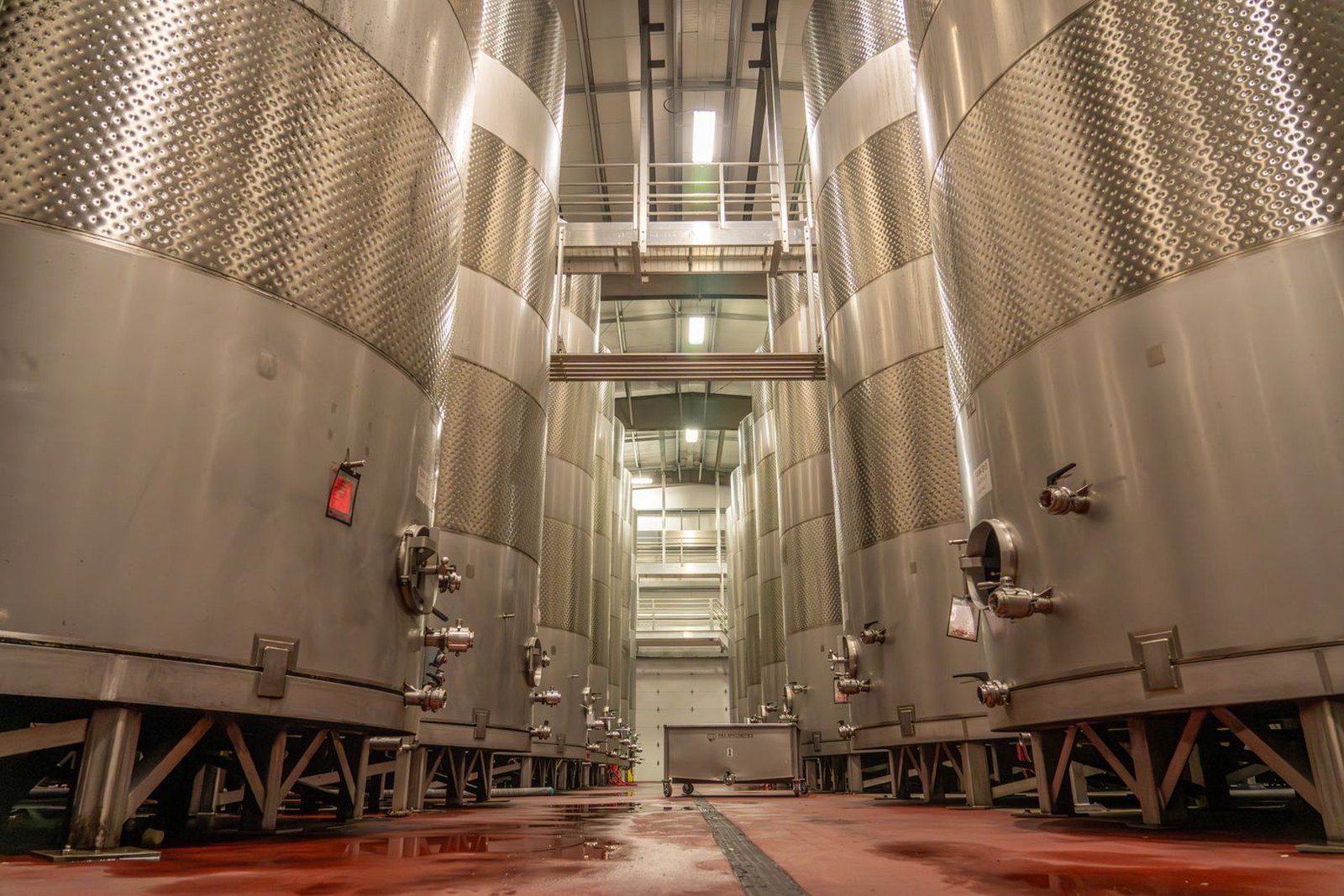
Stainless steel tank battery in a fermentation plant
Once aeration and agitation start in the fermenter, the foam inside climbs fast on the high foaming tendency of the molasses, the probe of the defoaming unit on the tank head trips again and again, the dissolved-oxygen reading swings widely under foam interference, and batch yield is anything but steady.
Chemi Tech has introduced the KM-833 series defoamer for the fermentation broth systems of microbial fermentation and industrial sugar refining; the dosage is set by the molasses brix, the fermentation temperature and the aeration rate. This grade is formulated specifically for water-based fermentation broth, knocking the foam down while staying gentle on the cells; the matching KM-833 dosage is set against the recorded correlation between in-tank foam height and the dissolved-oxygen reading.
Advantages of Chemi Tech Defoamers
The Chemi Tech KM-833 series defoamer is developed specifically for water-based fermentation broth: it breaks foam fast, so under aeration and agitation no foam layer builds up on the tank head; its foam suppression lasts long, covering the whole tank cycle with no top-up midway; it is gentle and friendly to cell growth and does not affect cell yield; its compatibility with molasses media is good, with no oil bleeding and no oil floating, so no extra burden lands on the downstream extraction stage.
Industry Pain Points and Solutions
The foam problem in fermentation broth has its root in the combined action of the foam-forming components in molasses and the continuous air entrainment from aeration and agitation, and it finally shows up as two big issues: foam building on the tank head and a swinging dissolved-oxygen reading.
The probe of the defoaming unit trips again and again because foam keeps piling up on the tank head, and heavy injection of defoaming water dilutes the broth in turn. The KM-833 dosage is set by the aeration rate, and it markedly cuts how often the defoaming unit fires.
Foam disturbs the gas-liquid exchange interface, so the dissolved-oxygen reading swings widely and the respiration rhythm of the cells is thrown off. KM-833 holds the foam layer down steadily and brings the dissolved-oxygen curve back to level.
The cost of defoamer sits alongside steam and make-up nutrients in production spending. Once the molasses brix, the fermentation temperature and the aeration rate have been compared, the dosage locks into a narrow, auditable band, and cost is brought under control.
Typical Operating Conditions and Verification
Customer: a yeast manufacturer in Guangxi, for a molasses-fed fermentation plant.
In peak fermentation season foam piled up fast on the tank head, heavy defoaming-water injection diluted the broth, and the final-tank concentration pressed close to its lower limit; the plant put defoaming and consumption reduction on its corrective list. After comparing molasses brix and aeration rate, the yeast plant chose KM-833 as its fermentation defoamer, with the dosage re-checked against the fermentation temperature. After it went in, foam no longer built up in layers on the tank head; the defoaming unit fired far less often and the final-tank concentration came back to its usual level; cell yield held steady and the spread between batches narrowed markedly.
Frequently Asked Questions
Fermentation strains are sensitive to additives — will a defoamer affect how the cells grow?
Adding a defoamer does not drag on cell growth, as long as the dosage sits inside the recommended range. KM-833 has completed cell-yield comparison tests on molasses media, and within the recommended range cell growth is steady. The actual dosage has to be set with the molasses brix, the fermentation temperature and the aeration rate taken together; Chemi Tech gives a recommended dosage based on a parallel comparison of in-tank foam height and the dissolved-oxygen reading.