
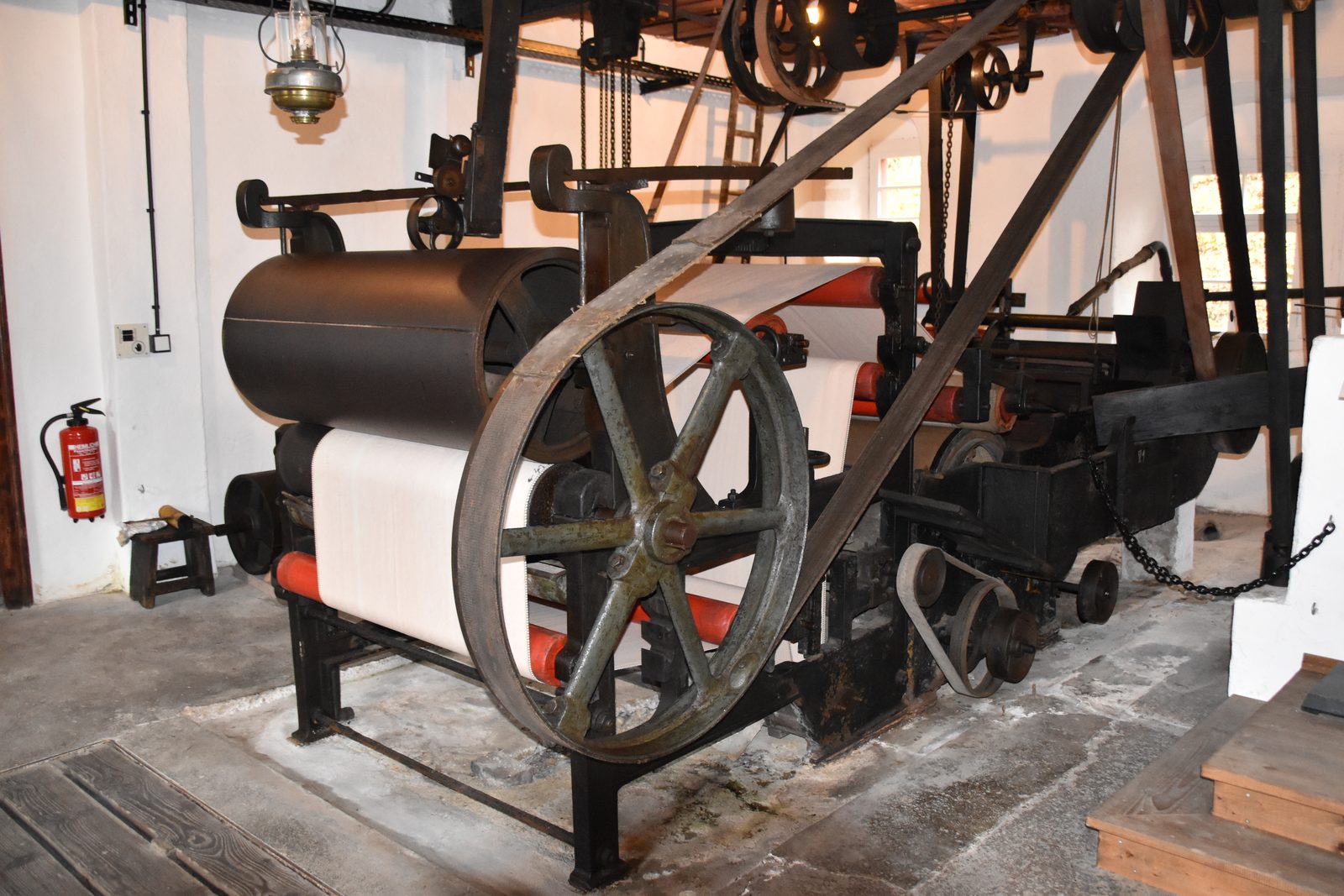
A paper machine roll and paper web on site
Once the white water of a paper machine's wire section is closed into circulation, dissolved fines and additives keep concentrating, the foam on both sides of the headbox nozzle thickens with it, foam spots appear on the surface of the finished sheet, and cross-direction basis-weight fluctuation grows with it.
Chemi Tech offers the KM-1003 series defoamer for papermill white-water circulation systems, with the dosage adjusted flexibly according to the white-water temperature and the wire section's machine speed. This grade is a silicon-free polymer system, acid- and alkali-resistant and heat-resistant, and its foam suppression lasts in hot, slightly alkaline white-water conditions. The measured data on wire-section foam height and finished-sheet foam-spot rate is the direct basis for setting the KM-1003 dosage.
Advantages of Chemi Tech Defoamers
Chemi Tech KM-1003 series defoamer is a silicon-free polymer system that does not produce silicon spots in closed white-water circulation; it is acid-resistant, alkali-resistant and heat-resistant, so its defoaming performance stays stable at high machine speeds in summer; it breaks foam quickly, so the foam in the headbox and the wire pit falls back fast within a short time; its foam suppression lasts, with no frequent topping-up needed throughout the white-water tower circulation; its compatibility with the stock system is excellent, with no effect on sizing or retention; and the dosage is economical, with controllable additive cost.
Industry Pain Points and Solutions
Foam problems in papermaking white water stem mostly from the combined effect of fines concentration and residue from rosin-size sizing agents, and they end up showing in two places: foam piling up in the wire section and foam spots on the finished sheet.
Foam returning with the white-water circulation gathers again and again at the edge of the headbox, and cross-direction basis weight fluctuates periodically with it. The KM-1003 dosage is set by the white-water alkalinity, and it can hold the wire-section foam layer steadily down.
Foam spots land on the surface of the finished sheet, and the defect rate in coating and printing rises with it. The silicon-free KM-1003 system produces no silicon spots and can effectively reduce foam spots in the finished sheet.
After white water is closed into circulation, the additive account per tonne of paper calls for finer reckoning. Factoring in the shifts in white-water temperature and alkalinity, the dosage range can be given in bands by machine speed, and the additive cost per tonne of paper narrows with it.
Typical Operating Conditions and Verification
Customer case: a cultural paper producer in Guangdong, for the wire-section white-water circulation stage of its high-speed paper machine.
After production was raised in summer, the white-water temperature rose, foam built up noticeably faster on both sides of the headbox, and foam spots on the finished sheet drove up the reject rate at the rewinder. Following comparison testing of wire-section foam height and finished-sheet foam-spot rate, Chemi Tech determined KM-1003 as the suitable grade for the mill's white-water system, with the dosage set dynamically to the white-water temperature. Once in use, the wire-section foam layer fell back below the baffle; foam spots on the finished sheet decreased reel after reel; the reject rate fell back to its normal band, and the additive account per tonne of paper narrowed with it.
Frequently Asked Questions
After the white-water system is closed into circulation, will the defoamer accumulate in the system?
Whether it accumulates has to be read from two clues together: the chemical structure of the defoaming components and the residence time of the white water. KM-1003 is a silicon-free polymer system and has completed continuous-operation measurement in closed white-water systems, with no effect on sizing performance within the recommended range. The actual dosage takes the white-water temperature and alkalinity as its baseline, with the wire-section machine speed determining the topping-up rhythm; Chemi Tech pins down the precise dosage through a parallel comparison of wire-section foam height and finished-sheet foam spots.