
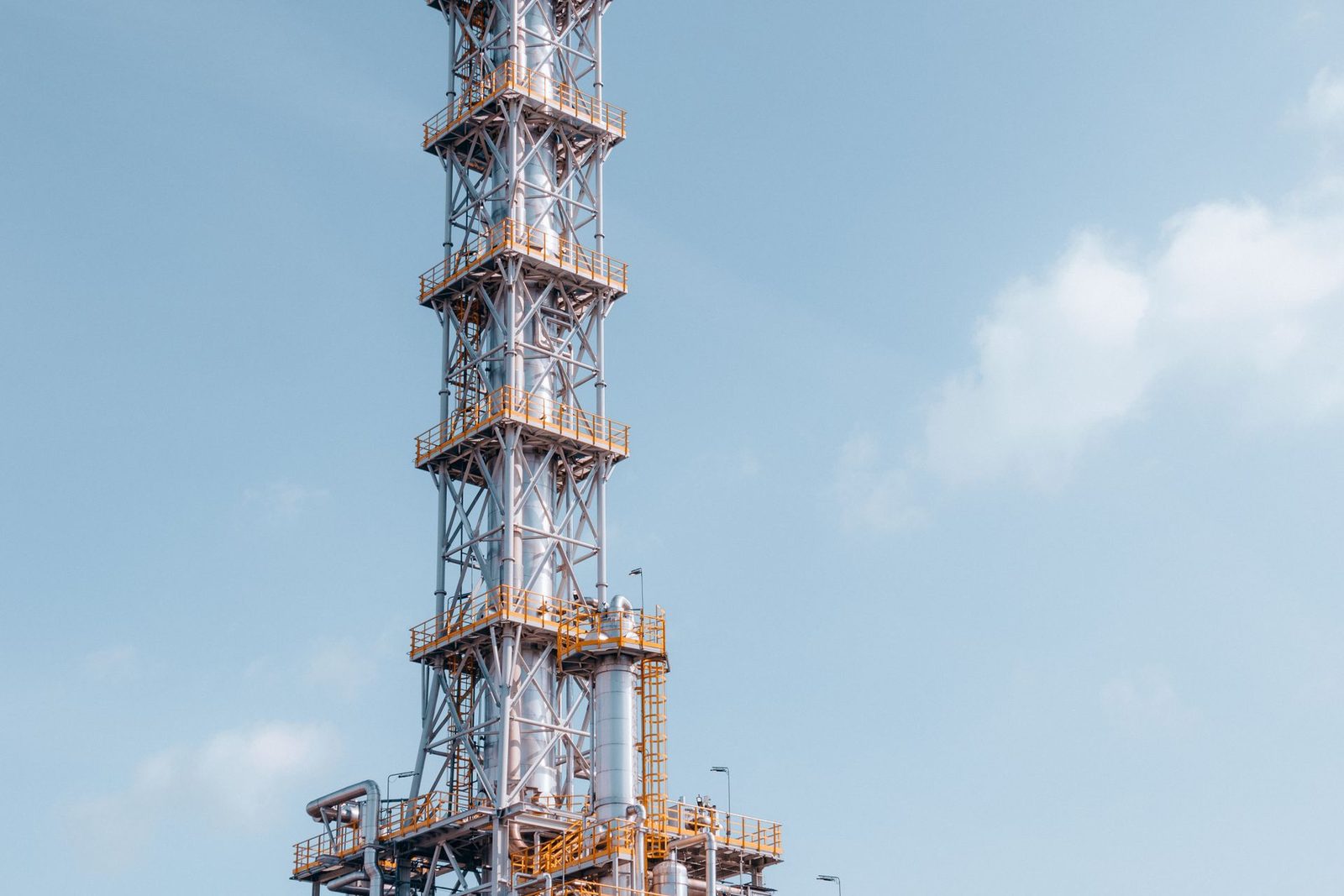
A petroleum refining tower and pipe rack on site
Once the coker feed is raised, the foam layer on the tower overhead piles up fast; coke fines ride upward with the oil vapour, wear on the slurry circulation pump at the bottom of the fractionator worsens with it, and the pressure-differential reading has to be watched by hand every shift.
Chemi Tech offers the KM-600 series defoamer for delayed coking and desulfurization units, with the dosage adjusted flexibly according to the feedstock carbon residue and the tower overhead temperature. The series is heat-resistant and oil-resistant, and its foam suppression lasts in the hot oil-vapour environment inside the tower; within the series, KM-660 suits the severe conditions of high feedstock acid value and high overhead temperature. Setting the measured tower-overhead foam-layer height alongside the pressure-differential reading gives the suitable KM-600 dosage.
Advantages of Chemi Tech Defoamers
Chemi Tech KM-600 series defoamer is built for the hot oil-vapour systems of delayed coking, atmospheric-vacuum distillation and desulfurization units. Its high-temperature stability is strong, so the defoaming components do not decompose under the hot conditions inside the tower; its oil-resistance is outstanding, with excellent compatibility with residue systems, no oil separation and no wall cling; its foam suppression lasts, keeping the foam-layer height controllable throughout and cutting the coke fines carried up with the oil vapour; it responds quickly, so the pressure differential falls back fast after it rises; and the dosage is economical, adjusted flexibly to the feedstock properties and the trend in foam-layer height, giving long-term control of the tower-overhead level.
Industry Pain Points and Solutions
Foam in a delayed coking unit stems mostly from the combined effect of fluctuating residue-feed properties and high-temperature flash inside the tower, and it shows up in two places: a rising overhead foam layer and a drifting pressure differential.
Once the overhead foam layer climbs, coke fines enter the fractionator with the oil vapour, and wear on the slurry circulation pump at the bottom worsens with it. The KM-600 dosage is set by the feedstock properties, and the foam-layer height can be held steadily below the trays.
A drifting pressure-differential reading leaves operators without a basis for judgement, and the operating flexibility of the fractionation system is squeezed with it. KM-660 resists acids and alkalis and withstands heat, and its foam-suppression capacity does not decay under high feedstock acid value.
Defoamer consumption is tied directly to long-run unit operation. Factoring in the shifts in feedstock carbon residue and the coke-forming cycle, the dosage can be pinned to an accountable range, cutting the unit's additive cost per tonne of oil directly.
Typical Operating Conditions and Verification
Customer: a local refinery in Shandong, for the coke tower and fractionation unit of its delayed coking plant.
After the unit was revamped for higher throughput, the overhead foam layer went over limit again and again, and coke-fines carry-over pushed up the pressure differential on the exchanger at the bottom of the fractionator, forcing the decoking cycle shorter. Following comparison testing of the overhead foam-layer height and the pressure-differential reading, the refinery settled on KM-610 as the dedicated defoamer for the coking unit, with the dosage set dynamically to the feed properties. Once in use, the tower level-gauge reading steadied; the pressure-differential curve stopped going over limit so often; the decoking cycle returned to its normal rhythm, and the unit's auxiliary man-hours fell noticeably.
Frequently Asked Questions
With the temperature inside the tower swinging widely, will the defoamer fail at high temperature?
Whether it fails comes down first to whether the defoaming components' temperature limit covers the actual temperature inside the tower. The KM-600 series has completed foam-suppression duration measurement under the hot conditions of coking towers, and within the recommended range its heat stability is strong. The actual dosage takes the feedstock carbon residue as its baseline, with the overhead temperature and the trend in foam-layer height set as corrections; Chemi Tech gives the suitable dosage through a parallel comparison of the overhead foam-layer height and the pressure-differential reading.