
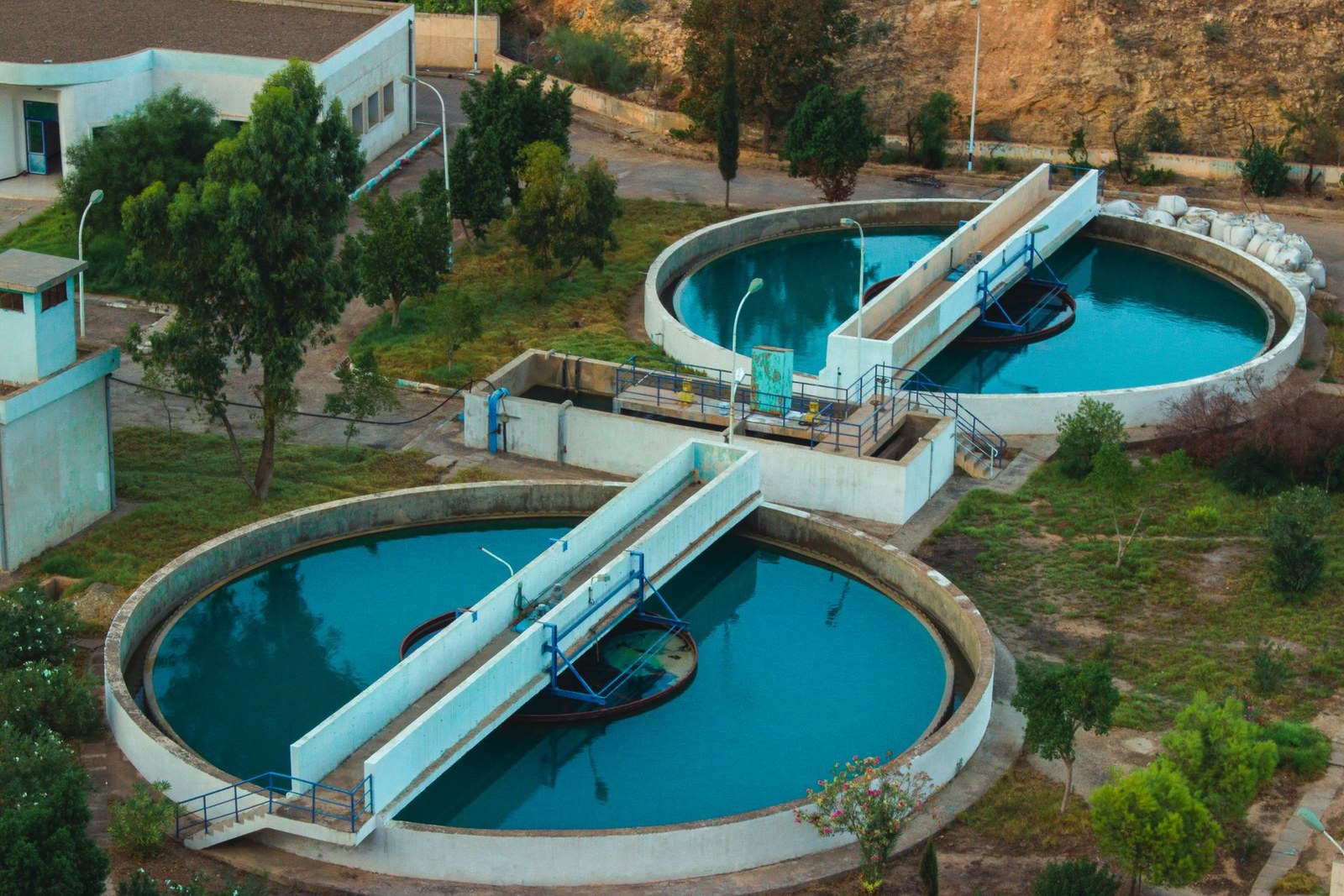
Aerial view of an aeration basin at a wastewater treatment plant
Once the influent load on an aerobic aeration basin rises, surface foam climbs the basin wall quickly, sludge carry-over into the secondary clarifier worsens with it, effluent suspended solids exceed the limit, and the pressure on the environmental compliance ledger builds month by month.
Chemi Tech has introduced the KM-1240 series defoamer for high-temperature anaerobic digesters and aerobic aeration basins, with the dosage adjusted flexibly according to sludge concentration and surface foam height. This grade is a silicon-free defoamer: it withstands high temperature and pressure as well as high alkalinity and high salinity, and its foam suppression holds up in aeration conditions where ammonia nitrogen runs high. Combined with measured data on surface foam height and effluent suspended solids, a precise KM-1240 series dosage can be given.
Advantages of Chemi Tech Defoamers
Chemi Tech KM-1240 series defoamer is configured for digester and aeration basin water treatment systems. The silicon-free composition introduces no silicone residue into the effluent system; it withstands high temperature and high alkalinity, so defoaming performance stays stable under summer peak loads; its foam suppression holds, the basin surface foam stays inside the limit throughout, and sludge loss is reduced; it breaks foam quickly, so under aeration agitation the foam can fall back within a single aeration cycle; and the dosage is economical — adjusted flexibly to sludge concentration and surface foam height, with effluent quality controllable and stable.
Industry Pain Points and Solutions
Foam in an aeration basin mostly arises from the combined action of influent surfactants and the air entrained by aeration blowers, and the consequences land in two places: surface foam overflowing the wall and sludge carry-over into the secondary clarifier.
Once the surface foam overflows, sludge deposits build up around the walkway and the basin wall, and the hours spent on manual cleanup keep rising. The KM-1240 dosage is set by sludge concentration, and the surface foam can be held steadily below the retaining kerb.
Sludge carry-over into the secondary clarifier pushes effluent suspended solids over the limit, and the discharge indicators swing repeatedly around the warning line. KM-1240 withstands high alkalinity and high temperature, and its foam suppression does not decay under conditions where ammonia nitrogen runs high.
Water quality swings at the wastewater plant ultimately convert into discharge exceedance risk and chemical top-up cost. By tying the dosage to sludge concentration and influent load, it can be locked into a narrow range, and the treatment cost per tonne of water narrows with it.
Typical Operating Conditions and Verification
Customer case: a wastewater treatment plant in an industrial park in Zhejiang, for the biochemical treatment stage of the aerobic aeration basin.
After the influent load rose, the aeration basin foam overflowed repeatedly, sludge carry-over into the secondary clarifier caused effluent suspended solids to exceed the limit again and again, and the environmental compliance ledger faced the pressure of rectification. After a comparison test on surface foam height and effluent suspended solids, the plant adopted KM-1240 as the dedicated defoamer for the aeration basin, with the dosage set by sludge concentration. After the change, surface foam fell back below the retaining kerb; sludge carry-over into the secondary clarifier dropped noticeably; effluent suspended solids met the standard steadily, and the discharge exceedance risk was cleared.
Frequently Asked Questions
Under high-alkalinity, high-salinity aeration conditions, will the foam suppression time of a silicon-free defoamer be discounted?
It depends on whether the alkalinity and sludge concentration of the aeration basin fall inside the range the silicon-free system handles. KM-1240 has completed continuous-operation trials in aeration conditions where ammonia nitrogen runs high, and within the recommended range foam suppression performs steadily. The actual dosage is set by sludge concentration and influent load as the baseline, with surface foam height as a correction; Chemi Tech pins the suitable range down through a parallel comparison of surface foam height and effluent suspended solids.