
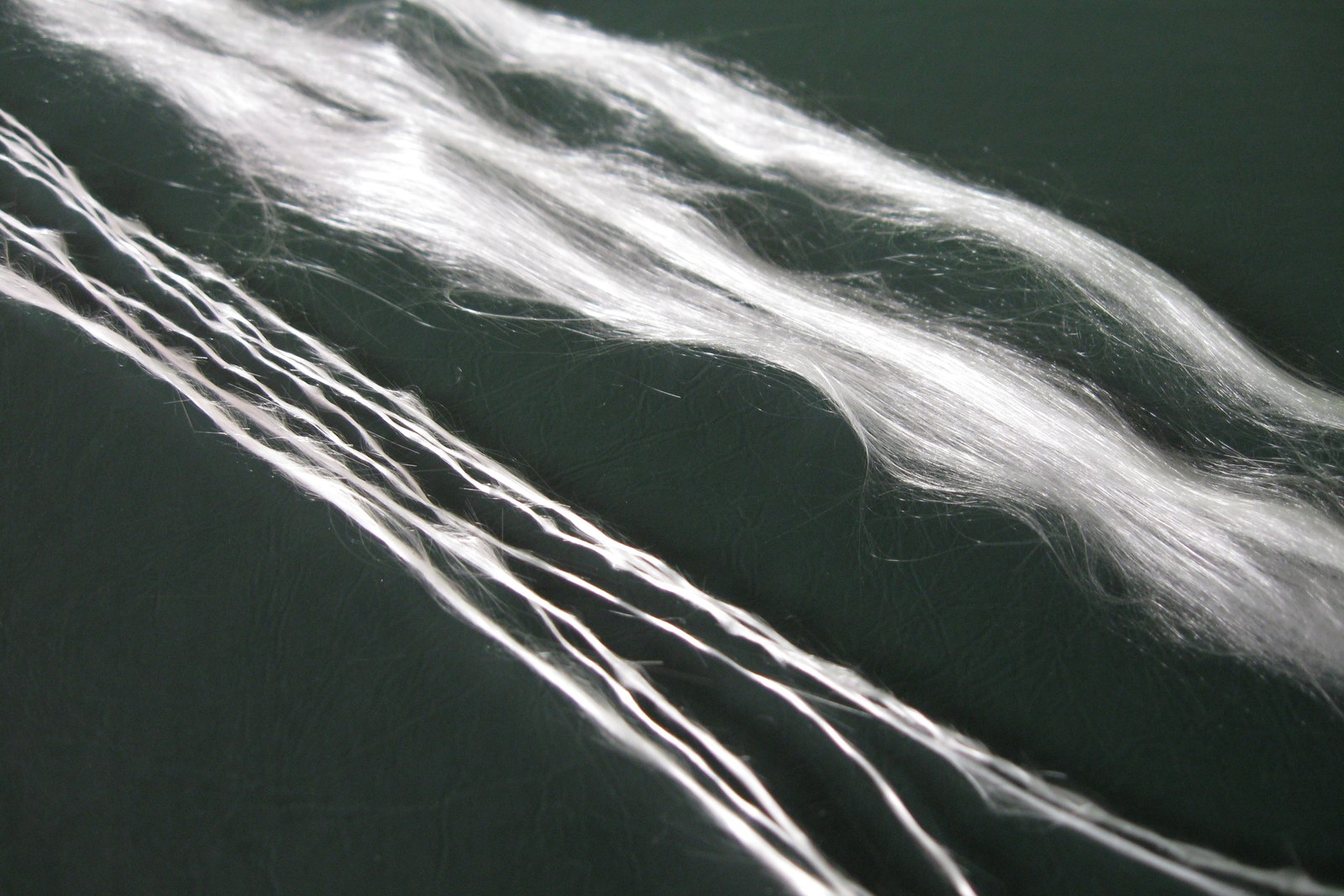
Close-up of glass fibre strands wound into a package
Once the number of bushing positions on the drawing line goes up, foam in the sizing circulation trough keeps piling higher with the return flow of the liquor, the strands are sized unevenly, filament breaks appear frequently in the winding section, and the drawing stability of each machine position drifts down with them.
Chemi Tech has introduced the KM-430 series defoamer for glass fibre drawing and sizing circulation systems, with the dosage adjusted flexibly according to the number of bushing positions and the trough liquor level. This grade resists shear and high temperature: in a high-shear sizing system the structure of the defoaming components stays intact and its foam suppression holds. Combined with measured data on trough foam height and filament break counts, a suitable KM-430 series dosage can be determined.
Advantages of Chemi Tech Defoamers
Chemi Tech KM-430 series defoamer is configured for glass fibre drawing systems. Shear resistance is pronounced — under high-shear circulation the defoaming components do not break up; high-temperature stability is strong, and foam suppression holds under conditions where the sizing agent heats up; compatibility with the sizing agent is excellent — no oil separation and no skinning, with no effect on strand sizing; it breaks foam quickly, and trough foam can fall back within a single circulation cycle; and the dosage is economical — adjusted flexibly to the number of bushing positions and the trough liquor level, with the trough level controllable and stable over the long run.
Industry Pain Points and Solutions
Foam in glass fibre drawing mostly arises from the combined action of sizing circulation shear and the return flow of the liquor, and the consequences land in two places: foam piling up in the trough and a rising filament break rate.
Once the foam layer in the circulation trough piles up, the foam is carried into the strands along with the sizing agent, and the continuity of sizing suffers with it. The KM-430 dosage is set by the number of bushing positions, and the trough foam can be held steadily below the overflow outlet.
Filament breaks appear concentrated in the winding section, and the downtime for head changes on each machine position rises with them. KM-430 resists shear and high temperature, and its foam suppression does not decay under conditions where drawing speed is raised.
In a drawing workshop's additives ledger, the downtime loss caused by filament breaks far exceeds the additives themselves. By tying the dosage to changes in the trough liquor level and the number of bushing positions, it can be locked into a narrow range, directly pulling down the overall cost per tonne of fibre.
Typical Operating Conditions and Verification
Customer case: a glass fibre manufacturer in Jiangsu, for the sizing circulation trough stage in the drawing workshop.
After the number of bushing positions was expanded, foam in the circulation trough piled up noticeably faster, uneven strand sizing pushed the filament break rate up, and the frequency of head-change downtime in the winding section rose significantly. After a comparison test on trough foam height and filament break counts, the plant adopted KM-430 as the dedicated defoamer for the sizing system, with the dosage set by the number of bushing positions. After the change, trough foam fell back below the overflow outlet; filament break counts fell position by position; the frequency of downtime in the winding section returned to its normal rhythm, and the effective machine hours per position recovered along with it.
Frequently Asked Questions
Once drawing speed is raised, will the defoamer fail under high shear?
First look at whether the defoaming components can stay structurally intact through high-shear circulation. KM-430 has completed shear and foam-suppression trials on multi-position drawing conditions, and within the recommended range shear resistance performs steadily. The actual dosage is set by the number of bushing positions and the trough liquor level as the baseline, with the trough temperature as a correction; Chemi Tech gives the suitable dosage through a parallel comparison of trough foam height and filament break counts.