
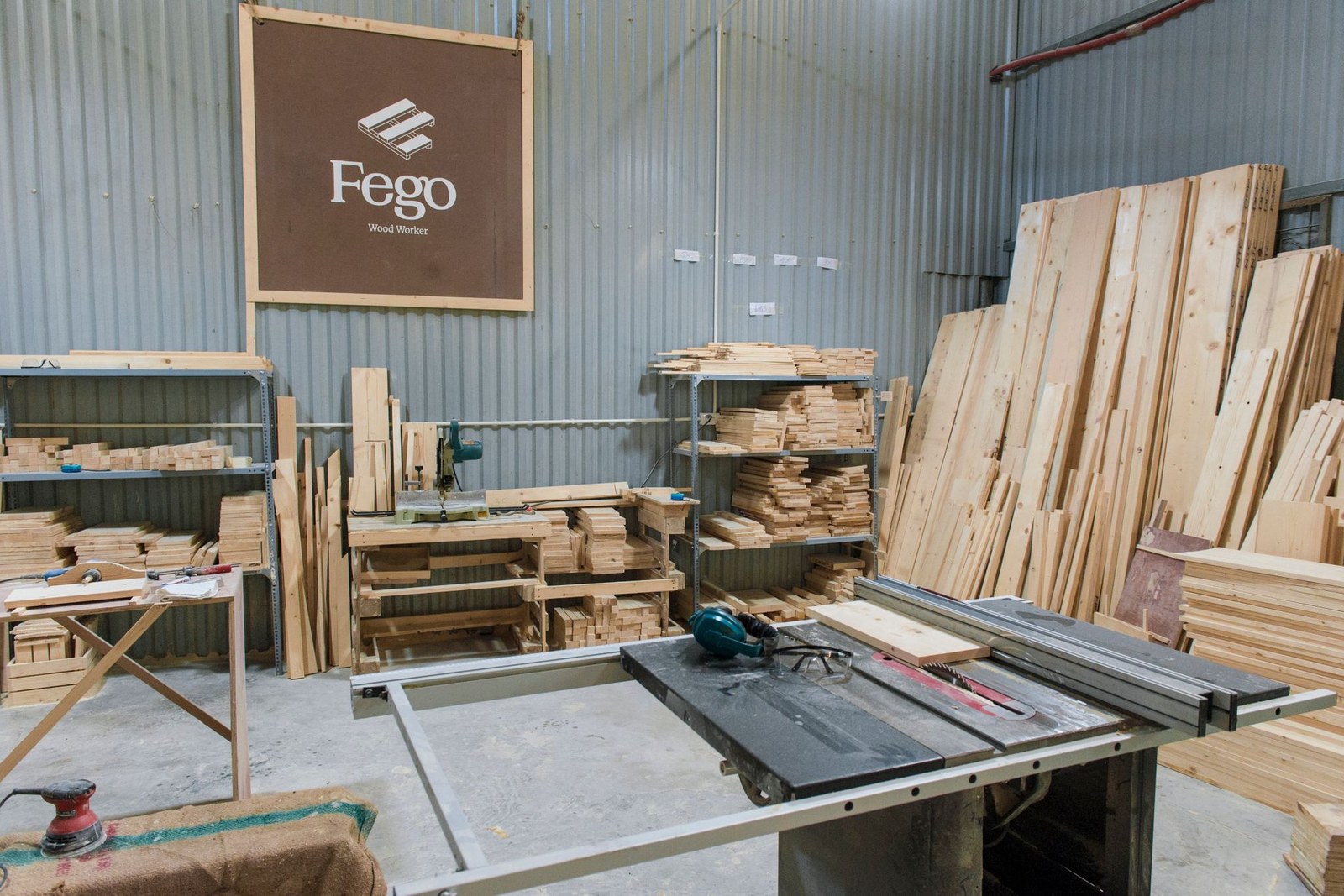
Table saw and stacked boards inside a woodworking workshop
Once the topcoat spray line in a woodworking shop picks up speed, the paint spread can no longer keep pace with the surface-dry rhythm, orange peel reappears piece after piece, the board ripple is clearly visible under side light, and the number of rework batches rises with it.
Chemi Tech has introduced the KMP-4105 series leveling agent for wood door and woodware topcoat spraying, with the dosage adjusted flexibly according to the paint solids content and the spray line speed. This grade is a waterborne leveling agent: surface tension reduction is pronounced, and the leveling window of the topcoat opens up with it. Combined with measured data on board orange peel grade and gloss reading, a suitable KMP-4105 scheme can be determined.
Advantages of Chemi Tech Leveling Agents
Chemi Tech KMP-4105 series leveling agent is developed for woodware coating spray systems. Surface tension reduction is pronounced, the paint spreads fully across the board surface, and orange peel flattens out progressively; compatibility is excellent — no cratering is induced, and intercoat adhesion and recoatability are unaffected; the effect on gloss is small, and the topcoat gloss reading does not swing with additive dosage; it dries fast, the film surface-dry rhythm stays stable, and the spray cadence is unaffected; and the dosage adjusts flexibly to the paint solids content, so both primer and topcoat can be matched.
Industry Pain Points and Solutions
Leveling problems in woodware topcoat arise mostly from the combined action of spray atomization shear and a mismatch of paint surface tension, and the consequences are concentrated in two places: repeated orange peel and a drop in gloss grade.
Orange peel is replicated piece after piece along the spray path, and downgrade decisions rise along with the orange peel grade. The KMP-4105 dosage is pinned down by spray line speed, and the board orange peel grade can be effectively pressed down.
A drop in gloss grade directly lowers the visual class of the finished product, and the points deducted at customer inspection land on the board surface. KMP-4105 affects gloss little and guards the lower limit for the topcoat's mirror finish.
Rework batches occupy spray line hours and slow the delivery rhythm of the whole workshop. By tying the dosage to changes in paint solids content and spray line speed, a dosage range can be defined, keeping the board surface passing on the first run out of the drying room.
Typical Operating Conditions and Verification
Customer case: a wood door manufacturer in Guangdong, for the topcoat spray stage of wood doors.
After the line was rebuilt for higher speed, the topcoat orange peel grade rose noticeably, the ripples joined across the surface under side-light inspection, and rework batches climbed with them. After a comparison test on board orange peel grade and gloss reading, the wood door plant adopted KMP-4105 as its topcoat leveling agent, with the dosage pinned down by spray line speed. After the change, the orange peel grade fell back to the pass band; the gloss reading stayed stable; rework batches fell noticeably, and the spray line delivery rhythm returned to normal.
Frequently Asked Questions
Once the spray line is sped up and the leveling window narrows, does the dosage have to be raised along with it?
First work out just how much the faster spray has widened the surface-dry window. KMP-4105 has completed orange peel and gloss comparison tests across several line-speed bands, and within the recommended range leveling performs stably and controllably. The actual dosage takes paint solids content and spray line speed as the baseline, then weighs the drying curve in as well; Chemi Tech gives a suitable scheme through a parallel comparison of board orange peel grade and gloss reading.