
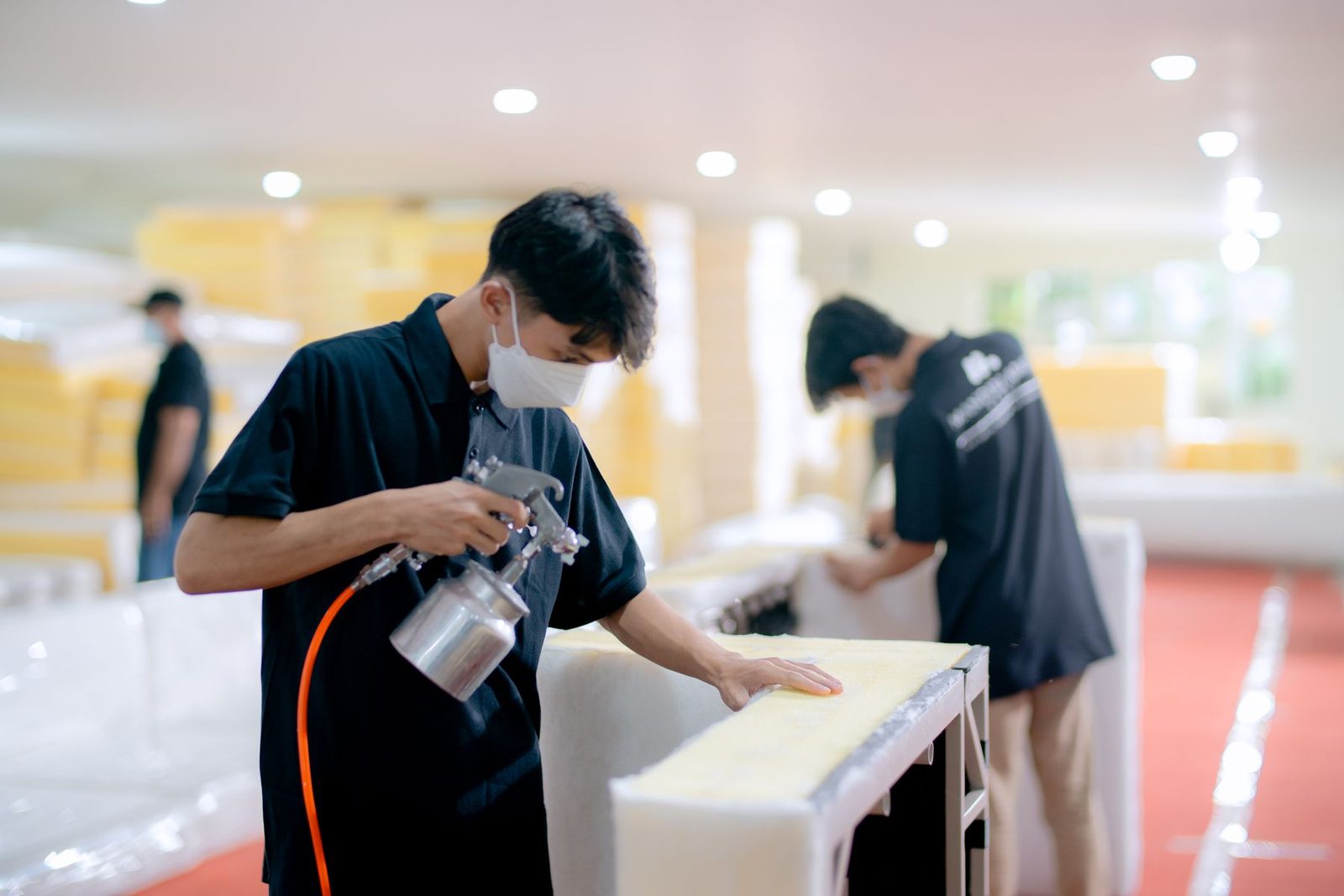
On the waterborne coating line for home-appliance shells, the wet film has no time to level within the flash-off window; orange peel and edge craters appear on the same batch of workpieces, and rework-polishing hours and topcoat rework rate climb together.
Chemi Tech offers the KMP-4510 series leveling agent for waterborne coating systems on appliance plastic parts; the dosage can be adjusted flexibly according to spray passes and wet-film thickness. This grade is a waterborne-system leveling agent that markedly lowers dynamic surface tension so the wet film spreads fully within the flash-off window. Combined with measured orange-peel grade and gloss readings, the suitable range of the KMP-4510 series can be locked in.
Advantages of Chemi Tech Leveling Agent
Chemi Tech's KMP-4510 series leveling agent is configured for plastic-part waterborne coating systems. It lowers surface tension markedly, giving full dynamic spread during spraying and narrowing panel ripple; compatibility is excellent, pairing with the waterborne resin system without craters or fish eyes; recoat adaptability is good, with interlayer adhesion at wet-on-wet interfaces unaffected; the leveling window is wide, retaining spread ability on lines with shortened flash-off; distinctness of image improves, with gloss readings tending to consistency; the dosage is economical, graded by spray passes, and rework-polishing hours fall.
Industry Pain Points and Solutions
The leveling problem in plastic-part waterborne coating mostly stems from the combined effect of substrate wetting differences and flash-off acceleration, ultimately concentrating in two places: high orange-peel grade and edge craters.
The wet film's spread time within the leveling window is compressed, orange peel sets in workpiece by workpiece, and the ripple under raking light is hard to hide. The dosage of KMP-4510, graded by spray passes, lets the wet film complete spreading before flash-off.
At the edges and stiffeners of plastic parts, the surface-tension difference easily induces craters and insufficient film thickness, leaving marks even after polishing. KMP-4510's excellent compatibility suppresses craters and edge marks right at the spray stage.
Rework and polishing hours ultimately convert into the per-shell coating cost. Combined with changes in spray passes and wet film thickness, the dosage can be narrowed to an accountable range, directly lowering rework loss.
Typical Conditions and Verification
Customer case: a home-appliance parts enterprise in Guangdong, applied to the waterborne colour-spray line for plastic shells.
Spray parameters were tuned once to the beat, but orange-peel improvement was limited; after shortening the flash-off, edge craters appeared. The line's leveling agent was set to KMP-4510, with the dosage graded by spray passes and wet-film thickness. After replacement, the panel showed: orange-peel grade fell back; edge craters disappeared; gloss readings tended to consistency, and rework-polishing hours dropped.
FAQ
With flash-off pushed to its shortest, how much spread headroom does the leveling agent still have?
It depends on whether the leveling agent can maintain dynamic spread within the shortened window. KMP-4510 has completed comparative trials of orange-peel grade and interlayer adhesion on fast-flash-off waterborne coating conditions; within the recommended range spreading is sufficient and no edge marks appear at recoat interfaces. The actual dosage is based on spray passes, with wet-film thickness and flash-off time as corrections; Chemi Tech locks the suitable range by comparing orange-peel grade against gloss readings.