
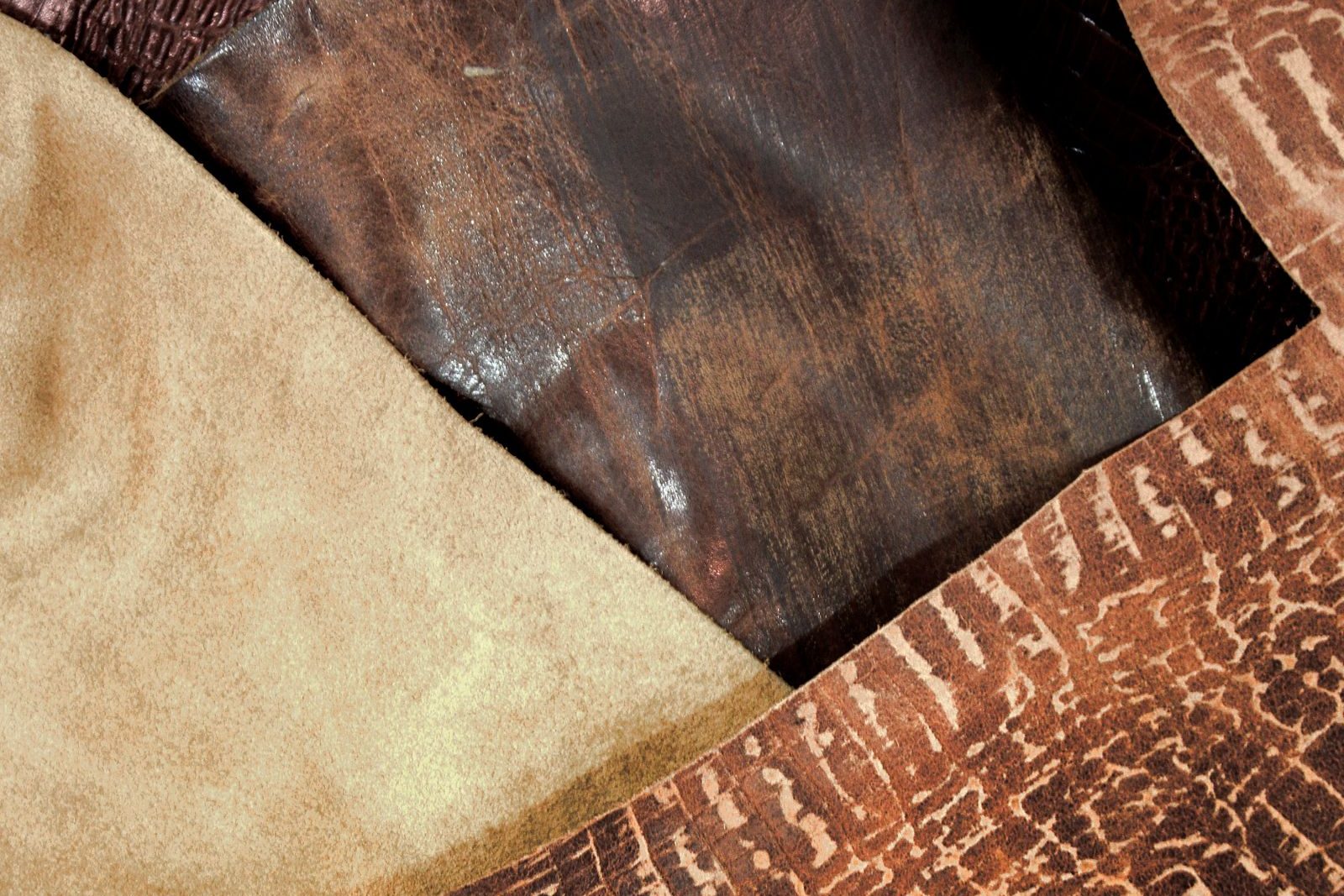
A real-shot of leather goods and vegetable-tanned hides.
Once the softening step for shoe-upper and bag leather runs oil-heavy, the gaps between grain-surface fibers reopen, moisture seeps in along the grain, wet marks in the rain test and repellency loss after flexing appear one after another, and finished-leather grading and order delivery come under pressure together.
Chemi Tech builds the KMF-4101 series waterproofing agent for water-repellent finishing of leather goods, with dosage adjustable to crust thickness and finishing concentration. This grade is a leather waterproofing agent: it forms a continuous repellent film over the grain surface and fiber gaps, the film stays intact after softening oils, and the hand does not stiffen. Against measured data of rain rating and flex testing, the suitable plan for the KMF-4101 series can be adjusted.
Chemi Tech Waterproofing Agent Advantages
The KMF-4101 series waterproofing agent from Chemi Tech is configured for leather repellency finishing systems. Film formation is continuous, fully covering the grain surface and fiber gaps, so water beads roll off without penetrating; flex resistance stands out, the film does not crack after flexing and the repellency rating holds; compatibility with fatliquors is good, and the softening step does not strip the repellent film; the hand stays natural, with the leather surface neither stiff nor boardy after finishing; adhesion to the finishing coat is good, and repellency does not discount after topcoating; and dosage is economical, set against crust thickness, directly benefiting the repellency grade in finished-leather sorting.
Industry Pain Points and Solutions
The repellency problem in leather, at root, comes from the trade-off between softening oils and film continuity, finally concentrating in two places: rain-test wet marks and rating decline after flexing.
After the crust is softened, fiber gaps reopen and rain-test wet marks spread from the seams. With KMF-4101 dosage set against crust thickness, the repellent film can cover the reopened gaps.
Flexing and kneading breach first the surfaces whose film is discontinuous, and the spray rating slips grade by grade. KMF-4101's flex resistance keeps the repellency rating in the passing grade even after the flex test.
Downgrades on the repellency item finally land on finished-leather sorting and order acceptance. Against changes in crust thickness and finishing concentration, the dosage can be narrowed to an accountable band, directly cutting downgrade losses.
Typical Duty Cases and Verification
Customer case: a tannery in Hebei, applied in the retanning, fatliquoring and repellency finishing section for shoe-upper leather.
After the crust was softened, rain-test wet marks spread from the seams. The spray rating dropped two grades after the flex test. The fitting points then became clear: finishing bath concentration was set against crust thickness, KMF-4101 served as the repellent finishing agent, and both spraying and immersion routes fitted. Afterward, rain-test wet marks disappeared; the spray rating after flexing held in the passing grade; and the repellency item no longer dragged in finished-leather sorting.
Frequently Asked Questions
Leather export orders are often accepted on the repellency rating after flexing. What should be watched during finishing?
Start by checking whether the repellent film stays continuous after flexing. KMF-4101 has completed comparative measurement of rain rating and flex testing on shoe-upper leather; within the recommended range the film does not crack under kneading and the hand stays natural. Actual dosage is set on crust thickness as the baseline, corrected for finishing concentration and the fatliquoring system; Chemi Tech adjusts the suitable plan through parallel comparison of spray rating and post-flex repellency retention.