
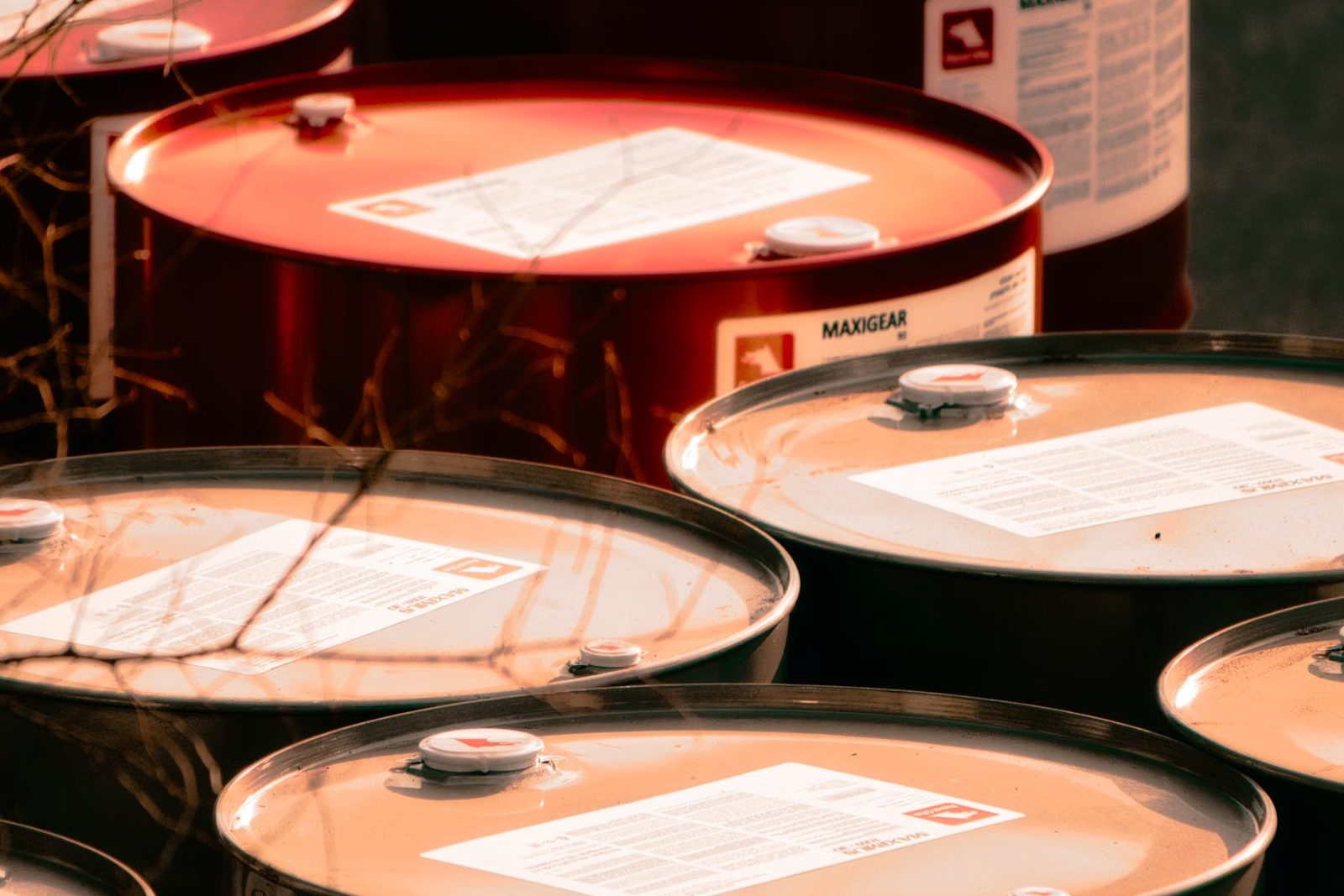
Steel paint pails standing in groups, with seals on the lids
The topcoat of coil coating levels poorly on the roll-coating line: the wet film has already surface-dried before it can spread, orange peel and roller marks surface on the panel, coverage at the edges becomes thin, and topcoat rework pins the coating shift's on-duty plan down at the roll-coating step.
Chemi Tech supplies the KMP-3602 series of levelling agents for coil-coating enterprises; the dosage is adjusted flexibly by wet-film thickness, roll speed and drying-tunnel temperature. This grade markedly lowers the dynamic surface tension, letting the wet film spread fully after roll coating; its compatibility is excellent and causes no craters, while leaving margin at the recoat interface. The measured results of the orange-peel grade on the panel surface and the cross-cut adhesion grade are filed into the same test-coil record, and the fitted dosage of the KMP-3602 series is settled at that grade of that line; the specific dosage is checked only after the roll speed and film-thickness grades are set.
Advantages of Chemi Tech Levelling Agents
The Chemi Tech KMP-3602 series levelling agent is configured for the roll-coating levelling of coil topcoat. It lowers the dynamic surface tension and lets the wet film spread fully within the flash-off window; the orange-peel grade on the panel surface rises and the roller marks become shallower in step; coverage at the edges is even and edge retraction basically no longer occurs; its compatibility is excellent, causing neither craters nor impairment of interlayer adhesion; it leaves margin for recoatability, keeping the interface of the two-pass coating stable; and its thermal stability is strong, with no decomposition or yellowing in the drying-tunnel section and little effect on gloss.
Industry Pain Points and Solutions
The root of orange peel in coil topcoat roll coating lies mostly in the combined effect of a too-short flash-off window and a too-steep surface-tension gradient in the wet film, while a rising roll speed compresses the spreading time further, finally concentrating in two places: orange peel on the panel surface and edge retraction at the corners.
Once the roll speed is raised, the wet film has no time to spread within the flash-off window and the orange peel sets first. KMP-3602 markedly lowers the dynamic surface tension; once the tempo and the drying temperature are set, its dosage is re-rated by the application speed of that line, and the orange-peel grade on the panel surface rises one notch.
When the wet film is set thicker, the tension gradient at the panel edge amplifies, edge retraction follows and film thickness at the corners falls in step. KMP-3602 performs stably across thick-film and thin-film grades; with wet films of eighty microns and one hundred and twenty microns compared side by side, the retraction width narrows from three millimetres to half a millimetre, and the dosage is graded accordingly.
The interlayer interface between topcoat and primer is the most easily disturbed. The KMP-3602 series leaves margin for recoatability and adds no extra sanding step on this item; once roll speed, film thickness and drying temperature are all checked through, the dosage of the coil line is graded and the roll-coating position executes at that grade.
Typical Operating Conditions and Verification
Customer case: the topcoat roll-coating workshop of a colour-coated steel coil enterprise in Hebei, applied to the roll-coating levelling stage of steel-sheet topcoat.
At this plant the orange peel on the panel surface of the topcoat roll coating varied from slight to severe on the same coil, edge retraction was more pronounced on the high-roll-speed batches, and the cross-cut result of the two-pass coating passed only at the thin-film grade. Based on comparison of roll speed and wet-film thickness, the plant listed KMP-3602 as the levelling solution for that line, with the dosage rated by drying-tunnel temperature and film thickness. Measured performance after the switch: the orange-peel grade on the panel surface rose one notch; edge retraction at the corners basically no longer occurred; the cross-cut result of the two-pass coating passed stably; the count of rework coils fell back, and the coating shift completed its on-duty plan to the original schedule.
Frequently Asked Questions
When a levelling agent is added to coil topcoat, will raising the dosage cause craters or impair interlayer adhesion?
It depends on whether the three readings of roll speed, wet-film thickness and drying temperature fall within the assessed range of that line. The KMP-3602 series has excellent compatibility and causes no craters at normal dosage, leaving margin at the recoat interface; the measured data on orange-peel grade and cross-cut result are checked out by Chemi Tech from the test-panel records of the same coil line, and within the above comparison range they do not weaken interlayer adhesion. The actual dosage is further calibrated by the roll-coating tempo and film thickness; Chemi Tech checks the test-panel results against the on-site records and gives the fitted dosage.