
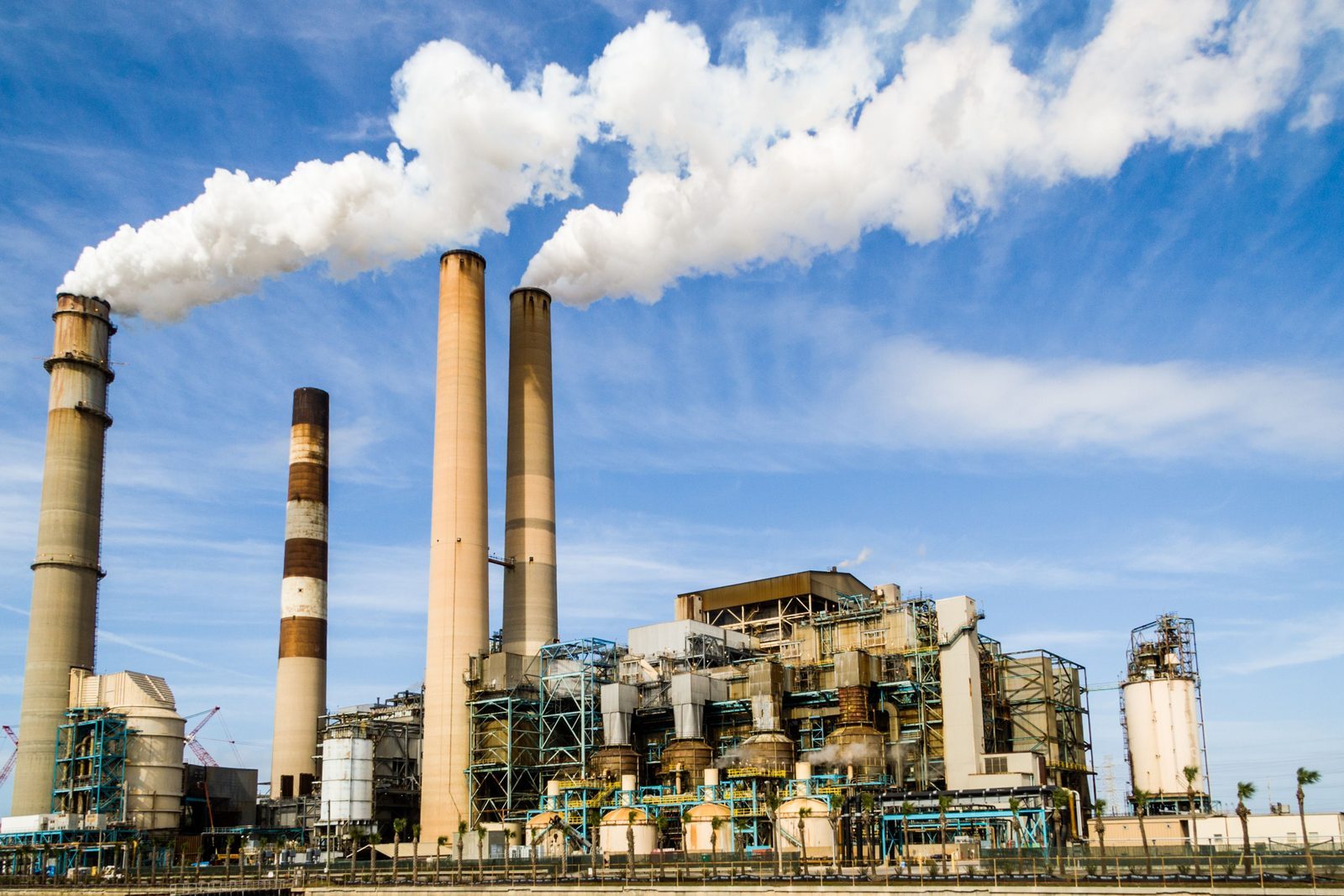
Distant view of towers and stacks at a refining and petrochemical plant, pipe racks in rows
Once the differential pressure of the desulfurisation tower climbs, the circulation rate has to follow it up while the absorption still falls away, the extra power consumed by the lean liquid pump is visible on the bill, and by the time the pressure reaches its ceiling the whole unit can only cut load.
Chemi Tech makes defoamers for delayed coking, atmospheric and vacuum distillation and desulfurisation units, taken from the defoamer KM-680 series. Which grade is added depends on the properties of the feed oil, the tower temperature and the trend of the foam layer height. KM-6588 was built in the direction of acid, alkali and high temperature resistance, so where the feed acid value is high and the tower overhead temperature cannot be held down it is the steadier choice; the polyether-modified silicone KMT-4610 has good water affinity, is compatible and does not separate, so units with a high risk of fouling in the tower find it easier to run. Report the tower process parameters and the feed oil analysis and we will settle it against the operating condition for you, saving you one round of trial and error after another.
Advantages of Chemi Tech Defoamers
The Chemi Tech defoamer KM-680 series holds steady in the desulfurisation liquid and does not react with the amine solution, so absorption efficiency is not dragged down with it. It also defoams fast: dosed at the first sign of the pressure lifting, the foam layer settles back quickly and an operating window is left open. It withstands high temperature and acid and alkali as well, so it does not lose effect when the tower bottom temperature swings. Its dosage is low, too, with the overhead injection set as a small proportion of the lean liquid circulation, so unit running cost does not rise. On top of that it does not interfere with downstream sulphur recovery, and the tail gas figures need not be feared to drift.
A note from Chemi Tech: the behaviour above comes from a typical coking desulfurisation unit condition. Change the feed oil properties or the tower operating temperature and the results move. Confirm on a small sample before putting it into service.
Industry Pain Points and Solutions
Foam in a desulfurisation tower never makes it into the alarm log; it shows only on the differential pressure gauge and the pump current, and by the time it is noticed it is usually late.
The first thing exposed is foam entrainment plastering the packing. Foam travels up with the gas phase, amine liquid is carried away, the packing layer fouls day by day, and once the pressure has risen far enough there is nothing for it but to shut down and wash. Chemi Tech moves the injection point from the overhead line to upstream of the foam layer and fits an atomising nozzle so the additive spreads out.
What comes next is a dosing rhythm that does not track load. Raise the unit throughput and the foam generation in the tower changes with it, so a constant injection is either not enough or simply wasted. Chemi Tech suggests linking the injection rate to the throughput and dosing in steps rather than running one number to the end.
One further point is the amine regeneration side being dragged in: with the overhead defoamer poorly matched, it travels with the gas phase into the regeneration system and the foaming simply breaks out somewhere else. Chemi Tech's approach is to fold the additive compatibility of the two systems into a single round of validation.
These we take over as one package: the high-temperature foaming comparison on the oil sample is run first, the injection point is fixed, the staged injection rates are settled, and two more lines on the operating card are all it takes to execute.
Typical Conditions and Verification
Customer: a local refinery in Liaoning, applying it to the desulfurisation unit of a delayed coking plant.
This plant runs a relatively heavy feed, the differential pressure of the desulfurisation tower had risen over two months to the point of shutting down to wash the packing, the amine liquid loss ran high, and the load on the sulphur recovery unit was unstable with it. The solution offered by Chemi Tech defoamers was: against the feed oil analysis and the tower operating temperature, KM-6588 was selected from the KM-680 series, the injection point was moved from the overhead line to upstream of the foam layer, and the injection rate was set in three steps against throughput. After the change the differential pressure stayed in the normal band, the packing cleaning cycle stretched from two months to ten, the amine make-up rate came down, and the sulphur recovery unit ran stably. The differential pressure log in the control room is now used only to check the trend.
Frequently Asked Questions
Will adding a defoamer to the amine system affect desulfurisation efficiency?
Cases where it does exist: some types press the foam down and the gas-liquid contact area drops with it, so the desulfurisation rate falls away. Chemi Tech's water-based defoamers have been compared on lean liquid absorption, and at normal injection rates the desulfurisation efficiency did not drop. Give the feed oil properties, the tower operating temperature and the amine concentration to the Chemi Tech technical department, and we will run a round of high-temperature foaming comparison for you and sync with the unit side once the results are out.