
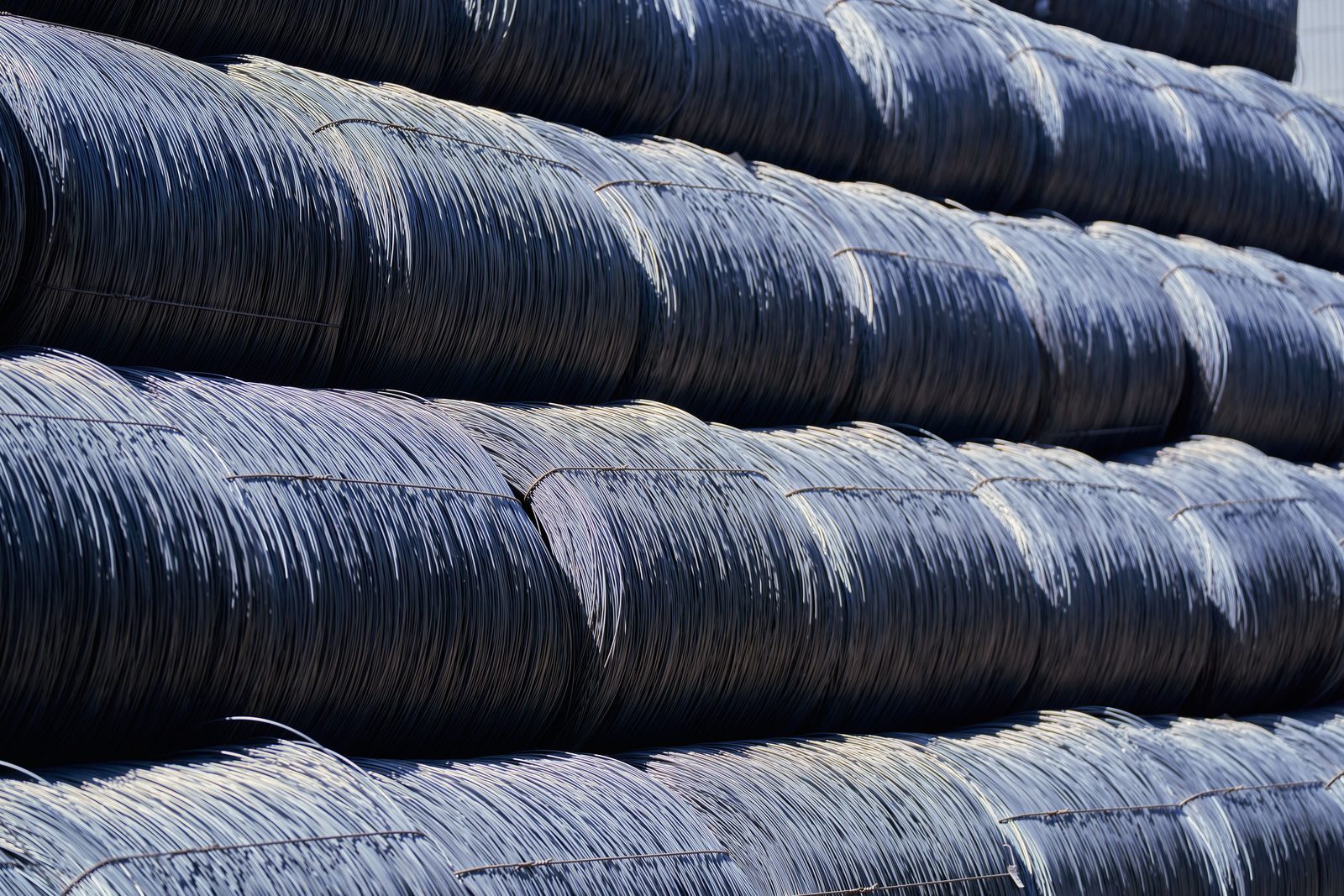
Metal strip coils stacked in rows, the surface texture clearly defined
Raise the coil line speed and the orange peel on the panel gets heavier with it, the flow-out window of the coating is squeezed until there is no room left, the texture sets once the panel cools, and the customer rejects it after one look through a magnifier.
Chemi Tech makes leveling agents for colour-coated steel, aluminium coil and coil coating systems, taken from the leveling agent KMP-4500 series. Which grade is added depends on whether the coating system is water-based or solvent-borne, how fast the line runs, and whether an embossing step follows. In water-based systems KMP-4500 lowers surface tension noticeably and holds dynamic surface tension down as well, so the flow-out window on a coil line can be opened up; in solvent-borne systems, or where intercoat adhesion is more sensitive, the polyacrylate counterpart KMT-458 is the closer fit, since it does not cloud in clearcoat or show haze on pigmented coats. Send over the coating system and the line speed, and we will settle the dosage and the point of addition for you, with recommended process parameters.
Advantages of Chemi Tech Leveling Agents
The Chemi Tech leveling agent KMP-4500 series lowers surface tension noticeably, so even with the coil line speed pushed high the panel still spreads out properly. Its compatibility is good as well: added in, it does not cause craters and does not affect intercoat adhesion, so downstream embossing and laminating keep pace. The effect on gloss is small, too, so a clearcoat system stays bright after addition and a pigmented coat shows no haze. Its heat stability is adequate as well, so it does not decompose or yellow in the baking section. On top of that, recoating leeway is retained, so there is no long wait between two coating passes and the line takt is unchanged.
A note from Chemi Tech: the behaviour above comes from a typical coil coating condition. Change the coating system or the line speed and the results move. Confirm on a small sample before scaling up.
Industry Pain Points and Solutions
Panel defects on a coil line are mostly not a matter of too little leveling agent; they come from the flow-out window being squeezed away by line speed.
Watching the dosage and not the line speed is the first place people slip. The moment orange peel shows up they go on adding to the additive, and by the end the adhesion has dropped and the problem is more tangled than before. Chemi Tech measures the static and dynamic surface tension of the system together, so it can first be seen which stretch the gap falls in.
What follows is the drying curve failing to keep up. If the surface dries too fast the coating sets before it has had time to flow out, and the texture naturally cannot level. Chemi Tech's approach is to check the flow-out time and the baking conditions together, not to look at the additive dosage alone.
One more point only shows itself at the change of season. High ambient temperature in summer means the same formula fails in winter, with orange peel and craters following. Chemi Tech folds ambient temperature and oven conditions into the validation conditions, saving you another round of re-inspection once autumn comes.
Surface tension, flow-out window and recoating adhesion are gone through item by item by us, two parameters on the line are all that need changing, and the heat-storage data comes with it.
Typical Conditions and Verification
Customer: a colour-coated steel manufacturer in Shandong, applying it to the topcoat section of a coil coating line.
After this mill sped up its coil line the orange peel on the panel ran heavy, the coating gloss fell short of what the customer required, a good number of coils were rejected or downgraded, and rework meant recoating the whole coil. The solution offered by Chemi Tech leveling agents was: against the coating system and the line speed, KMP-4500 was selected from the KMP-4500 series, the dosage and the point of addition were recalibrated to line speed, and the oven temperature curve was adjusted to suit. After the change the orange peel rating on the panel moved up a band, gloss reached the customer's requirement consistently, and rejected coils largely stopped appearing. The quality room used to stick a separate gloss label on every coil; it has since moved to sampling by shift.
Frequently Asked Questions
Does too much leveling agent affect the intercoat adhesion of the coating?
It does: press the surface tension too low and wetting of the substrate is fine, but on recoating the two layers cannot hold on to each other. The KMP-4500 Chemi Tech supplies to coil plants has been compared on recoating behaviour, and at normal dosage the adhesion did not drop. Give the coating system, the line speed and the recoating interval to the Chemi Tech technical engineers, and we will run a round of surface tension and recoating adhesion testing for you, with the results passed to the workshop together with the suggested dosage.