
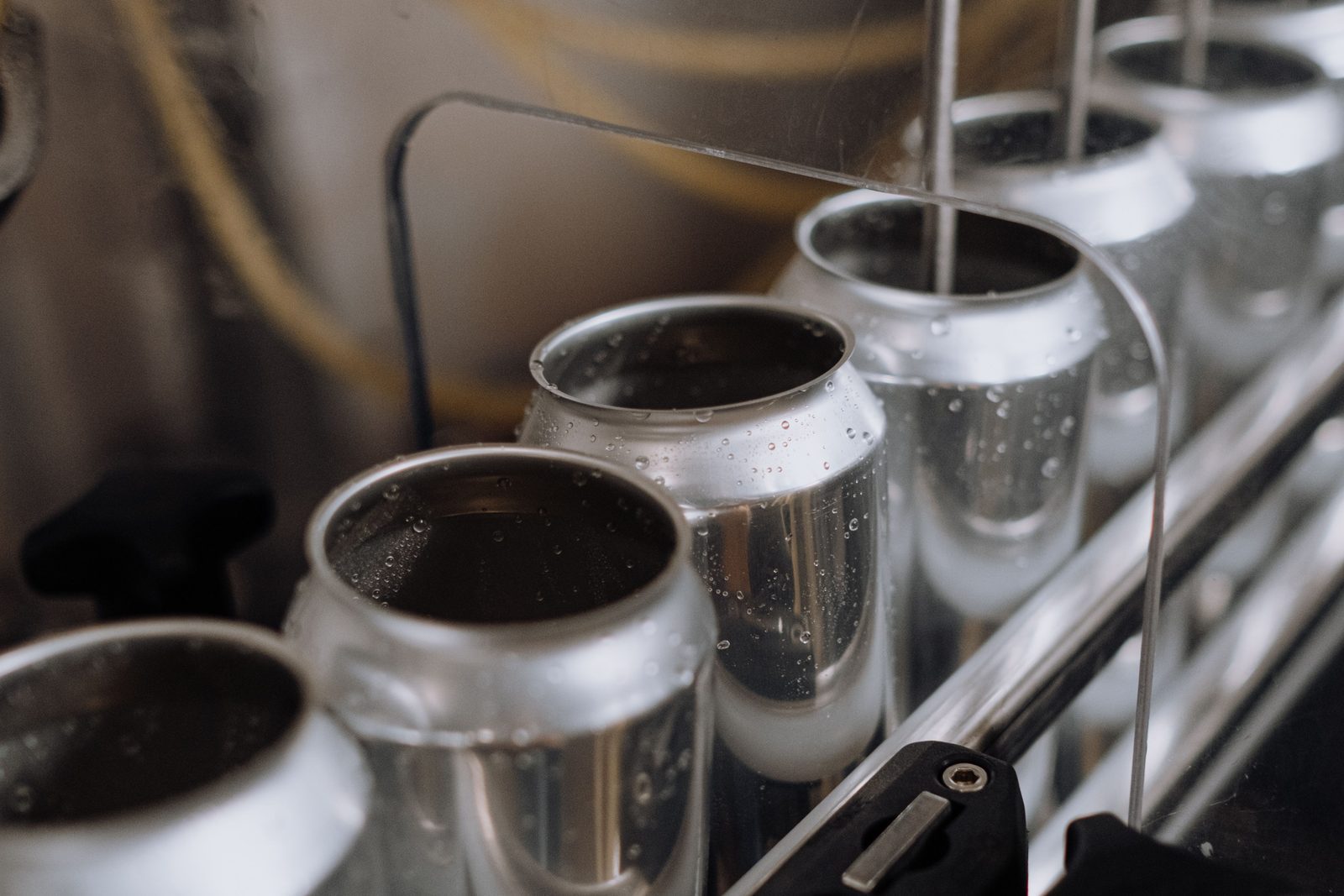
Pipework and valve details on the outside of a stainless steel tank, droplets at the vessel mouth
Raise the level in the clarifier and the juice runs out along with the foam, sugar scale builds on the vessel face and calls for a shutdown to wash, the filter mud carries sugar away with it, and when the sugar recovered this shift is reconciled against the sugar lost, the gap traces straight back to foam.
Chemi Tech makes defoamers for cane sugar mills, refineries and starch sugar systems, the product line being the defoamer KM-192 series. Which grade is used depends on material temperature, the pH range and whether a food contact review has to be passed. The silicone-free KM-192 single-component and two-component line is built around compatibility: the additive floating on the surface of the juice breaks the foam without interfering with clarification. In the clarification stage of sugar making the grade most often used is KM-192, while later stages where syrup concentration demands greater foam persistence are a closer match for it as well. Report the material temperature and the process stage, and we will settle it against the process for you, so you need not run a trial round yourself first.
Advantages of Chemi Tech Defoamers
The Chemi Tech defoamer KM-192 series has good compatibility in the juice, does not separate or stick to the vessel wall, and does not disturb the settling effect of the clarification step. It also puts no drag on sugar recovery, so the sugar lost in the filter mud does not rise because the additive was dosed. It withstands temperature adequately as well, so it does not lose effect at the operating temperature of the clarification stage. Its chemistry is stable, too, so it introduces no off-odour in the distillation and concentration stages. On top of that, its dosage is low, running as a small proportion of juice volume, so the cost per tonne of sugar rises only marginally.
A note from Chemi Tech: the behaviour above comes from a typical cane sugar mill clarification condition. Change the material temperature or the pH range and the results move. Confirm on a small sample before putting it into service.
Industry Pain Points and Solutions
Foam in sugar making is awkward because it is tied directly to recovery: every extra measure of foam is another measure of sugar lost.
Foam boiling over the vessel is the first problem out of the gate. Once the clarifier level cannot be held down, the juice carries foam outwards, sugar scale sets on the vessel face and the walkway, and the man-hours spent washing are charged against the shift output. Chemi Tech puts the dosing point at the clarifier feed inlet, so the additive enters the vessel along with the juice and the preparation is there before the foam forms.
What comes next is the filter mud carrying sugar off with it. Pick the wrong class of defoamer and flocculation is pressed down, the sugar content of the filter mud climbs, and the loss only turns up once it has already gone into the books. Chemi Tech's approach is to fold filter mud sugar content into the validation items and to let the laboratory sheet settle it.
One further point is easily missed: the distillation stage closes the loop. However well the clarification stage is pressed down, the syrup foams again during concentration, and both vacuum and evaporation intensity are affected. Chemi Tech's approach is to check the additive match for the clarification and concentration stages together, leaving no link out.
From the foam layer height comparison to the filter mud sugar assay, and on to the calibration of dosage and dosing point, we run through it in process order, and the workshop receives a parameter sheet it can execute directly.
Typical Conditions and Verification
Customer: a cane sugar producer in Guangxi, applying it to the clarification and filtration sections.
At this mill the clarifier raised level alarms frequently at the peak of the crushing season, juice boiling over left scale on the vessel face and forced shutdowns to wash, the filter mud sugar content ran high, and the sugar loss per tonne would not come down. The solution offered by Chemi Tech defoamers was: against material temperature and process stage, KM-192 was selected from the KM-192 series, the dosing point was moved to the clarifier feed inlet, and the dosage was set in bands against crushing rate. After the change the clarifier stopped raising alarms, the number of shutdowns for washing fell from twice a week to once a month, and the filter mud sugar content came back into the normal band. The two people the workshop used to keep on vessel face washing were moved onto other work.
Frequently Asked Questions
Will a silicone-free defoamer affect the clarification and filtration of the juice?
Cases where it does exist: with a silicone-bearing class, once the dosage goes up both flocculation and settling can be pressed down, and the filter mud water content and sugar content worsen together. The KM-192 Chemi Tech supplies to sugar mills has been compared across the clarification and filtration steps, and at normal dosage the juice purity and the filter mud sugar content both stay in the normal range. Give the material temperature, the pH range and the downstream process to the Chemi Tech technical engineers, and we will run a round of clarification and filtration comparison for you, with the dosing plan settled once the data is out.