
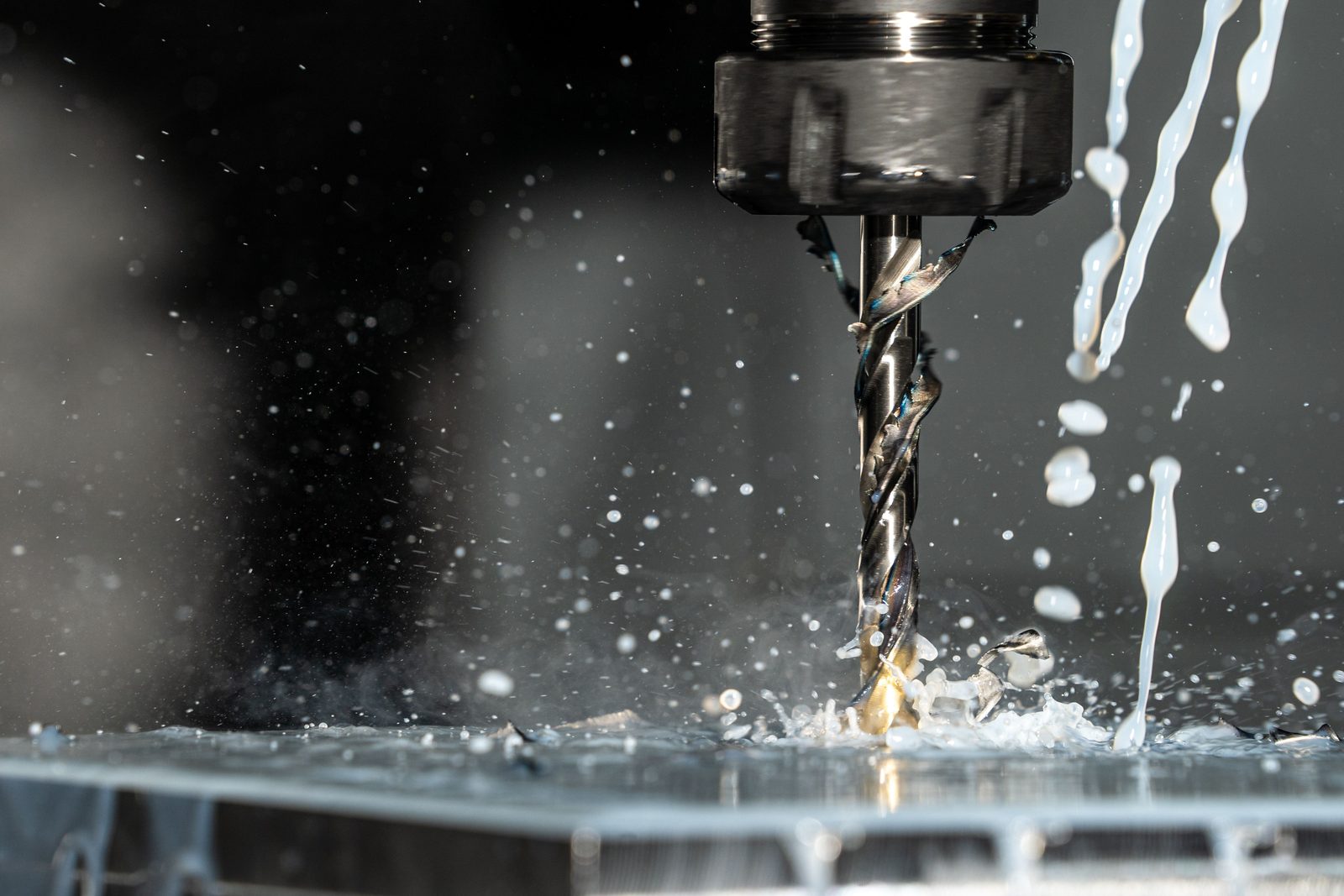
Close view of metalworking fluid sprayed onto a CNC machine tool
Once the foam in the cutting fluid sump builds up, the level cannot be held, the pump draws a foam-laden mixture, cooling at the cutting edge is discounted, tool wear climbs and the surface roughness of the workpiece drifts with it.
Chemi Tech makes defoamers for metalworking fluids, cutting fluids and grinding fluids, drawn from the defoamer KMT-485 series. How a grade is matched depends on the formulation type of the fluid, the circulation volume, and how often make-up is added. KMT-485 is a silicone system: it breaks foam fast and suppresses well, resists acid and alkali, and is compatible, and it disperses evenly after dilution, so it holds up in emulsions and semi-synthetic fluids alike. Send the fluid formulation and the circulation volume over, and we will settle the grade against the operating condition, so you do not have to run the trials yourself over and over.
Advantages of Chemi Tech Defoamers
Chemi Tech defoamer KMT-485 series breaks foam rapidly: a layer of foam is knocked down as soon as it forms, and the level in the sump holds steady. Its suppression lasts as well, so one addition does not only hold for a while and the foaming across a whole shift is contained. It also resists acid and alkali, so a fluid running either side of neutral does not lose the effect and pH swings do not touch the active content. And compatibility is good, so it does not fight additives such as rust preventives and extreme pressure agents, and the performance of the fluid is not pulled off course. On top of that, it stays uniform after dilution — no oil floating out, no precipitation — and lines and nozzles do not block.
A note from Chemi Tech: the behaviour above comes from a typical metalworking fluid circulation condition. Change the formulation system or the circulation volume and the results move. Run a small trial before scaling up.
Industry Pain Points and Solutions
Foaming in the working fluid looks like a matter of the liquid surface, but what grinds most is the way it drags the cutting edge and the workpiece down along with it.
The first thing exposed is insufficient cooling. The foam mixes air into the cutting fluid, the effective volume reaching the cutting edge falls, the cutting heat cannot be carried off, and tool life drops away. Chemi Tech places the dosing point in the return sump, so the chemical is already working before the foam reaches circulation.
What follows is false level readings. The foam lifts the surface, the level sensor reads a distorted value, make-up is either overdone or missed, and the concentration goes with it. Chemi Tech's approach is to look at defoaming and concentration monitoring together: steady the level first, then talk about concentration control.
One more point is that the longer the fluid circulates, the more stubborn the foam becomes. With more impurities and metal fines in the fluid, the foam is harder to break and ordinary defoamers act slowly. Chemi Tech's approach is to run a foaming comparison against the actual state of the circulating fluid and settle the addition level and the make-up frequency together.
Chemi Tech defoamers clear these troubles at the root — the foaming comparison and the make-up schedule are the first task we verify.
Typical Conditions and Verification
Customer: a machining enterprise in Jiangsu, applying it to the cutting fluid circulation system of its machining centres.
Several machining centres at this plant share one circulation sump, the cutting fluid foams heavily, the spray at the cutting edge comes and goes, and tool consumption and workpiece rework are both rising. The solution offered by Chemi Tech defoamer was: against the fluid formulation and the circulation volume, a suitable grade was selected from the KMT-485 series, the dosing point was set in the return sump, and the addition level was stepped against the circulating fluid volume. After the change the level steadied, cooling at the cutting edge returned to normal, and the tool change interval stretched out. The experienced hands on the shop floor say they used to blame the insert quality for fast tool wear, and now they know it was the foam taking over the cooling job.
Frequently Asked Questions
Will the defoamer added to the cutting fluid affect rust prevention?
There are cases where it does: some chemistry holds the foam down and the rust preventive's action is interfered with as well. The defoamers Chemi Tech supplies to machining plants have been compared against the rust prevention system, and at normal addition levels the rust prevention is not affected. Send the fluid formulation and the circulation volume over, and we will confirm which grade is the better match.