
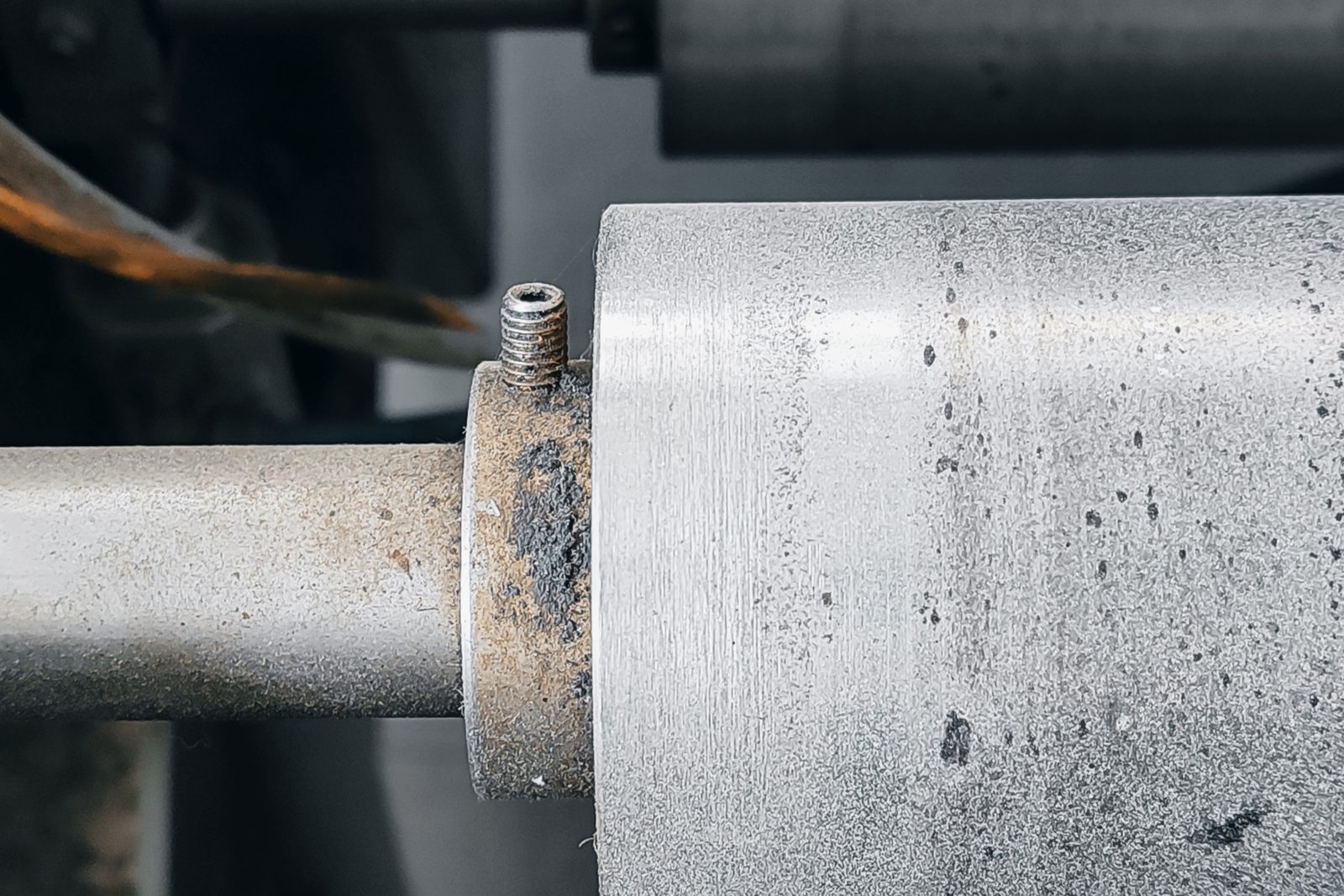
Close-up of the metal rollers on a coating machine
As soon as the waterborne coating on the release paper enters the oven the microfoam pushes out, the surface carries a spread of pinholes, and under light it shows even more clearly; the batch of synthetic leather can only be downgraded or reworked, and the foam in the coating pan keeps building.
Chemi Tech makes defoamers for waterborne systems such as synthetic leather coating and release paper coating, drawn from the defoamer KM-270 series. How a grade is matched depends on the resin system, the coating thickness and the drying temperature curve. Where coating appearance is demanding and silicone marks have to be avoided, KM-272 silicone-free defoamer is the better match: made for silicone-free processes, it causes no craters once added and does not affect coating appearance. Chemi Tech settles the grade against your specific condition such as the resin system and the coating thickness, so you do not have to run the tests yourself over and over.
Advantages of Chemi Tech Defoamers
Chemi Tech defoamer KM-270 series breaks foam rapidly: a layer of microfoam in the coating pan is knocked down as soon as it forms, and the air content has already come down before the coating enters the oven. Compatibility with waterborne resins is good, too, with no craters and no fish eyes left behind. It does not affect coating appearance either, and the embossing step that follows does not delaminate. Heat resistance comes with it as well, with no change in effect through the high temperature oven stage. And the addition level is low — a small proportion dripped in against the coating weight, so the auxiliary cost per tonne of synthetic leather stays limited and surface defects that would send a whole roll to rework are ruled out.
A note from Chemi Tech: the behaviour above comes from a typical synthetic leather waterborne coating condition. When the resin system or the drying temperature changes, the results move. Run a small trial before scaling up.
Industry Pain Points and Solutions
With pinholes forming on the coated surface, the biggest difficulty is that they drag the grade of the whole batch of synthetic leather down, and it is not merely a matter of appearance at the oven.
The first problem to appear is foam accumulating in the bath. The coating roller turns and carries air into the bath, the microfoam builds up, and the coating that goes on carries air with it. Chemi Tech places the dosing point upstream of the coating pan, so the chemical disperses before the microfoam gathers into sheets.
Next is the bubble near the weir. The shear is strongest the moment the bath liquid reaches the weir, so the bubbles come out finer and harder to break, and pinholes appear first where the coating is thin. Chemi Tech's approach is to calibrate the dosing against coating weight and line speed, so the chemical goes in in step with the line.
The last point is that the oven stage magnifies the defect. Once the microfoam enters the oven it expands with heat, the original small bubbles push up into a spread of pinholes, and a rework means the whole roll has to be run again. Chemi Tech's approach is to verify the defoaming process and the drying temperature curve together, comparing both items at once rather than looking only at how much additive went in, which takes the step of topping the additive up again out of the run entirely.
Typical Conditions and Verification
Customer: a synthetic leather enterprise in Zhejiang, applying it to the waterborne coating stage for release paper.
The waterborne coating from this plant carried many pinholes after baking, the pass rate would not come up, and the microfoam in the coating pan had to be physically skimmed by hand at intervals. The solution offered by Chemi Tech defoamer was: against the resin system and the coating thickness, the silicone-free KM-272 was selected from the KM-270 series, the dosing point was moved upstream of the coating pan, and the dosing was stepped against coating weight and line speed. Since KM-272 silicone-free defoamer went in, the coating surface is level, the pinholes are gone, and the pass rate has come up.
Frequently Asked Questions
Will the defoamer added to a waterborne coating system affect adhesion?
There are cases where it does: some chemistry holds the foam down and the coating and the substrate stop holding together with it. The KM-272 Chemi Tech supplies to synthetic leather plants has been compared for compatibility against waterborne systems, and at normal addition levels adhesion is not affected.