
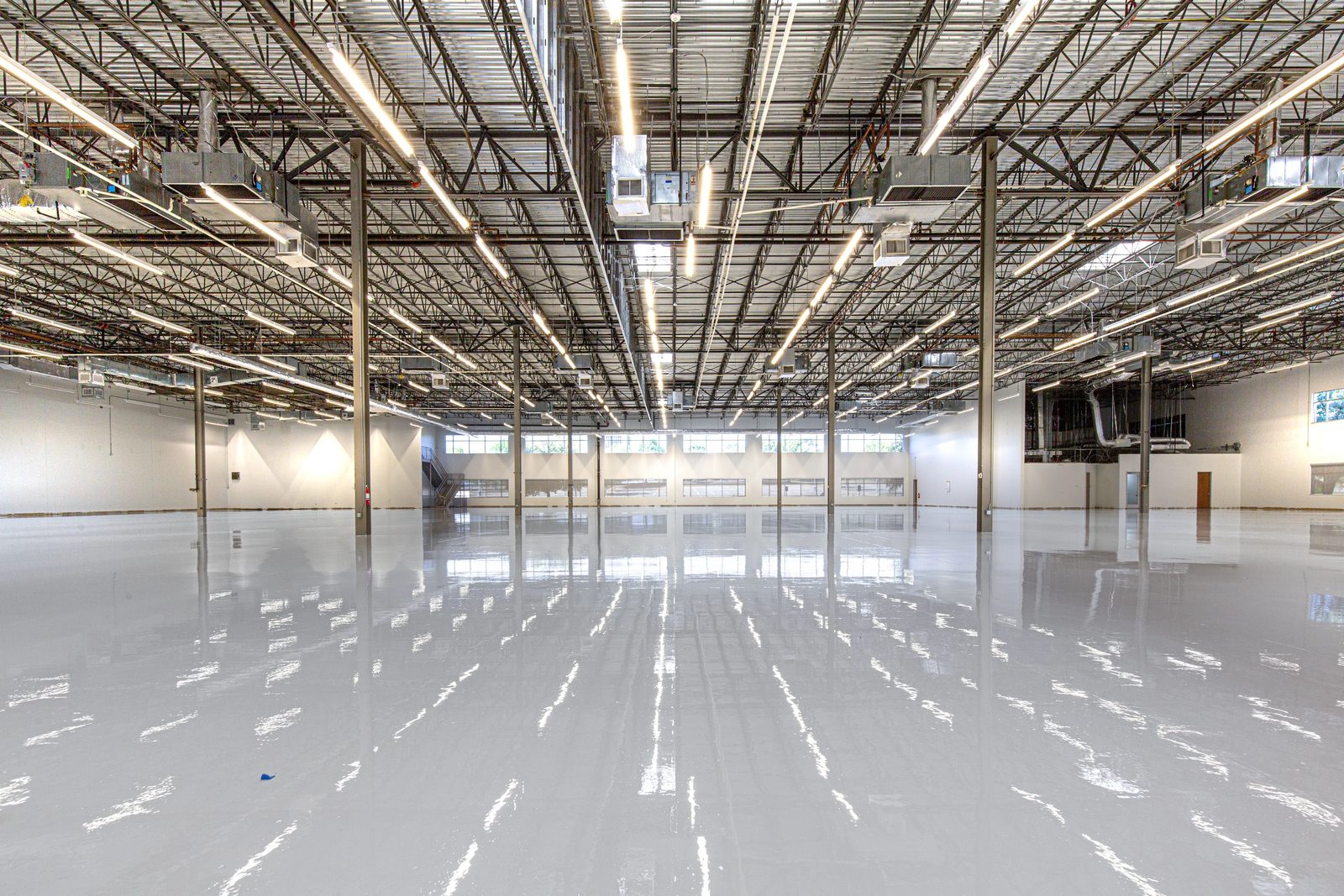
An epoxy self-levelling floor being installed
Once the epoxy self-levelling compound is spread with a trowel, the microfoam in the thick film is sealed underneath, the surface is left with a spread of pinholes, and under the lights it all shows, which is most obvious on a large plane like an underground car park; a rework means grinding the whole area back and starting again.
Chemi Tech makes defoamers for epoxy floor coatings and high solids coating systems, drawn from the defoamer KM-8800 series. How a grade is matched also depends on the solids content of the coating, the applied thickness and the trowel method. KM-8800 is a polysiloxane system containing hydrophobic particles: defoaming and suppression are both excellent, it is aimed specifically at microfoam in a thick film, and it presses the microfoam out in high solids systems such as self-levelling. Chemi Tech compares against the coating solids and the applied thickness and recommends the defoamer that fits.
Advantages of Chemi Tech Defoamers
Chemi Tech defoamer KM-8800 series is a polysiloxane system containing hydrophobic particles: the hydrophobic particles penetrate the bubble film of the microfoam, so even small bubbles at the bottom of a thick film are broken. Defoaming is fast, too: the air stirred into the coating is largely released while the paint stands. Suppression is steady as well, so no second round of foaming is triggered under the shear of trowelling. It is aimed specifically at microfoam, so after drying there are noticeably fewer pinholes in high solids thick film systems like self-levelling. And the dosage runs at a small proportion of the coating weight, so the auxiliary cost added to a drum of paint stays limited.
Industry Pain Points and Solutions
Pinholes in a floor coating are usually not a matter of the application technique; it is the microfoam in the thick film that has not come out. What worries people most is a large plane going to rework, which wastes material and holds up the labour hours as well.
The first thing encountered is air entrained by mixing. A high solids coating is thick, air beaten in during high speed dispersion is entrained as microfoam, and a short standing time does not let it out. Chemi Tech places the dosing point in the let-down stage, so the chemical is working at the peak of the air entrainment.
Next is the microfoam being sealed by trowelling. Once the self-levelling compound is spread, the surface skins over first, the microfoam beneath rises halfway and is sealed in, and after curing it is all pinholes. Chemi Tech's approach is to step the defoamer dosage against the applied thickness, giving the thick film system enough suppression margin.
There is also the defoaming roller only partly saving the day. Workers roll and roll, a large plane always has something missed, and the rolling brings in new air. Chemi Tech's approach is to solve the problem at the source in the coating, knocking the microfoam out before application, which settles the repeated rework at the root.
Typical Conditions and Verification
Customer: a flooring engineering enterprise in Jiangsu, applying it to epoxy self-levelling work in an underground car park.
This contractor took on an underground car park project, and once the self-levelling was trowelled out a spread of pinholes showed under the lights; the client would not accept it, and the area that had to be ground back and redone cost heavily. The solution offered by Chemi Tech defoamer was: against the coating solids and the applied thickness, KM-8805 was selected, added in one go at the let-down stage, with the dosage stepped against film thickness. After the change the microfoam in the thick film came out clean, there were fewer pinholes after drying, and the large plane passed inspection in one go.
Frequently Asked Questions
With a high solids coating this thick, can the defoamer really disperse?
The concern is fair: the thicker the system, the harder it is for the chemical to travel evenly. The KM-8800 Chemi Tech supplies to floor coating plants contains hydrophobic particle polysiloxane; it has been compared for dispersion and defoaming in high solids epoxy systems, and stirring evenly at the normal dosage is sufficient. If there are further questions, the research department at Chemi Tech will answer them for you at any time.