
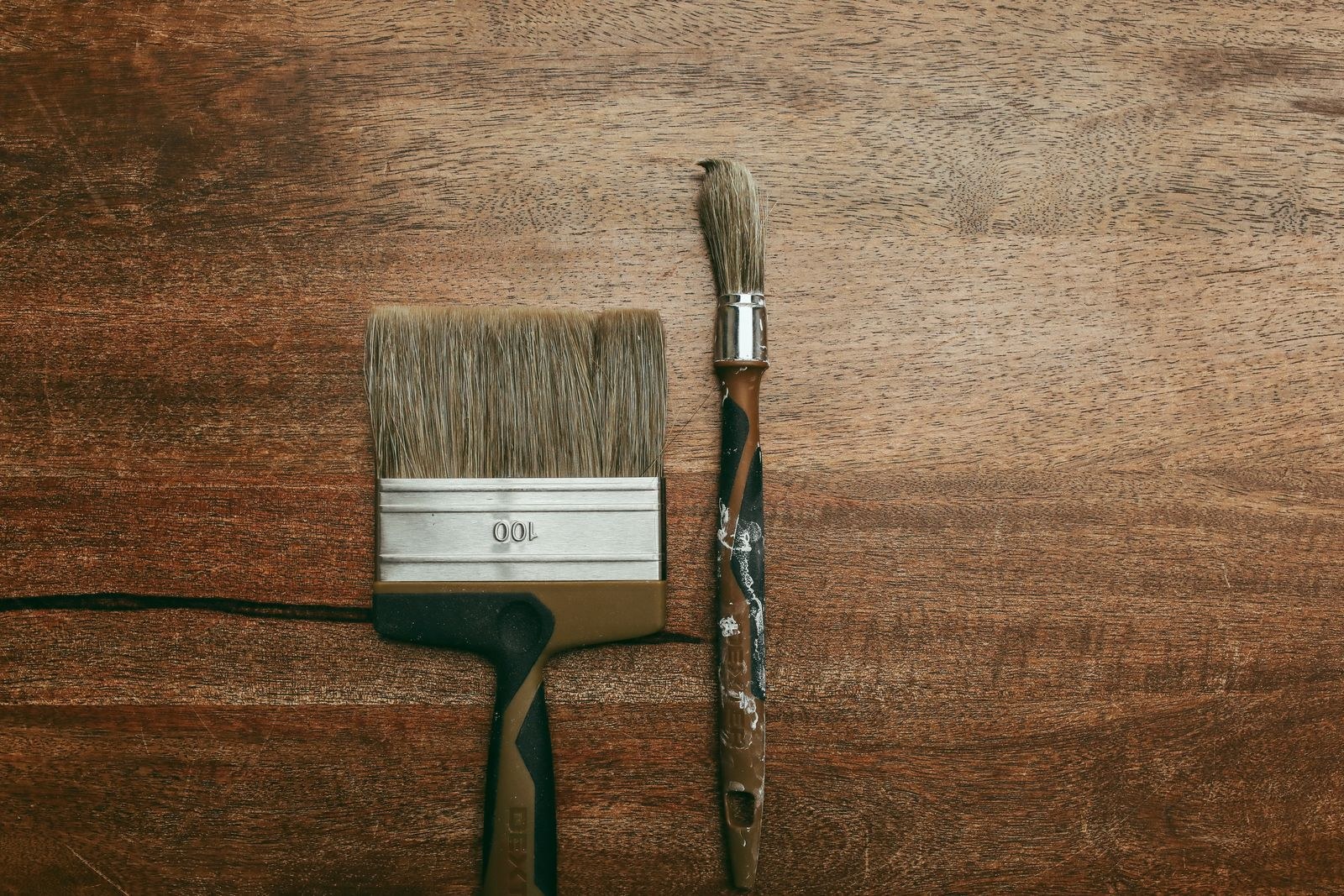
Paint brushes and coating material on a wooden bench
Micro-foam is folded into water-based clear varnish during spraying and flow coating; if it is not cleared in time, white spots and haze remain after the film cures, the brightness of the board falls, and the overcoating effect and the first-pass yield suffer together.
Chemi Tech supplies defoamers for water-based clear varnish and transparent coating systems, drawn from the defoamer KM-2604 series; the dosage is set by the resin system and the application method. KM-2604 is of the modified polysiloxane transparent emulsion type, exactly suited to applications where the varnish must not turn cloudy, clearing the micro-foam without hazing the varnish; KM-502, also of the modified polysiloxane transparent emulsion type, can likewise be added to systems that require no clouding. Chemi Tech runs foam-breaking comparisons against the clarity of the varnish, and selects the fitted model for the customer.
Advantages of Chemi Tech Defoamers
Chemi Tech defoamer KM-2604 series is designed around transparent systems, and the varnish stays bright after the agent is added, with no haze and no clouding; at the same time the micro-foam is cleared thoroughly, and no white spots or haze remain after the film cures; in addition it is compatible with water-based resins, does not separate out and does not cause craters; moreover, it does not interfere with the gloss of the film, and the overcoating effect stays stable.
Industry Pain Points and Solutions
Foam in water-based clear varnish is mostly not carried in by stirring, but air repeatedly folded into the varnish by spraying and flow coating; the consequence is white spots and haze, and a loss of brightness in the film.
The first problem to surface lies in air entrainment at the spraying stage. High-pressure spraying carries air into the varnish, the micro-foam stays in the system, and after curing it leaves white spots in the film. Chemi Tech's answer is to add the transparent emulsion type KM-2604 at the let-down stage, so that the agent is already dispersed before the air is entrained.
Next comes clouding of the varnish. Clear varnish is the most demanding on defoamer compatibility, and a tiny incompatible particle is enough to make the varnish lose its clarity and its gloss to fall. KM-2604 from Chemi Tech is of the modified polysiloxane transparent emulsion type, and the varnish stays bright after it is added.
There is one more point in the haze after the overcoating. The micro-foam gathers again during flow coating and levelling, and forms haze once cured. Chemi Tech runs foam-breaking comparisons according to the application method, and calibrates the dosage of the micro-foam-stable KM-2604 together with the point of addition, so that the state of the varnish is not thrown off.
Typical Operating Conditions and Verification
Customer: a water-based coatings manufacturer in Guangdong, for the let-down stage of furniture clear varnish and clear topcoat.
At this plant the clear topcoat came out hazy after spraying, with rather too many white spots and insufficient brightness in the finished product. The solution Chemi Tech defoamer gave for the situation was: taking the resin system and the application method into account, choose the KM-2604 series, set the dosing point at the let-down stage, and grade the dosage by film thickness. After the solution was switched in, white spots on the board fell noticeably, and the brightness of the film returned to the normal range.
Frequently Asked Questions
Will adding a defoamer to clear varnish haze the varnish and affect its clarity?
Not entirely without effect, since a small number of categories are not sufficiently compatible with clear varnish and make it lose its clarity once added. For transparent systems, Chemi Tech has completed clarity comparisons with KM-2604, and at normal dosage the varnish stays bright. The dosage depends on the resin system and the application method, and Chemi Tech gives a recommended range after the clarity check.