
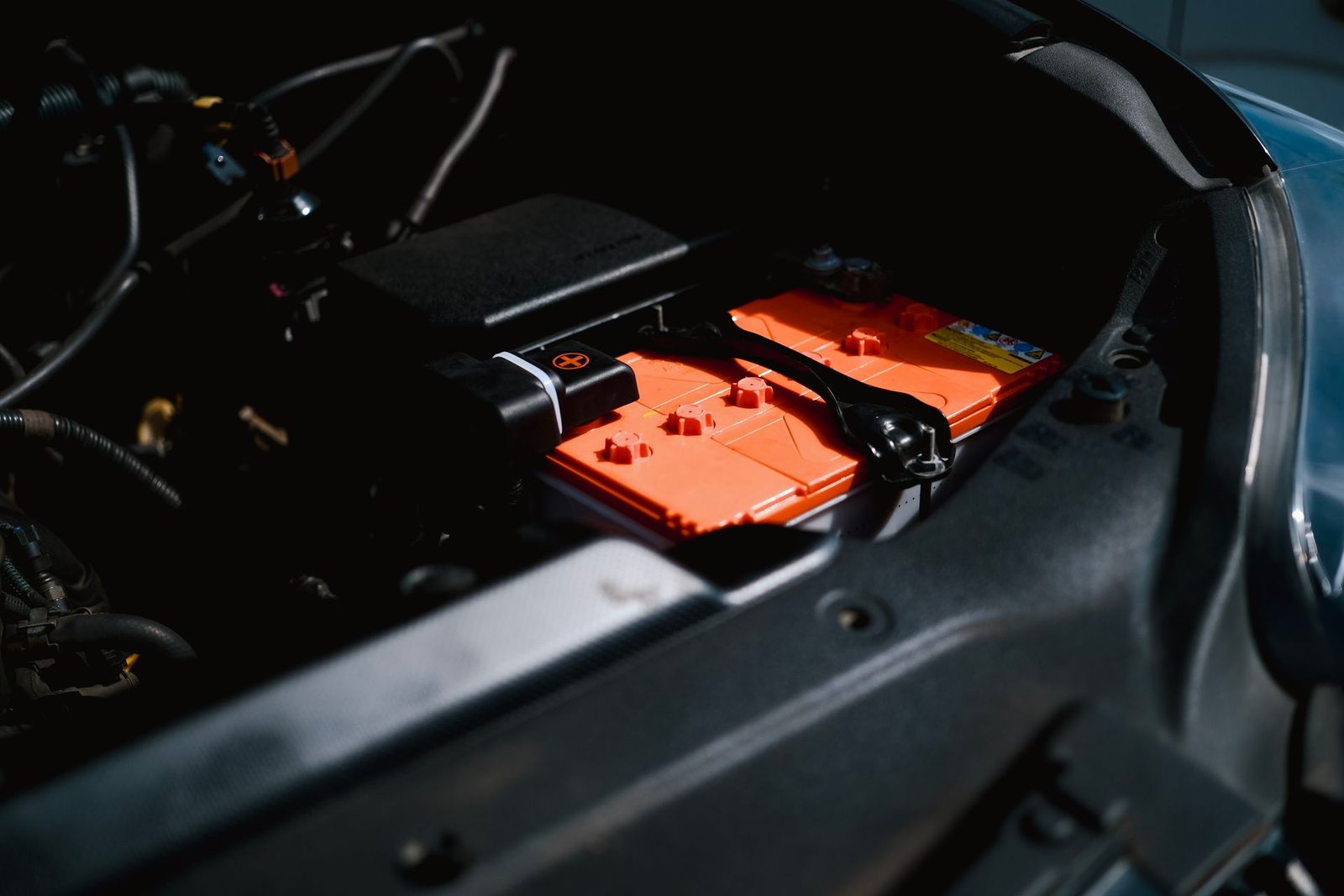
Close-up of a battery pack inside an electric vehicle battery bay
Once high-shear dispersion of cathode slurry scales up, the active particles clump back together, the grind gauge reading rebounds again and again, the areal density of the coated electrode drifts with it, and batch consistency slides day by day.
Chemi Tech has introduced the KMK-409 series dispersant for lithium battery electrode slurry systems, with the dosage adjusted flexibly according to slurry solids content and grinding intensity. This grade is a dispersant for lithium battery systems: its anchoring groups bind firmly to the surface of the active particles and do not desorb under high-shear grinding. Taking measured data on slurry fineness and coating areal density as the basis, a suitable KMK-409 dosage can be defined.
Advantages of Chemi Tech Dispersants
Chemi Tech KMK-409 series dispersant is configured for lithium battery cathode and anode slurry systems. Anchoring is firm — under high-shear conditions the active particles do not re-flocculate and the fineness keeps falling steadily; the viscosity-reduction effect is pronounced, and the coating areal density evens out as the slurry flow improves; compatibility with binders and conductive agents is good, so the mixing stage neither thickens nor cakes; dispersion stability is outstanding, with the slurry neither stratifying nor settling during storage; and the dosage is economical, adjusted flexibly to slurry solids, so both cathode and anode slurries can be matched.
Industry Pain Points and Solutions
Dispersion problems in lithium slurries arise mostly from the combined action of the high surface energy of the active particles and insufficient grinding shear, and the consequences are concentrated in two places: fineness rebound and coating areal density drift.
Repeated fineness rebound slows the mixing rhythm, and the batch stability of the slurry falls with it. The KMK-409 dosage is pinned down by grinding intensity, and the fineness can be pushed down to the target value in one pass.
Areal density drift worsens the capacity consistency of the electrode, and the difficulty of grouping cells rises with it. KMK-409 anchors steadily and can effectively eliminate the re-agglomeration of particles.
Rework in the mixing and coating stages ultimately converts into equipment occupancy and material loss. By tying the dosage to changes in slurry solids content and grinding intensity, a dosage range can be locked in, keeping the slurry stable and free of stratification through storage.
Typical Operating Conditions and Verification
Customer case: a lithium battery materials company in Fujian, for the mixing stage of cathode slurry.
After the cathode material changed batches, the slurry fineness rebounded frequently, the areal density of the coated electrode fluctuated more widely, and the consistency metric of cell grouping slid with them. After a comparison test on slurry fineness and coating areal density, the lithium battery company adopted KMK-409 as its cathode slurry dispersant, with the dosage pinned down by slurry solids. After the change, the slurry fineness dropped into place in one pass; the coating areal density evened out; electrode consistency improved noticeably, and the grouping pass rate recovered with it.
Frequently Asked Questions
After the cathode material grade changes, does the dispersion system need to be determined again?
Put the surface treatment of the cathode material and the anchoring strength of the dispersant side by side for comparison. KMK-409 has completed grinding and storage comparison tests across several cathode blend ratios, and within the recommended range the fineness performs stably. The actual dosage takes slurry solids as the baseline, corrected item by item for grinding intensity and grinding time; Chemi Tech determines a suitable dosage through a parallel comparison of slurry fineness and coating areal density.