
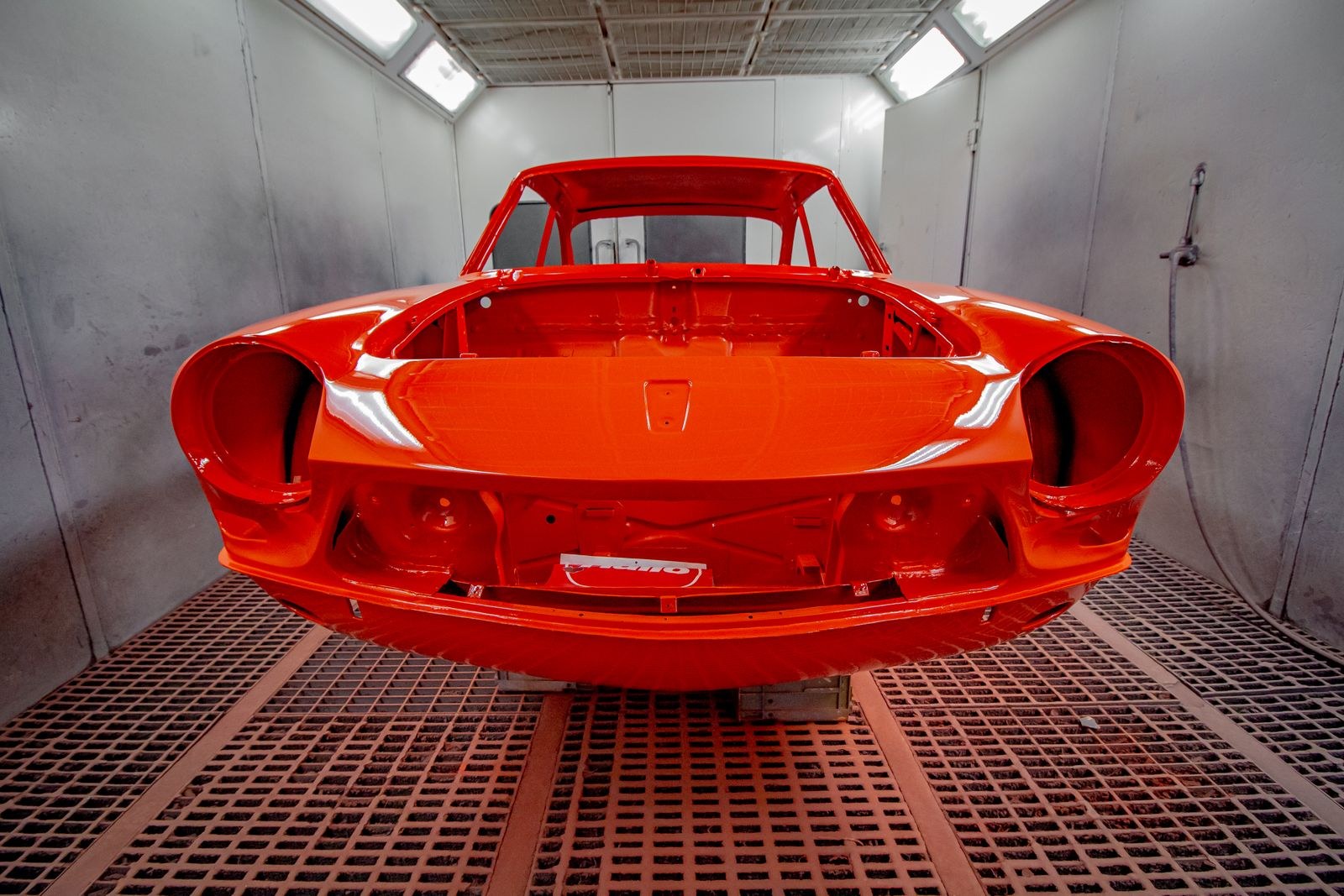
A red car body being sprayed inside a paint booth
If the surface tension of a refinish coating is not pulled down after recoating, the film struggles to level before it sets, the recoated area hazes over with visible orange peel, and the gloss gap against the surrounding paint shows; the repair quality and the first-pass yield fall together.
Chemi Tech supplies leveling agents for automotive coatings and refinish systems, drawn from the leveling agent KMP-4500 series; the dosage is set by the coating viscosity, the film thickness and the spray method. KMP-4500 lowers surface tension markedly, keeps the dynamic surface tension of water-based systems equally under control, leaves room in recoatability, has little effect on gloss, and is thermally stable up to the baking stage without decomposing or yellowing. Chemi Tech compares leveling performance against the coating system and the spray method, and gives the customer a fitted leveling agent.
Advantages of Chemi Tech Leveling Agents
Chemi Tech leveling agent KMP-4500 series lowers surface tension markedly, so the film of the recoated area spreads fully before it sets, and haze and orange peel are reduced with it; moreover, recoatability keeps its margin and intercoat adhesion stays stable, so nothing peels off after the repair; in addition, it has little effect on gloss, so the gloss gap against the surrounding paint narrows; and it is thermally stable up to the baking stage without decomposing or yellowing, so the colour of the finished panel stays consistent.
Industry Pain Points and Solutions
Leveling problems in automotive refinish paint mostly stem from the surface tension of the recoated area not being pulled down; the consequence is haze and orange peel, and a gloss that does not match the surrounding paint.
The most difficult point is the haze of the recoated area. When surface tension falls short, the recoated film struggles to level and haze and orange peel appear. Chemi Tech's answer is to add the markedly surface-tension-lowering KMP-4500 at the paint-adjustment stage, so that the recoated film completes its spread before it sets.
The most common point is the weakening of intercoat adhesion. When the leveling agent is over-dosed it gathers on the film surface and weakens the intercoat bond of the recoating. KMP-4500 from Chemi Tech is well compatible and does not affect intercoat adhesion, and at normal dosage the bond of the recoating stays stable.
The core difficulty lies in the gloss gap against the surrounding paint. The repaired area and the original paint do not share a gloss, and the colour difference and the gloss difference appear together. Chemi Tech compares leveling performance against the spray method, and re-calibrates the dosage and the point of addition of the gloss-neutral KMP-4500, so that the repaired area and the original paint behave alike.
Typical Operating Conditions and Verification
Customer: an automotive refinish paint manufacturer in Hubei, for the spray package of car-body refinish paint.
At this plant the refinish paint hazed over after recoating, orange peel was pronounced, the gloss gap against the surrounding paint was on the large side, and the rework rate stayed high. The solution Chemi Tech leveling agent gave for the situation was: taking the coating viscosity and the spray method into account, choose the KMP-4500 series, and re-calibrate the dosage and the point of addition by the spray rhythm. After the adjustment was done, the haze of the recoated area fell noticeably, the gloss gap narrowed into the qualified range, and the rework rate came down with it.
Frequently Asked Questions
Once a leveling agent is added, will it affect the recoating and the intercoat adhesion of refinish paint?
It is indeed worth watching, since at high dosage a leveling agent gathers on the film surface and the bond of the recoating weakens with it. For KMP-4500, Chemi Tech has run leveling and adhesion comparisons at different dosages, and only recommends the dosage range where both perform steadily. The dosage is calibrated by the spray rhythm and the film thickness, and Chemi Tech gives its fitted recommendation from the on-site baking curve.