
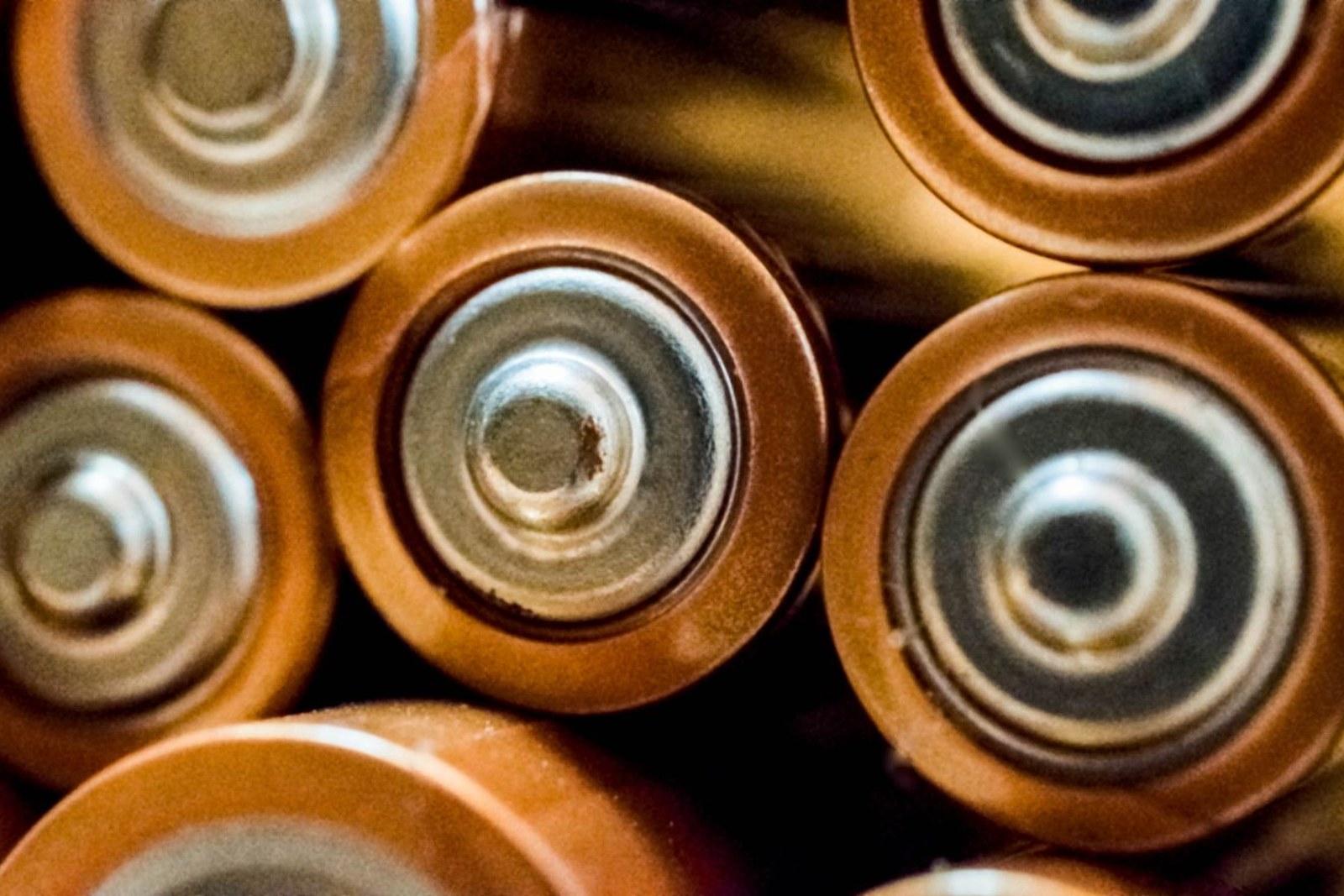
Close-up of the tops of batteries in rows
Battery slurry entrains air bubbles during high-speed dispersion and transfer; if they are not broken in time, the bubbles travel with the slurry into the coating stage, the electrode surface shows pitting and bare foil, the areal density wobbles with it, and cell consistency is also affected.
Chemi Tech supplies defoamers for battery slurry and electrode coating systems, drawn from the defoamer KM-1900 series; the dosage is set by the solids content, the viscosity and the mixing method of the slurry. Taking slurry conductivity and residual bubbles as the basis, Chemi Tech compares defoaming performance in light of how mixing and coating are linked, and fixes the fitted dosage range for the customer.
Advantages of Chemi Tech Defoamers
Chemi Tech defoamer KM-1900 series is itself non-conductive and free of heavy metals, so it introduces no ionic impurities into the slurry once added; at the same time, slurry conductivity and cell internal resistance are not disturbed, and cell consistency is kept; moreover, it breaks foam quickly, the bubbles formed in mixing and transfer are cleared in good time, and no foam gathers on the slurry surface before coating; and it does not interfere with binder systems such as PVDF, and the slurry does not break its emulsion or separate; in addition, under mixing conditions of high viscosity and fast stirring, the foam-suppressing performance stays stable.
Industry Pain Points and Solutions
Foam in battery slurry mostly comes not from over-fast stirring but from bubbles in the highly viscous slurry that cannot detach on their own; the consequence is pitting on the electrode, bare foil and fluctuation in areal density.
What goes wrong first is bubbles lingering in the mixing stage. The slurry is rather viscous, bubbles rise slowly, hold-up sits inside the slurry body, and they are carried into the electrode with the wet film at coating. Chemi Tech chooses the KM-1900 defoamer, added at the mixing and feeding stage, so that the bubbles are broken before coating.
Next comes drift in the conductivity figure. Some defoamers contain silicone or carry in ionic components; once added the slurry conductivity wobbles and the cell internal resistance rises with it. Chemi Tech draws on the non-conductivity of the KM-1900 defoamer itself, and it does not disturb the slurry conductivity or the cell internal resistance.
The last problem lies in compatibility with the binder system. If a defoamer is not compatible with binders such as PVDF, the slurry breaks its emulsion and separates, and coating uniformity suffers. Chemi Tech checks compatibility against the solids content and the mixing method, and pins down both the dosage and the point of addition of KM-1900 together, so that the slurry system stays uniform.
Typical Operating Conditions and Verification
Customer: a lithium battery materials enterprise in Jiangsu, for the mixing and coating stages of battery slurry.
At this plant the slurry still held rather a lot of bubbles after mixing, the coated electrodes showed pitting and bare foil time and again, and cell consistency dropped. Taking the solids content and the mixing method into account, Chemi Tech chose the KM-1900 defoamer and graded the dosage by solids content. After the approach was put in place, the bubbles left in the slurry fell noticeably, the pitting and bare foil on the electrode cleared with them, and the coating areal density came back into the qualified range.
Frequently Asked Questions
Will adding a defoamer to a battery slurry system drag on conductivity and cell internal resistance?
Ordinary defoamers on the market contain silicone structures or ionic components, which make the slurry conductivity wobble and ultimately affect the cell internal resistance. For the lithium battery slurry scenario, Chemi Tech KM-1900 series defoamer has completed dedicated checks on conductivity and system compatibility: within the recommended dosage range the product is itself non-conductive and introduces no ionic impurities. The dosage needs to be fixed together with the solids content and the viscosity of the slurry, and through conductivity-versus-residual-bubbles comparison tests Chemi Tech can give the optimal dosage range that matches the system.