
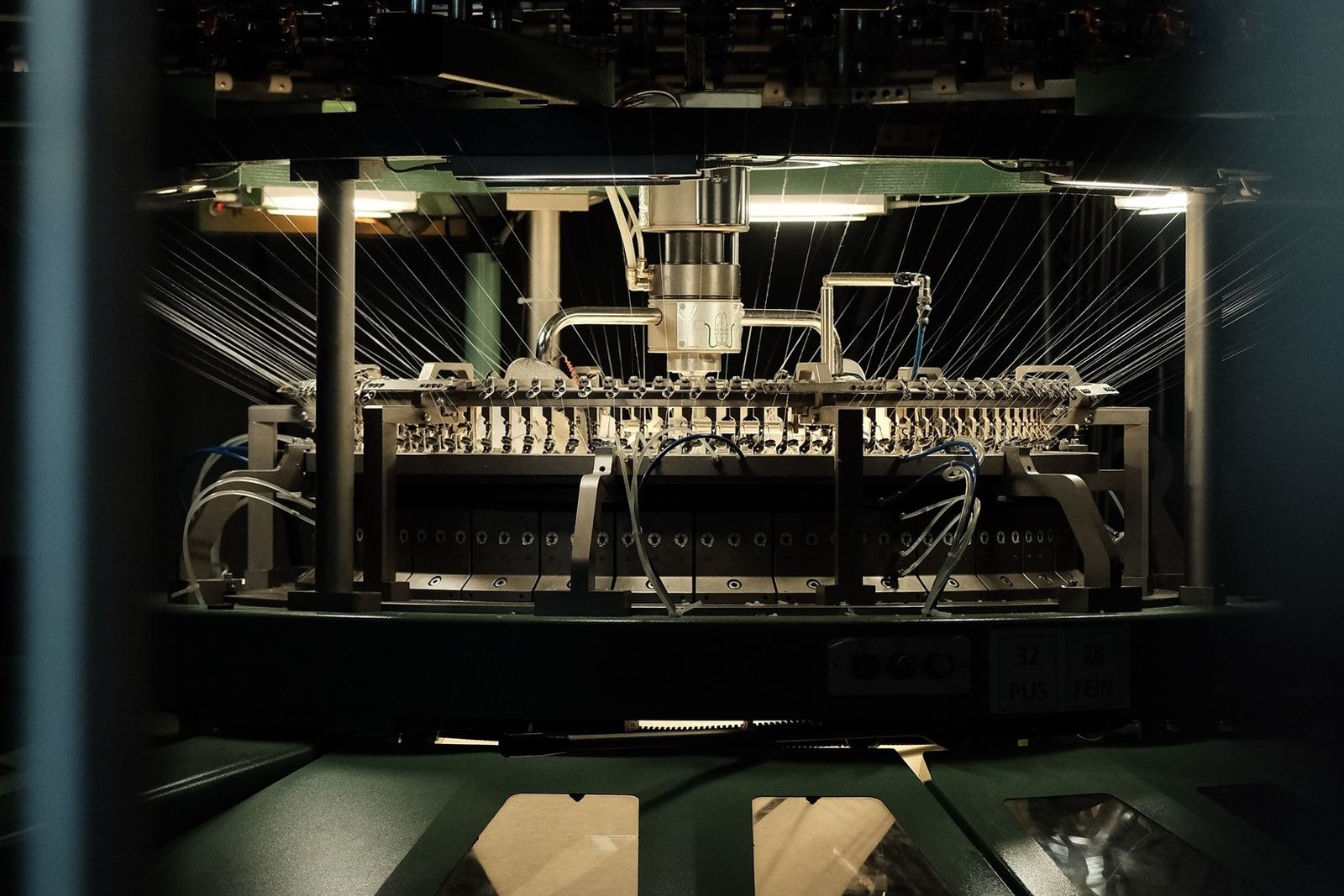
Spinning machinery running in a textile plant, photographed on site
Once the finish circulation bath on a chemical fibre line warms up, foam in the finish builds with the return flow, wraps oil onto the godet rollers, oil pick-up begins to drift, and both the cohesion and the dyeing evenness of the finished yarn fall away day by day.
Chemi Tech has introduced the KM-830 series defoamer for chemical fibre finishes and spin-finish lubrication systems, with the dosage adjusted flexibly according to finish viscosity and circulation temperature. This grade holds its temperature stability and does not carry oil, staying stable in high-temperature finish circulation without pulling the finish's own oil pick-up behaviour off course. Customers can set the adapted KM-830 dosage on the basis of measured data for bath foam height and oil pick-up rate.
Advantages of Chemi Tech Defoamers
Chemi Tech KM-830 series defoamer is configured for chemical fibre finish systems. Temperature stability is strong, with no separation or stratification in high-temperature finish circulation; it does not carry oil, so foam is broken without stripping the active components of the finish and oil pick-up stays level; defoaming is fast, with foam removed before it reaches the godet rollers; compatibility with the finish is outstanding, introducing neither oil contamination nor residue; and the dosage is economical, adjusted flexibly to finish viscosity and circulation temperature so that spinning production stays stable and controllable.
Industry Pain Points and Solutions
Foam problems in chemical fibre finish systems stem mostly from the combined effect of air entrainment in the finish return and oil carry-over by the defoaming component, and the consequences are concentrated in two places: oil fouling on the godet rollers and a drifting oil pick-up rate.
Once the godet rollers take on oil, the yarn bundle slips against the roller surface and the tension of drawing and winding loses its footing. The KM-830 dosage is set by finish viscosity, which presses bath foam down steadily and cuts the oil contamination that foam carries onto the rollers.
A drifting oil pick-up rate leaves the finish applied to yarn from the same batch uneven, and cohesion and dyeing evenness at the weaving end suffer with it. KM-830 holds temperature without carrying oil, breaking foam while leaving the active components of the finish in place.
Broken filaments and the waste from shedding both translate into cost per ton of yarn. By tying the dosage range to changes in finish viscosity and circulation temperature, the loss from waste material is reduced directly.
Typical Operating Conditions and Verification
Customer case: a chemical fibre producer in Jiangsu, for the finish circulation stage of polyester filament.
After the plant switched to a new finish, foam on the circulation bath increased; oil fouled the surface of the godet rollers and the yarn bundle slipped against them; oil pick-up drifted from batch to batch and broken filaments in the winding section rose with it. After a comparison test on bath foam height and oil pick-up rate, KM-830 was selected as the plant's defoamer for finish circulation, with the dosage set by finish viscosity. After the change, bath foam fell back to a normal level; oil fouling on the godet rollers dropped markedly; oil pick-up levelled out and the broken-filament count returned to its usual level.
Frequently Asked Questions
Does adding a defoamer to the finish affect its oil pick-up performance?
What matters is whether the defoaming component stays stable in high-temperature finish circulation and does not carry oil. KM-830 has completed compatibility and oil pick-up tests under polyester filament finish circulation conditions, and within the recommended range it neither carries oil nor weakens oil pick-up performance. The actual dosage takes finish viscosity as its baseline, with circulation temperature and return intensity set as corrections; Chemi Tech sets the adapted dosage through a parallel comparison of bath foam height and oil pick-up rate.