
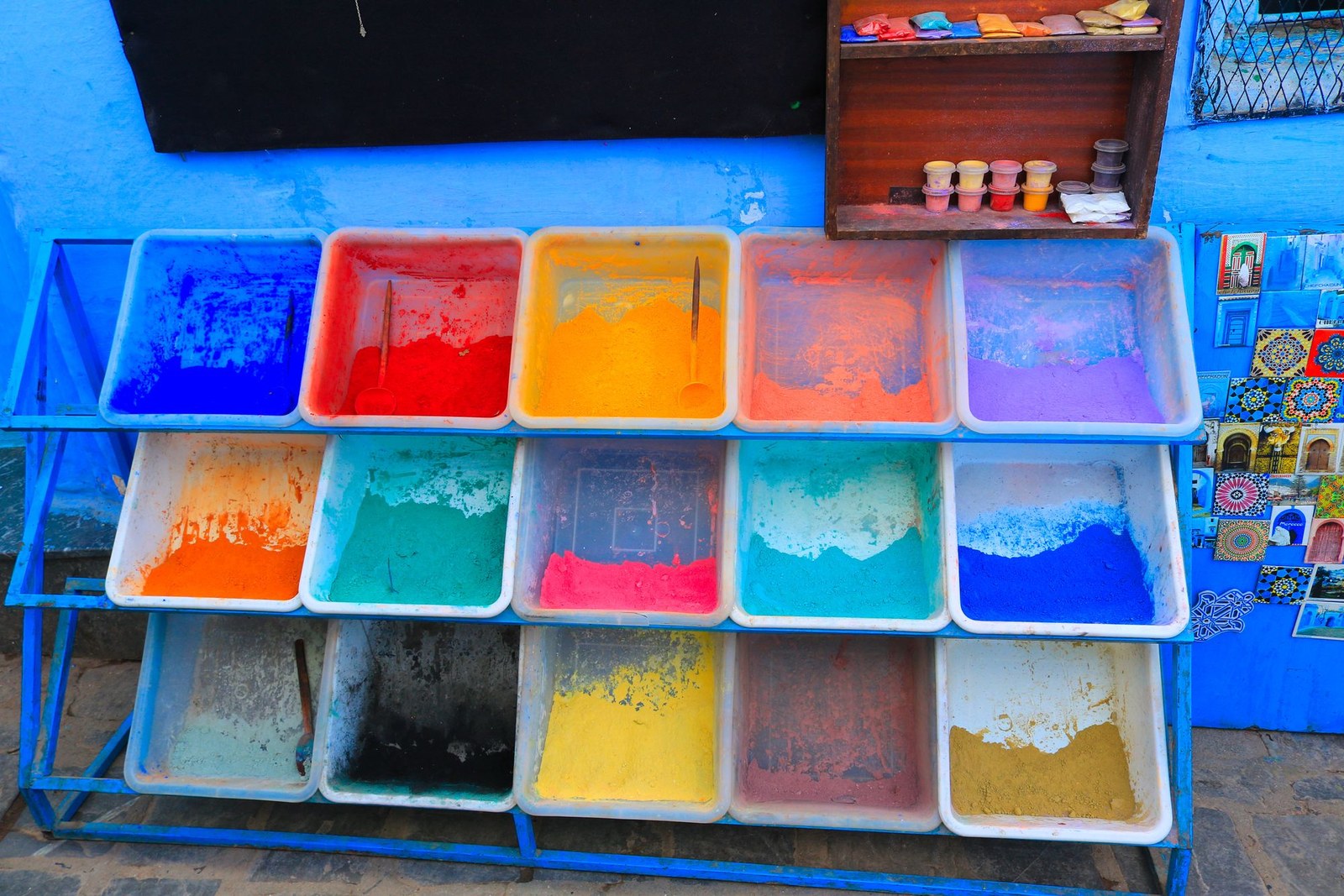
Coloured pigment powders in separate compartments
Coatings tinting often brings several pigments into one grinding system, yet the surface treatment of each pigment is not the same; if the dispersant is dosed by a single rule, some pigments are not anchored enough, which makes the colour paste re-coarsen and float, and the tinting colour difference and batch consistency suffer together.
Chemi Tech supplies dispersants for coating tinting and multi-pigment blending systems, drawn from the dispersant KMK-416 series; the dosage varies with the pigment grade, the surface treatment method and the target solids content. In the tinting system the titanium white, iron oxide and organic pigments are surface-treated differently, and Chemi Tech fixes the dosage for each one accordingly.
Advantages of Chemi Tech Dispersants
Chemi Tech dispersant KMK-416 series anchors pigment by pigment, and the titanium white, iron oxide and organic pigments are each anchored stably; moreover, its fitness for different pigment grades is broad, and the colour paste does not re-coarsen or float in storage; and the dosage is graded by the surface treatment method and the target solids content, so high-solids tinting pastes are likewise fitted; in addition, the anchoring comparison is done by Chemi Tech in advance, and the colour development tends to be consistent from batch to batch.
Industry Pain Points and Solutions
Re-coarsening in coating tinting mostly comes from uneven anchoring of the dispersant across several pigments, with little relation to the grinding time; the consequence is colour paste re-coarsening, floating and a widening colour difference.
The most worrying is re-coarsening in multi-pigment blending. The pigments are surface-treated differently, one dosage is hard to spread across them all, and some pigments re-aggregate after co-grinding. Chemi Tech's answer is to choose the KMK-416, which anchors grade by grade, added at the feed end of the grinding stage, so that each pigment is anchored in place.
What is hard is floating and mottling. When the dispersant does not anchor some pigments enough, the colour paste floats and mottles after storage, and the tinting colour difference widens with it. Chemi Tech's KMK-416 has a broad fitness for different pigment grades, and the colour paste does not float in storage.
Another difficulty is batch-to-batch fluctuation in colour development. Different batches of pigment differ in grade and surface treatment, which makes the dispersion unstable and lowers the tinting hit rate. Chemi Tech evaluates anchoring performance against the pigment grade and the target solids content, and pins down both the dosage and the grinding time of the KMK-416 dispersant, so that the colour development is even and stable from batch to batch.
Typical Operating Conditions and Verification
Customer: an architectural coatings enterprise in Guangdong, for the grinding and blending stages of tinting colour paste.
On site the multi-pigment compounded tinting colour paste re-coarsened and floated, the batch colour difference was large, and the tinting hit rate was low. Taking the pigment grades and the formula's target solids content into account, Chemi Tech chose the KMK-416 dispersant, matched anchoring pigment grade by grade, and set the dosage in grades by the pigment surface treatment type. After the approach was put in place, the re-coarsening and floating of the colour paste cleared, the batch colour development was even and stable, and the tinting hit rate came back to the qualified level.
Frequently Asked Questions
For a multi-pigment blended tinting colour paste, why must the dispersant be fixed pigment by pigment?
For a multi-pigment blended tinting colour paste, the dispersant must be fixed pigment by pigment. The reason is that the surface treatment of each pigment differs, and the anchoring needs are not the same. If one dosage is used across the board, some pigments are not anchored enough and the colour paste tends to re-coarsen and float. The KMK-416 series dispersant has completed multi-grade pigment anchoring comparison tests in the lab, and recommends only the dosage range in which colour development stays stable. Chemi Tech fixes the dispersant dosage for each pigment against the pigment grade and the target solids content, and outputs the scheme after test comparison.