
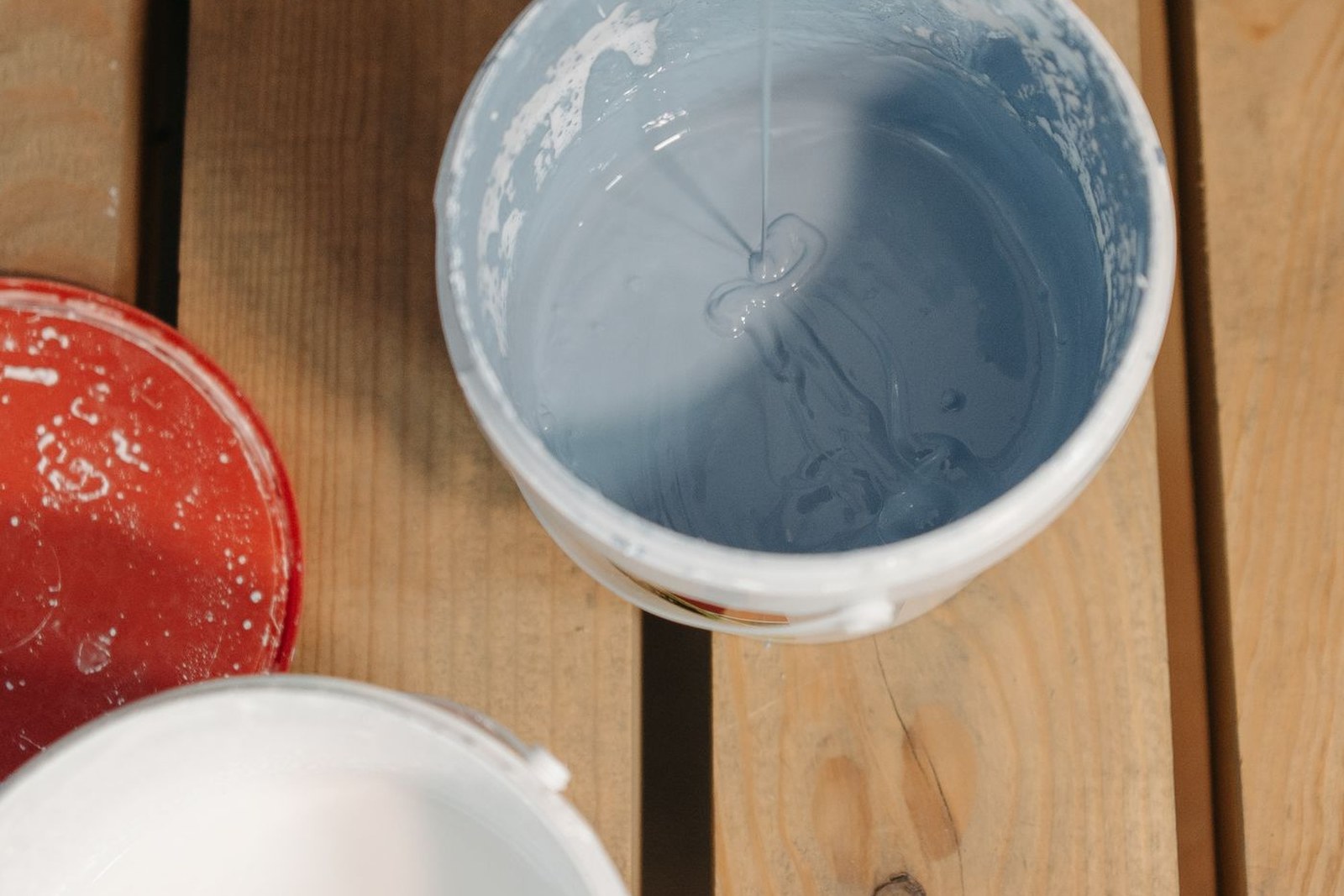
Live shot of paint being poured during a coating letdown
Once the pigments of a solvent-based industrial coating enter the bead mill, they re-flocculate under high shear; the fineness reading keeps rebounding near the pass line, the can re-coagulates after standing, the clear coat turns hazy, the colored coat floats and blooms, and hiding power and color development slide batch by batch.
Chemi Tech launches the KMK-412 series dispersant for pigment dispersion systems in solvent-based industrial and coil coatings, with the addition level set flexibly against pigment solids and grinding intensity. This grade is a wetting dispersant, better suited to applications with high transparency and hiding requirements, also applicable in acid-catalyzed coil coatings, anchoring firmly without detachment under high shear. Based on measured paste fineness and color-development data, the suitable dosage of the KMK-412 series can be determined.
Chemi Tech Dispersant Advantages
The Chemi Tech KMK-412 series dispersant is formulated for solvent-based and coil coating systems. Anchoring is firm — pigments do not re-flocculate under high-shear grinding, and the fineness drops steadily; viscosity reduction is significant, improving paste flow so the grind current tends to stabilize; dispersion stability stands out, with no re-coagulation or floating during storage; it suits systems with high transparency and hiding demands, keeping clear coats clear and colored coats evenly developed; it adapts widely to organic and inorganic pigments, needing no frequent adjustment after a batch change; dosage is economical, calibrated by pigment solids for one-pass grinding to specification.
Industry Pain Points and Solutions
Dispersion problems in solvent-based coatings mostly share one root cause: differences in pigment surface treatment and insufficient grinding shear acting together, ending up in two places — fineness rebound and floating/blooming.
Repeated fineness rebound slows the grinding beat and lowers batch stability. The KMK-412 dosage, calibrated by grinding intensity, drives fineness down to target in one pass.
Floating and blooming make clear coats hazy and colored coats uneven, so transparency and hiding drift. KMK-412's stable anchoring keeps pigments evenly dispersed through storage and film formation.
Rework in grinding and tinting converts into equipment occupancy and material loss. Against changes in pigment solids and grinding intensity, the dosage range can be scoped to keep the paste stable and re-coagulation-free through storage.
Typical Conditions and Verification
Customer: an industrial-coating enterprise in Jiangsu, applied to the bead-mill section for solvent-based colored and clear coatings.
The colored coat re-coagulated at the can bottom. The clear coat turned hazy overnight. Color development varied between tinting batches. After comparing fineness and color development, Chemi Tech set this plant's dispersant to KMK-412, with the dosage calibrated by pigment solids. Thereafter, the fineness reading dropped into the target range at once, no hard scale built at the can bottom, the clear coat stayed clear, and the colored coat's color development became consistent across batches.
FAQ
After raising pigment solids in solvent-based coatings, should the dispersant dosage be adjusted accordingly?
Pigment solids and grinding intensity must be brought together into the calibration before the dispersant dosage can be set accurately. KMK-412 has completed comparative grinding and storage tests across multiple pigment grades, with stable fineness and color development within the recommended range; Chemi Tech determines the suitable dosage from the side-by-side comparison of paste fineness and color development.