
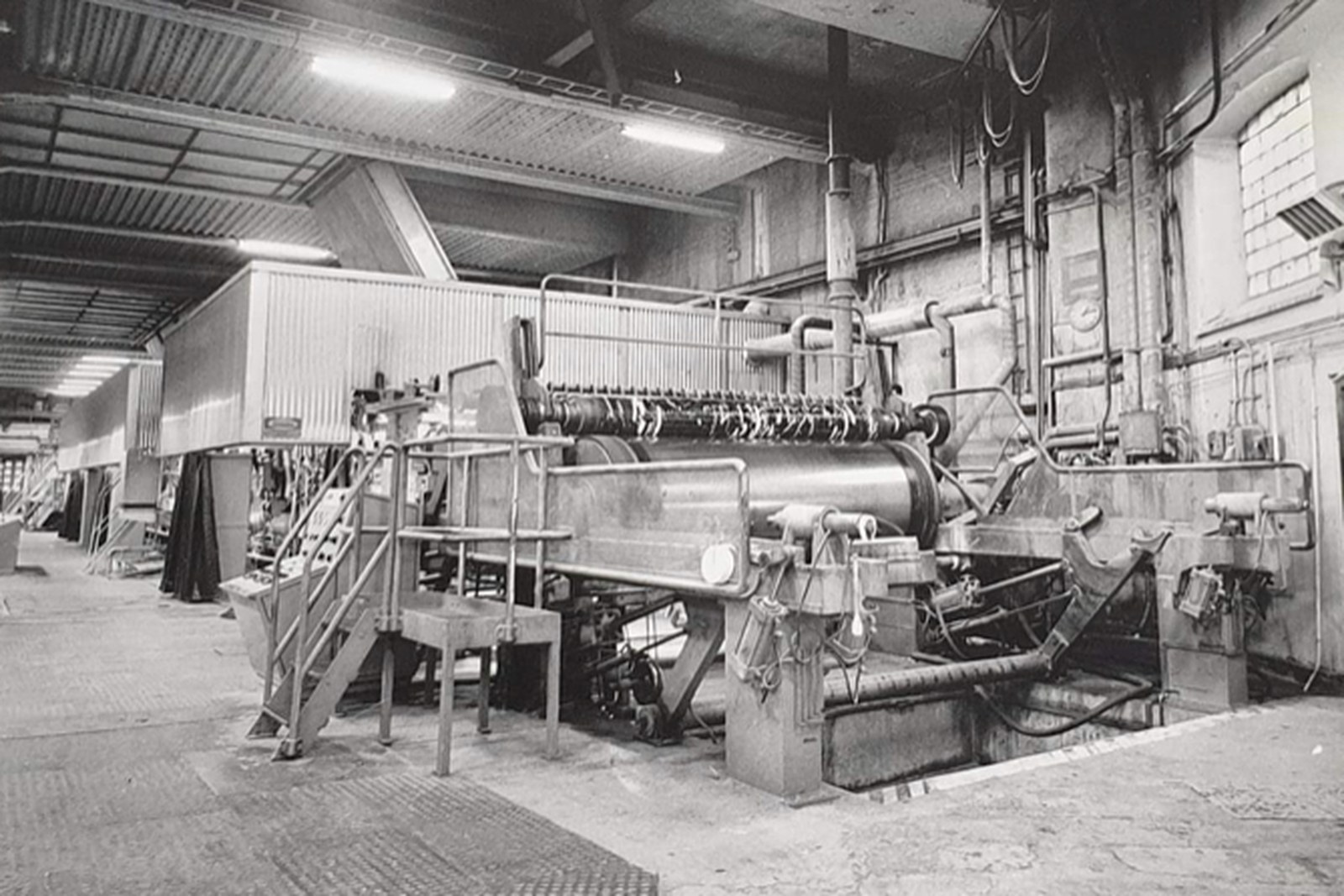
Live shot of the wet end and reel section of a paper machine
Once the paper-machine white-water system heats up, deinking and coating foam accumulates layer upon layer along the wire and felt; sheet formation and drainage fluctuate, and both paper yield and per-ton cost come under pressure at the same time.
Chemi Tech launches the KM-1003 series defoamer for paper-machine white-water circulation and the papermaking system, with the addition level set flexibly against white-water temperature and stock concentration. This grade is a silicone-free polymer defoamer, resistant to acid, alkali and high temperature; its foam breaking does not decay in high-temperature, alkali-biased white water, and the addition cost stays controllable. Combined with measured data on wire-section foam height and sheet formation, the precise dosage of the KM-1003 series can be defined.
Chemi Tech Defoamer Advantages
The Chemi Tech KM-1003 series defoamer is formulated for paper-machine white-water circulation systems. It is a silicone-free polymer system that holds up in high-temperature, alkali-biased white water; its acid-alkali resistance is outstanding, breaking foam without decay under alkaline papermaking conditions; high-temperature stability is good, keeping its antifoam capacity after the white water heats up; it breaks foam quickly, removing wire-section foam before sheet formation; it is compatible with the stock, without oil bleed or pulp floating, not affecting sheet formation; it can be diluted and compounded, keeping the addition cost controllable and directly benefiting paper yield.
Industry Pain Points and Solutions
Foam problems in paper-machine white-water circulation mostly share one root cause: white-water heating entraining air and defoamer components that cannot resist alkali or heat acting together, ending up in two places — wire-section foam accumulation and sheet-formation fluctuation.
Once wire-section foam accumulates, the stock's drainage and formation are disturbed and sheet formation declines. The KM-1003 dosage, calibrated against white-water temperature, keeps the wire-section foam stably pressed flat.
Foam carrying fine fibers floats to the stock surface, producing pinholes and spots on the paper surface. KM-1003 breaks foam gently, not carrying impurities back into the sheet.
The decline in paper yield ultimately enters the per-ton cost. Against changes in white-water temperature and stock concentration, the dosage can be narrowed to an accountable band, directly reducing papermaking loss.
Typical Conditions and Verification
Customer case: a Shandong papermaking enterprise, applied to the papermaking section of its white-water circulation system.
After the white-water system heated up, wire-section foam increased markedly. A previous defoamer gave insufficient antifoam in alkali-biased white water, and paper yield slipped. The plant selected KM-1003 as its white-water defoamer, with the dosage tiered against white-water temperature. After commissioning, wire-section foam fell back, sheet formation stabilized, paper yield recovered, and pinholes and spots decreased noticeably.
FAQ
With white-water temperature on the high side and alkalinity heavy, will the defoamer fail or affect paper quality?
Check whether the defoamer components resist acid-alkali and high temperature, and whether they carry impurities back into the sheet. KM-1003 has completed side-by-side measured comparisons of wire-section foam height and sheet formation under high-temperature, alkali-biased white-water conditions; within the recommended range its foam breaking does not decay and it does not affect sheet formation. The practical dosage is based on white-water temperature, with stock concentration and machine speed as correction factors; Chemi Tech determines the suitable dosage by comparing wire-section foam height with sheet formation side by side.