
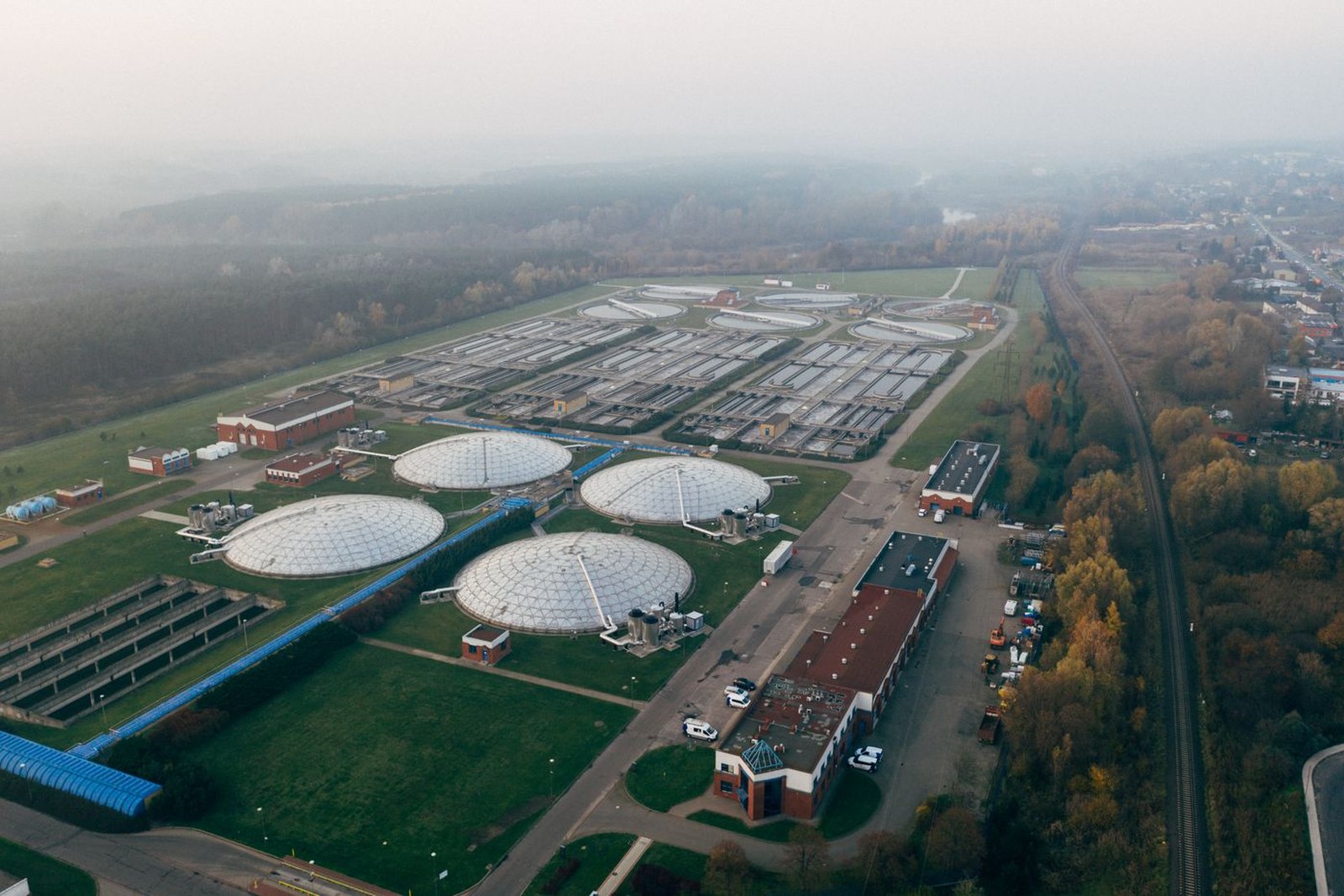
Aerial view of the aeration tank at a wastewater treatment plant
Once the foam layer in an aeration tank keeps thickening with rising influent load, sludge-water separation in the secondary clarifier worsens; suspended solids in the effluent climb step by step, and both sludge settleability and effluent compliance come under pressure at the same time.
Chemi Tech launches the KM-1240 series defoamer for wastewater aeration tanks and sludge anaerobic digestion systems, with the addition level set flexibly against foam-layer height and influent load. This grade is a silicone-free defoamer that breaks foam without decay and holds persistence over time, without carrying silicone oil into the activated sludge. Combined with measured data on tank-surface foam height and secondary-settling effluent indicators, the suitable dosage of the KM-1240 series can be determined.
Chemi Tech Defoamer Advantages
The Chemi Tech KM-1240 series defoamer is formulated for wastewater aeration tanks. It breaks foam quickly, removing tank-surface foam before sludge-water separation worsens; persistence is long, a single dose covers the high-load operating window; it is silicone-free, carrying no silicone oil into the activated sludge or the effluent; it is gentle on activated sludge, not inhibiting microbial activity or flocculation; settleability stays stable, keeping secondary-settling sludge-water separation within the normal range; the dosage is economical, calibrated against foam-layer height, so effluent compliance benefits directly.
Industry Pain Points and Solutions
Foam problems in wastewater aeration tanks mostly share one root cause: rising influent load and defoamer components that irritate activated sludge acting together, ending up in two places — tank-surface foam accumulation and declining secondary-settling effluent.
Once tank-surface foam accumulates, aeration oxygen-transfer efficiency drops and the sludge-water separation interface blurs. The KM-1240 dosage, calibrated against foam-layer height, keeps the tank-surface foam stably pressed within a safe range.
Foam carrying sludge particles floats to the surface, pushing suspended solids in the effluent upward. KM-1240 breaks foam without silicone, carrying no silicone oil into downstream treatment units.
Declining effluent indicators ultimately translate into the risk of compliant discharge versus excess discharge. Against changes in foam-layer height and influent load, the addition range can be narrowed to an accountable band, directly stabilizing the effluent compliance rate.
Typical Conditions and Verification
Customer case: a Jiangsu water-service enterprise, applied to the aeration tank of a treatment plant handling mixed domestic and industrial wastewater.
During high-load periods the aeration tank showed obvious foam-layer accumulation. A previous defoamer required a high dosage yet suspended solids in the secondary-settling effluent still crept up from time to time. After comparing tank-surface foam height with effluent suspended solids, KM-1240 was added, with the dosage tiered against foam-layer height. After commissioning, the tank-surface foam fell back to the normal range; secondary-settling sludge-water separation became clearer; effluent suspended solids gradually retreated and the compliance rate returned to the routine level.
FAQ
Will adding a defoamer to the aeration tank affect activated-sludge activity and effluent compliance?
First check whether the defoamer components break foam while carrying no silicone oil into the activated sludge. KM-1240 has completed side-by-side measured comparisons of tank-surface foam height and effluent suspended solids under aeration-tank conditions; within the recommended range it is gentle on activated sludge and does not inhibit microbial activity. The practical dosage is based on foam-layer height, with influent load and sludge age as correction factors; Chemi Tech determines the suitable dosage by comparing tank-surface foam height with secondary-settling effluent indicators side by side.