
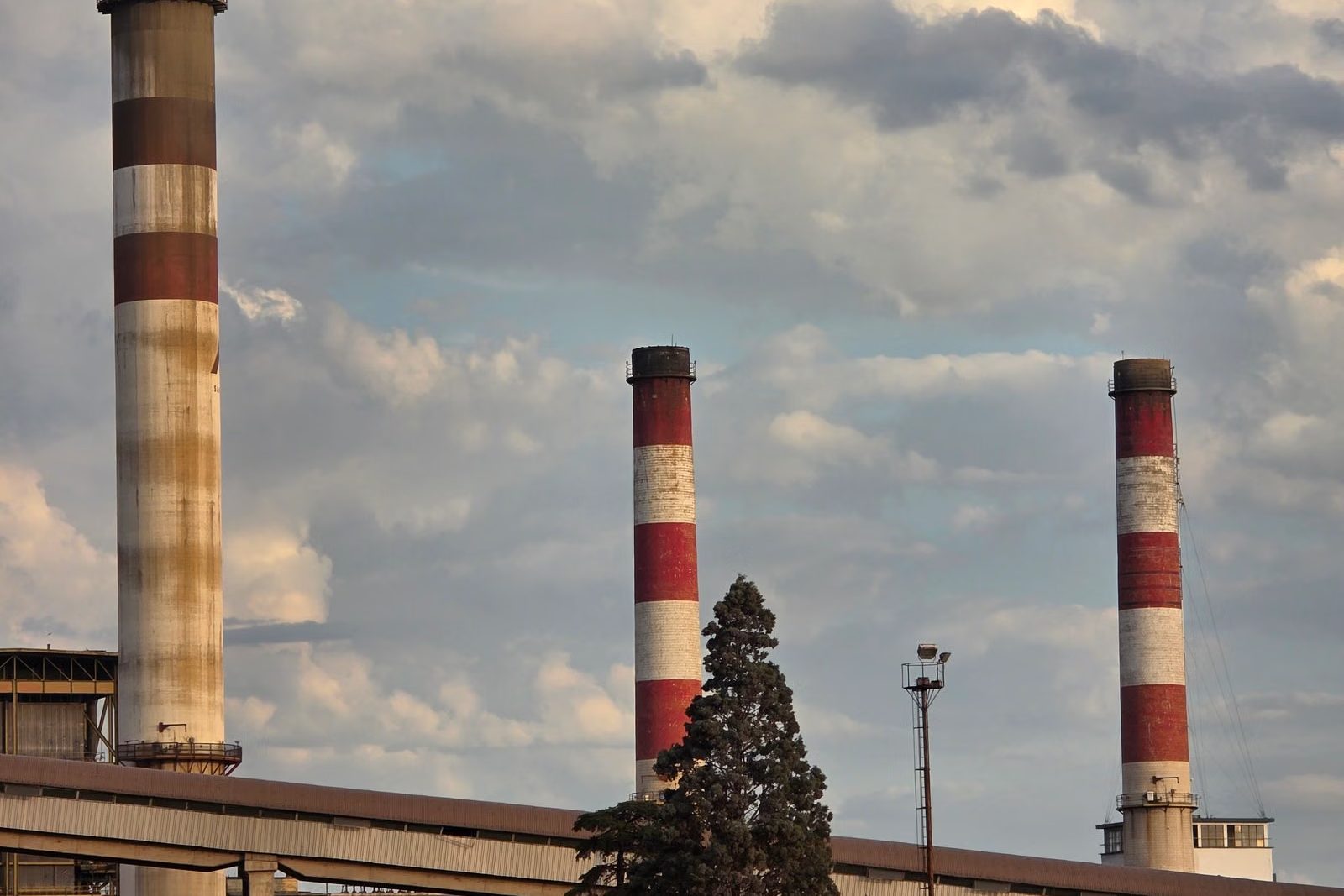
Towers and pipe racks in a chemical plant area spread out horizontally under a pale sky
In the desulfurization tower of a refinery, the polyether circulating liquor foams continuously under amine liquor and hydrocarbon entrainment, the liquid-level reading rises falsely in step, tray fouling pushes the pressure drop high, maintenance frequency and solvent replenishment climb month by month, and the unit's throughput is forced down to a low grade.
Chemi Tech supplies the KM-1040 series of defoamers for the polyether circulation system of refinery desulfurization towers; the dosage is adjusted flexibly by circulating-liquor viscosity, amine concentration and the gas-liquid load inside the tower. This grade is a polyether-modified type; it neither breaks emulsion nor separates in sulfur-containing solvent environments, and it causes no interference with the desulfurizing ability of the amine liquor. The measured data on foam-layer thickness and tray pressure drop are recorded side by side at the same tower diameter, and the fitted dosage of the KM-1040 series is determined accordingly; it is finalised only after circulating-liquor viscosity and solvent ratio are checked in grades.
Advantages of Chemi Tech Defoamers
The Chemi Tech KM-1040 series defoamer is configured for the polyether circulation system of refinery desulfurization towers. It resists solvents, neither breaking emulsion nor separating in sulfur-containing amine environments; it breaks foam fast, thinning the foam layer of the circulating liquor within hours; its foam-suppressing duration is long-lasting, so no shift-by-shift top-up is needed for the foam in the tower; its compatibility is excellent, causing no interference with the amine absorption reading of hydrogen sulfide; it resists high temperature, keeping its foam-suppressing ability in the high-temperature section at the tower bottom; and the dosage is economical, rated by circulating-liquor viscosity and gas-liquid load, so the solvent cost per tower can be accounted directly.
Industry Pain Points and Solutions
The root of foaming in the polyether circulating liquor of a desulfurization tower lies mostly in the combined effect of a too-high amine concentration and gas-liquid shear inside the tower, while hydrocarbon entrainment stabilises the fine bubbles at the liquid surface, finally concentrating in two places: the falsely high liquid level and the tray pressure drop.
When the amine concentration rises, the circulating-liquor foam first thickens and a deviation appears between the level meter and the on-site gauge glass. KM-1040 resists solvents; once the two readings of concentration and gas-liquid load are cleared, its dosage is re-rated by the amine load of that tower, and the level-meter reading and the gauge glass converge.
After the gas-liquid load inside the tower is raised, foam breaking and regeneration play against each other, and the tray pressure drop differs markedly between the low-load and high-load grades. KM-1040 resists high temperature; with the two sets of pressure drops at sixty-percent and ninety-percent loads compared side by side, the gap from 1.2 kilopascals down to 0.5 kilopascals narrows to within 0.2 kilopascals, and the dosage is rated to the fitted grade of that tower.
Hydrocarbon entrainment accumulates in the circulating liquor, further extending the stable period of the foam, and amine entrainment loss rises accordingly. The KM-1040 series adds no extra solvent-replenishment frequency on this item; once amine concentration, gas-liquid load and hydrocarbon content are all checked through, the precise dosage of that tower is made clear and the operating shift executes at that grade.
Typical Operating Conditions and Verification
Customer case: the desulfurization-tower unit of a refinery enterprise in Shandong, applied to the defoaming stage of the polyether circulating liquor.
This plant originally checked the liquid level manually twice per shift, the difference between the level meter and the gauge glass stayed steadily above two divisions, and the tray pressure drop rose markedly after the change of season. KM-1040 was selected as the defoaming grade for that tower after comparison against the two readings of amine concentration and gas-liquid load, with the dosage rated by hydrocarbon entrainment and circulation rate. After commissioning, the difference between the level meter and the gauge glass narrowed to within half a division; solvent replenishment fell from once per shift to once per day; the tray pressure drop fell back from 1.2 kilopascals to 0.5 kilopascals; and amine entrainment loss no longer accumulated month by month.
Frequently Asked Questions
If the KM-1040 series is dosed over the long term in the polyether circulating liquor of a desulfurization tower, will it affect the desulfurization efficiency of the amine liquor?
It depends on three clues: amine concentration, hydrocarbon entrainment and the gas-liquid load inside the tower. The KM-1040 series is a polyether-modified type that neither breaks emulsion nor separates in sulfur-containing solvent environments; the measured data on foam-layer thickness and tray pressure drop are given side by side by Chemi Tech from two sets of readings at the same tower diameter, and dosing at the rated magnitude does not disturb the amine absorption reading of hydrogen sulfide. The actual dosage is corrected by hydrocarbon accumulation; Chemi Tech gives the fitted dosage of that tower through comparison of the two operating conditions.