
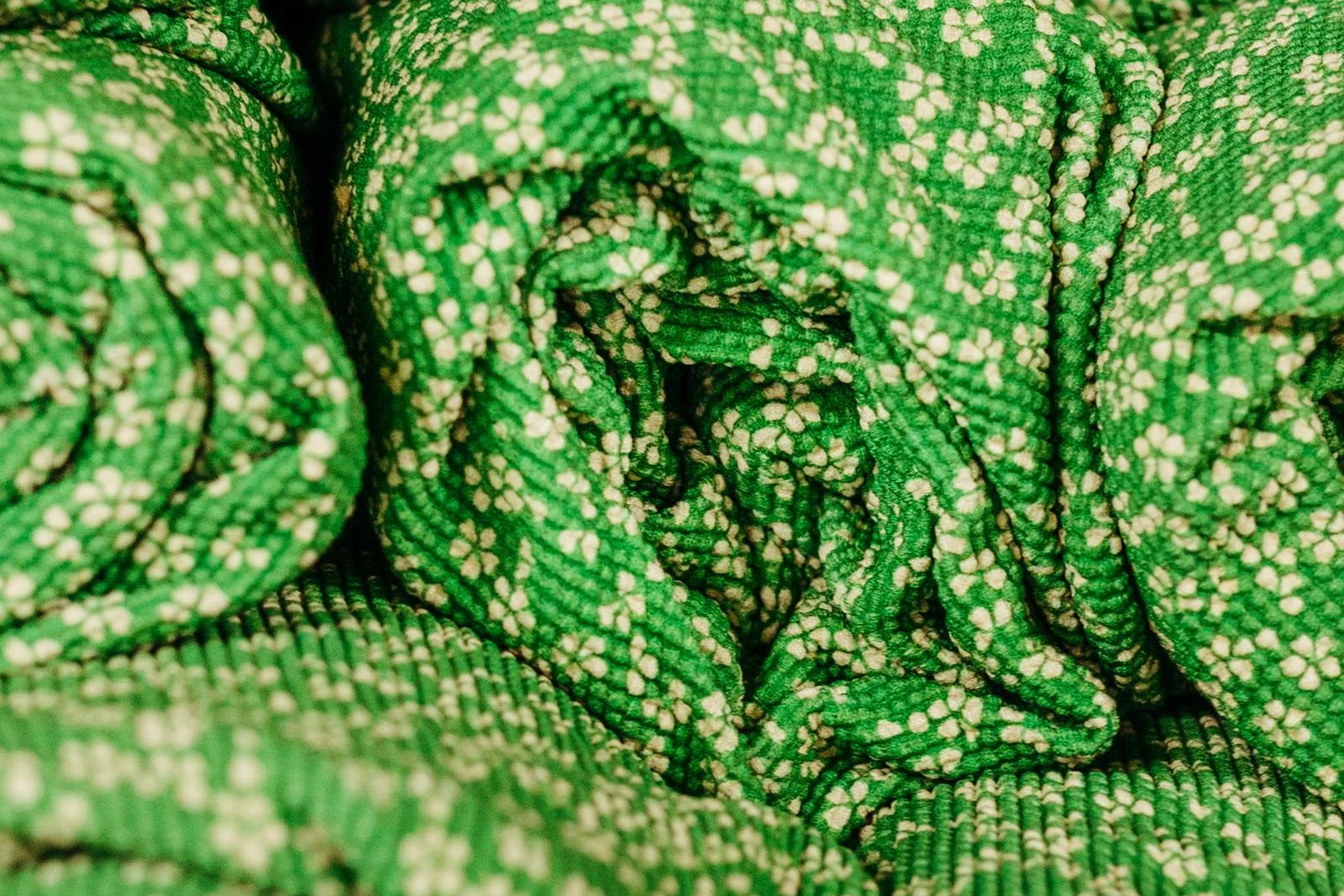
The warp and weft texture of a green fabric spread out at close range
After fluorine-free finishing, the spray rating of the cotton fabric drops notch by notch after a few wash cycles; water droplets spread on the cloth surface instead of rolling off, wet spots appear first at the cuffs and collar, and reworked and re-finished batches pin the finishing workshop's schedule down at the water-repellency step.
Chemi Tech supplies the KMWF-01 series of water repellents for the fluorine-free water-repellent finishing of cotton fabrics; the dosage is adjusted flexibly by fabric weight and wet pick-up. This grade follows a fluorine-free route, keeping the perfluorinated item within the detection limit, forms a continuous film on the fibre surface, balances spray rating with hand feel, and is compatible in the same bath with common softeners and crosslinkers. The measured data of the AATCC 22 spray rating and wash-fastness cycles are laid on the same finishing record, and the fitted dosage of the KMWF-01 series is graded accordingly; the finishing dosage is set only after the fabric weight and curing conditions are checked through.
Advantages of Chemi Tech Water Repellents
The Chemi Tech KMWF-01 series water repellent is configured for the fluorine-free water-repellent finishing of cotton fabrics. It follows a fluorine-free route, keeping the perfluorinated item within the detection limit; it forms a continuous film on the fibre surface, keeping the spray rating in the pass grade; it is wash-fast, so rating decay slows after multiple wash cycles; it has little effect on hand feel, leaving the cotton cloth neither stiff nor harsh; its compatibility in the same bath with common softeners and crosslinkers is excellent, so the finishing bath needs no separate formulation; and its curing-temperature window is wide, so the fabric mill's existing curing conditions can be carried over directly.
Industry Pain Points and Solutions
The root of fluorine-free water-repellency decay on cotton fabric lies mostly in the combined effect of a too-low wet pick-up and insufficient curing crosslinking, while the mechanical friction of washing weakens the integrity of the finishing film cycle by cycle, finally concentrating in two places: the spray rating and the appearance of wet spots.
When the wet pick-up is too low, the film formed on the fibre surface is not continuous enough and the spray rating drops one notch after the first few wash cycles. KMWF-01 forms a continuous film; once the wet pick-up and curing temperature are checked through, its dosage is re-rated by the fabric type and the spray rating stays in the pass grade.
When the curing temperature is set too low, crosslinking is insufficient, the spray rating falls with each wash cycle, and spreading wet spots are left on the face of the cuffs. KMWF-01 performs stably across cotton and cotton-polyester blends; with curing at one hundred and twenty and one hundred and fifty degrees Celsius compared side by side, rating decay narrows from three notches to one, and the finishing-bath concentration is graded accordingly.
The mechanical friction of washing puts the finishing film through another test. The KMWF-01 series is wash-fast and adds no extra re-finishing cycles on this item; once fabric weight, wet pick-up and curing temperature are all checked through, the fitted dosage of this batch of fabric is made clear and the finishing workshop continues to use that magnitude.
Typical Operating Conditions and Verification
Customer case: the water-repellent finishing workshop of a cotton-fabric finishing enterprise in Fujian, applied to the fluorine-free water-repellent curing stage.
At this plant the spray rating of the cuffs fell faster after washing than that of the body, wet-spot spreading was wider on the cotton-polyester blend batches than on the pure-cotton batches, and re-finishing cycles rose month by month. KMWF-01 was taken as the fluorine-free finishing grade for that batch of fabric after comparison of fabric weight and washing conditions; both padding and exhaustion processes can be adapted; and the finishing-bath concentration was rated by wet pick-up and curing temperature. Measured records after finishing: the rating decay of the cuffs converged with that of the body; wet spots no longer spread to the back of the fabric; the spray rating stayed in the pass grade after multiple wash cycles; re-finishing cycles decreased, and the finishing schedule was completed to the original plan.
Frequently Asked Questions
After multiple wash cycles, can the rating decay of a fluorine-free water repellent be predicted?
It depends on three clues: wash-cycle count, washing temperature and detergent alkalinity. The KMWF-01 series forms a continuous film on the fibre surface and is wash-fast; the measured data of the spray rating and wet-spot rating are checked out by Chemi Tech from the wash records of the same fabric type, the decay trend can be plotted as a curve against cycle count, and the specific values are subject to the actual conditions of that finishing mill. The actual dosage is further fine-tuned by wet pick-up and curing temperature; Chemi Tech determines the fitted dosage by combining lab samples with production-line measurements.