
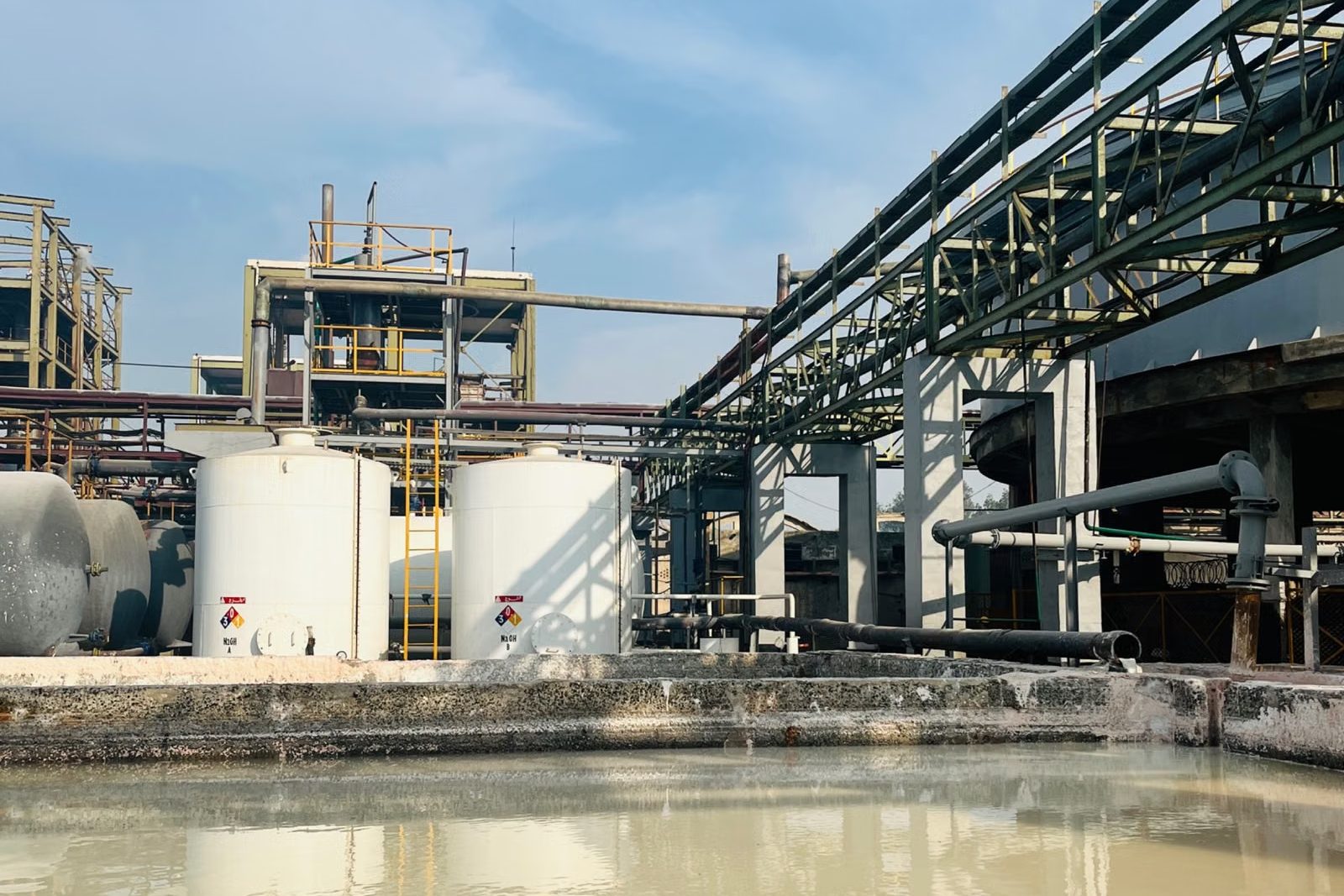
Groups of water-storage tanks and pipelines arranged along the plant area under sunlight
High-salinity wastewater is concentrated continuously in the evaporative crystalliser; the foam layer from salt precipitation covers the liquid surface, the level and density readings become distorted, fine bubbles entrained on the crystal surface reduce purity, and the evaporation and centrifugation stages are forced to run at reduced load.
Chemi Tech supplies the KM-955 series of defoamers for the foam conditions in the evaporative-crystallisation stage of high-salinity wastewater; the dosage is adjusted flexibly by salinity, evaporation temperature and feed load. This grade is a powder type; it resists high salinity without failing, neither separates nor cakes in the crystallisation liquor, and causes no interference with the crystal particle-size distribution. The measured data on foam-layer thickness and crystal purity are recorded side by side at the same evaporation effect, and the fitted dosage of the KM-955 series is determined accordingly; the salinity grade and feed load are listed separately before the dosage of that effect is checked.
Advantages of Chemi Tech Defoamers
The Chemi Tech KM-955 series defoamer is configured for the evaporative crystallisation of high-salinity wastewater. It is a powder type that resists high salinity, keeping its foam-suppressing ability from decaying as salinity rises; it breaks foam fast, thinning the foam layer on the crystalliser surface within a short time; its foam-suppressing duration is long-lasting, so no frequent top-up is needed in the continuous evaporation section; it causes no interference with the crystal particle-size distribution, keeping the output purity stable; it can be blended in the same tank with common scale inhibitors without disturbing the crystallisation process and leaving no deposits on the crystal surface; and the dosage is economical, rated to a specific grade by salinity and evaporation temperature, so the chemical cost account of the evaporation section is clear and traceable.
Industry Pain Points and Solutions
The root of foaming in high-salinity evaporative crystallisation lies mostly in the combined effect of surface-tension changes from salinity accumulation and air entrained by feed shear, while rising temperature stabilises the fine bubbles at the crystal-slurry surface, finally concentrating in two places: distorted level reading and declining crystal purity.
When the salinity grade rises, the foam layer of the crystallisation liquor first thickens and a deviation appears between the level reading and sampling. KM-955 resists high salinity; once the two readings of salinity and temperature are cleared, its dosage is re-rated by the load of that effect, and the level reading stabilises again.
As the evaporation temperature keeps rising, foam breaking and regeneration play against each other and the fine bubbles entrained on the crystal surface leave impurities after centrifugation. KM-955 is a powder type resisting high salinity; with the foam half-life at the low-salinity and high-salinity grades compared side by side, the gap from twenty-five seconds to forty-one seconds narrows to within five seconds, and the dosage is rated to the fitted grade of that effect.
The hydraulic fluctuation brought by a feed-load switch returns stable fine bubbles to the crystal surface and the foam-suppressing margin is consumed step by step. The KM-955 series adds no extra blowdown frequency on this item; once salinity, temperature and load are all checked through, the crystallisation section continues to dose at that magnitude.
Typical Operating Conditions and Verification
Customer case: the high-salinity evaporative-crystallisation workshop of a wastewater-treatment enterprise in a chemical park in Shandong, applied to the evaporative-crystallisation stage of sodium-chloride wastewater.
At this plant the foam layer of the three-effect evaporator once covered most of the observation window, the purity of the output crystals differed markedly between two shifts, and the deviation between the level meter and on-site sampling stayed large over time. KM-955 was matched to the plant after comparison of the two grades of salinity and evaporation temperature, with the dosage rated by feed load and salinity. Measured records after commissioning: the foam layer of the three-effect evaporator came under the lower edge of the observation window; the output-crystal purity converged between the two shifts; the deviation between the level meter and sampling fell within one grade; and the processing load of the centrifuge no longer had to be cut shift by shift.
Frequently Asked Questions
For a powder defoamer used in high-salinity wastewater, will the crystal purity drop as the dosage rises?
It depends entirely on whether the salinity grade and evaporation temperature fall within the assessed range of that evaporation effect. The KM-955 series is a powder type that resists high salinity without failing; the measured data on foam-layer thickness and crystal purity are given side by side by Chemi Tech from the two grades of readings of the three-effect evaporator, and dosing at the rated magnitude does not disturb the crystal particle-size distribution. The actual dosage is corrected by feed load and salinity accumulation; Chemi Tech derives the dosage of that effect from the comparison results of the crystallisation liquor.