
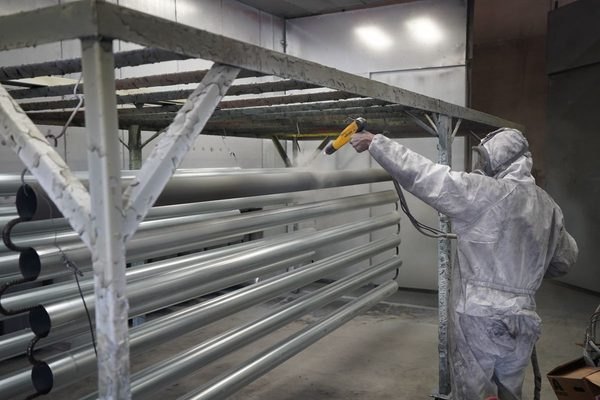
Orange peel and craters on a powder coating are often not decided by bake temperature alone. When the resin system, the filler ratio and the leveling agent do not line up, spreading in the melt stage suffers, the panel looks mottled, gloss falls with it and rework rates climb.
For powder and industrial coatings, what Chemi Tech brings is the acrylic leveling agent range, matched to resin system and cure conditions. Conventional bake and low-temperature cure both apply, from the KMT series.
Business Advantages
First, spreading is even and orange peel on the panel is reduced. Flow through the melt stage is smooth, surface waviness is small, appearance clears inspection more easily and rework drops.
Second, craters are suppressed and no pits are left on the panel. Compatibility with the system is good, so craters caused by local surface energy differences are fewer and edges start to look clean as well.
Third, the dosage window is wide and a light addition still does work. It takes effect within the normal addition range, and the side effects of over-dosing stay controllable.
Fourth, it tolerates the oven: it still works with slightly looser cure conditions. Transfer coating and electrostatic spraying both connect to it, so switching lines does not mean rewriting the formulation.
Boundary on these figures: from Chemi Tech's line feedback, the conclusions here come from typical powder formulations. Change the resin or the filler and the behaviour differs. Run a test panel first.
Industry Pain Points and Solutions
Leveling problems in powder coatings usually come down to three things: system compatibility, the cure window and the dosage boundary.
Pain point one: orange peel is obvious and the panel fails appearance inspection. The answer is to start from system compatibility and fix spreading first.
Pain point two: craters and show-through appear and the rework rate climbs. The answer is to choose a better-compatibilised type and cut the local surface tension difference.
Pain point three: the dosage is hard to hit, and adding more causes haze and mottling. The answer is to fix the dosage boundary with test panels and step the adjustment against the system.
Chemi Tech works in three steps as well: screen for system compatibility first, then run machine test panels, and finally lock the dosage band.
Typical Conditions and Verification
Powder coating cure conditions mostly fall between low-temperature fast cure and conventional bake, and film thickness changes with part geometry. Orange peel and craters usually concentrate in the melt and ramp-up stage, and part thickness plays into it.
Failure signals show up in four ways: orange peel visible to the eye; craters appearing in patches; edges showing through; gloss falling after the bake. Hit two and a test panel verification needs scheduling.
Comparison data at the same powder system and the same cure conditions is on file at Chemi Tech, so test panel results can be checked against it instead of starting from nothing.
FAQ
Q1: Why are powder systems particular about additives?
General-purpose additives disperse poorly in a powder system, so haze and craters appear and adding more still will not hold orange peel down.
Q2: Does a leveling agent affect adhesion and weather resistance?
That needs separate verification. Resin systems differ and so do the conclusions, so the test panel decides, with adhesion and weathering assessed together rather than concluding from one measurement.
Q3: How do you replace an imported leveling agent with a domestic one?
Draw a baseline from the original product's dosage and panel appearance first, reproduce it equivalently on the same powder batch, and replace once the test panels pass.