
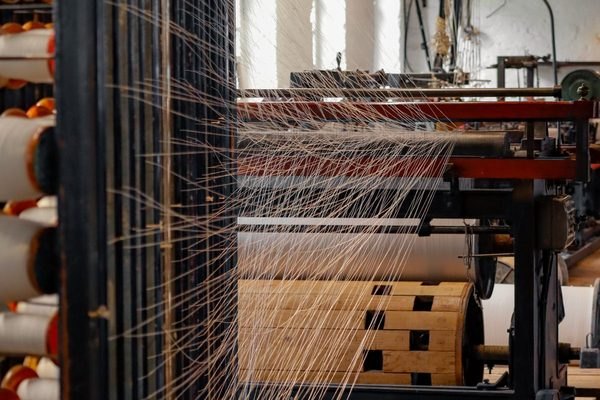
The size liquor in the box circulates continuously, and both agitation and pumping pull air into it. Foam floats on the surface, the liquor the warp carries out varies from one end to the other, breakages and size spots go up on the loom, waste yarn is lost and uneven size film drags on loom efficiency.
On the textile line, Chemi Tech supplies polyether and silicone defoamers, plus compounded silicone-polyether types, for sizing, pretreatment and finishing. They are matched to size type and sizing temperature, and high-viscosity high-temperature conditions are covered from the KM series defoamer line.
Business Advantages
First, no skinning from incompatibility and no build-up in the box. It mixes with starch and PVA systems, so the box walls and guide rollers do not pick up skins.
Second, foam is held at the source and the circulation loop stays clear. Air drawn in by pumping does not accumulate and the liquor surface stays level.
Third, pick-up is stable and the warp takes up size evenly. Variation in liquor take-up is small, breakages on the loom come down and loom speed can be raised.
Fourth, desizing stays straightforward and downstream processing is unchanged. The components are carried out in the desizing stage instead of staying on the yarn.
Boundary on these figures: the conclusions come from typical sizing conditions. Change the size recipe or the line speed and the results differ. Run a small-scale trial before bulk use.
Industry Pain Points and Solutions
Foam in the sizing section is hard to handle: the liquor is viscous, the circulation never stops, and the downstream stage still demands clean desizing.
Pain point one: foam rises in the box and warp pick-up swings. The answer is a type that is compatible with the size, dealing with the compatibility question first.
Pain point two: foam gets into the size film and hard size spots appear on the yarn. The answer is stronger foam suppression so less foam reaches the sizing zone at all.
Pain point three: residue in the desizing stage keeps the following process from coming clean. The answer is to put desizing behaviour into the screening criteria and rule unsuitable types out early.
Chemi Tech works in three steps: reproduce the temperature and concentration on your own size first, then run a machine trial, and finally fix the type and the addition point.
Typical Conditions and Verification
Sizing temperature generally sits between seventy and ninety-five degrees Celsius, liquor viscosity moves with the recipe and the box is fed continuously. Foam builds fastest at start-up and at size changes.
Four signals are worth watching: thick foam floating on the box; warp pick-up going high and low; size spots on the yarn after drying; foam increasing in the desizing trough. Two of those and the recipe should be left alone until a machine trial has been run.
Records at the same size recipe and the same weaving conditions are available from Chemi Tech as reference, for comparing pick-up and desizing results.
FAQ
Q1: Why is the sizing section particular about chemistry?
General-purpose defoamers skin up in starch size, hold foam for only a short time, and can affect how evenly the warp takes up size.
Q2: Will a sizing defoamer affect desizing and downstream dyeing?
That needs separate verification. Size recipes differ and desizing behaviour differs with them, so the on-site trial decides, with desizing results judged alongside.
Q3: What order should a switch to a domestic defoamer follow?
Record the original product's dosage and the box condition as a control first, reproduce it equivalently on the same size batch, and switch across fully once pick-up is stable and desizing is normal.