
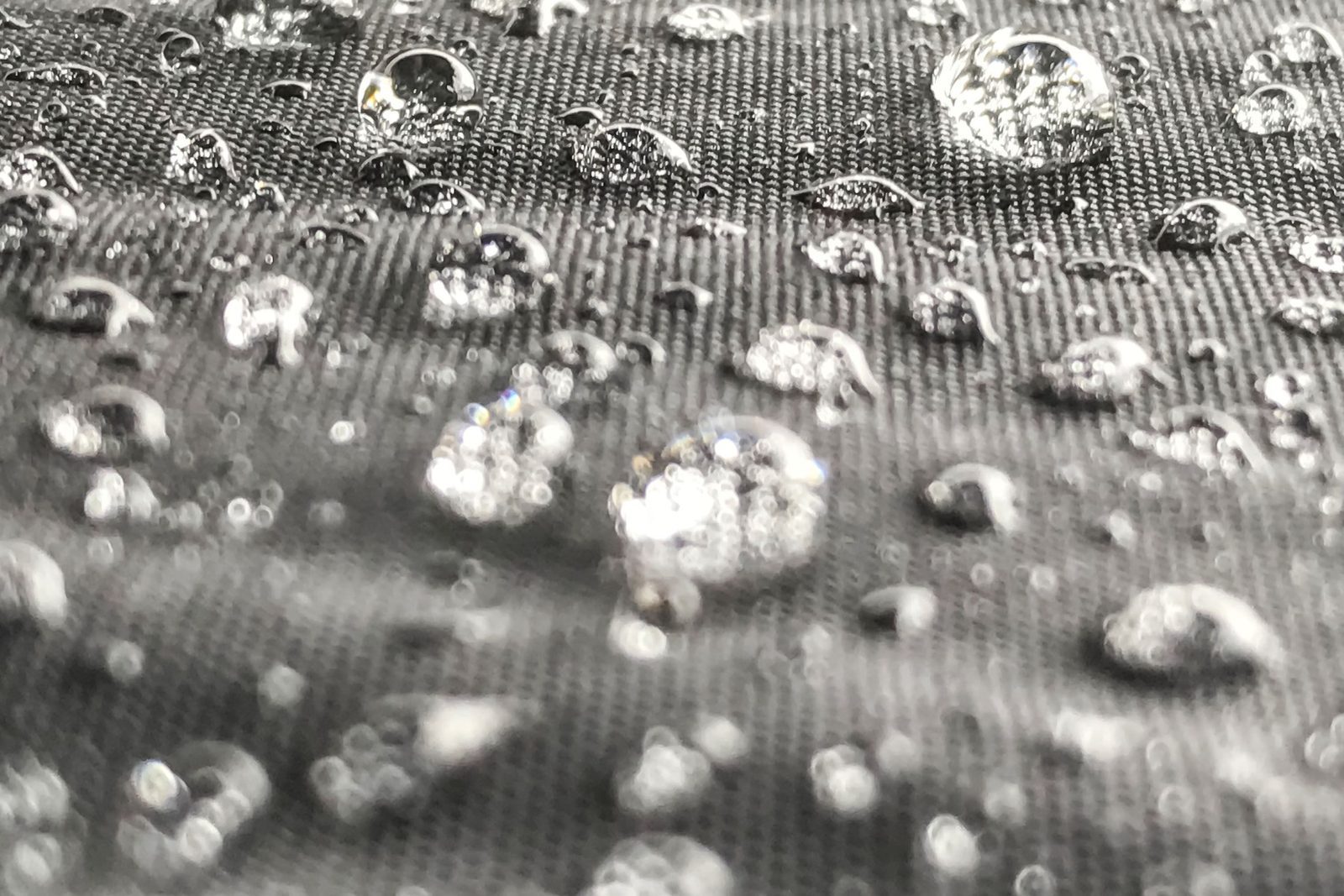
The face of the fabric beads water and rolls it off, yet the webbing and stitching still draw water upward, so a garment catches rain and the inside of the shoulder and back wets out first. Once the customer's lab report lands, the returns and the rework are all charged to that one batch of cloth.
Chemi Tech supplies water-repellent finishes for outdoor gear, luggage webbing and shoelaces. The line is the water repellent KMF series, and which grade to use depends on whether the substrate is polyester or nylon, filament or staple, and whether the customer's test method is a spray rating or a wicking rise height. KMF-803 is built for the anti-wicking direction and is the one most often used on webbing and stitching. Where the fluorine item also has to be held down, the fluorine-free KMWF-102 is the simpler route and is widely used on export orders. Send over the greige specification and the test standard, and we will settle it against your method rather than having you feel your way through a first round.
Advantages of Chemi Tech Water Repellents
KMF-803 series penetrates webbing and stitching well, so the inside of the yarn carries repellency too and water cannot creep up the fibre by wicking. Wash durability keeps pace as well: after twenty washes the wicking rise height still sits inside the thresholds customers commonly apply, so sampling day is not a gamble. It also has little effect on hand feel, so webbing does not go stiff and brittle and neither the luggage plant nor the garment plant has to change its sewing parameters. There is room on the bath compatibility side too: it runs alongside the softeners and resins normally used, so the setting schedule does not need reworking. And with no perfluorinated compounds in it, the export test method clears in one pass.
A note from Chemi Tech: the behaviour above comes from a typical polyester webbing finishing condition. Change the fibre composition or the fabric construction and the results move. Confirm on a small sample before going to bulk.
Industry Pain Points and Solutions
What makes anti-wicking hard is that it does not show up in the face fabric's numbers. It hides in the rise height on the stitching and the fabric edge.
Testing the face fabric and not the stitching is the most common gap. The face spray score looks good, but the garment rain test leaks along the seam line and the problem gets pushed onto the garment maker. What Chemi Tech does is sample the webbing and the stitching alongside the fabric, in the same trial round.
Having it only surface after washing is harder still to guard against. The rise height passes on sampling day, then climbs back after a few washes and the complaint erupts downstream. What Chemi Tech does is supply the wicking data for before and after washing together, rather than a report that only looks good on the day.
Hand feel and repellency pulling against each other is the most wearing of the lot. Add too much finish and the webbing goes stiff; add too little and the rise cannot be held down. What Chemi Tech does is put the hand-feel score and the wicking height into the same comparison table so both boundaries are found together.
Please welcome a call to discuss samples. The formulation is stable and it comes direct from the manufacturer.
Typical Conditions and Verification
Customer: an outdoor equipment supplier in Zhejiang, for water-repellent finishing on luggage webbing and stitching.
The plant builds backpacks for European customers. The face fabric's spray rating passed consistently, but the garment rain test kept leaking at the webbing and the stitching, and two shipments were returned by the customer for rework. The solution Chemi Tech's water repellents provided was this: working from the webbing specification and the customer's wicking standard, KMF-803 was selected from the KMF series, and the finishing process was re-calibrated together with the curing temperature, followed by a small sample sent to the customer's lab for confirmation. The wicking height before washing and after twenty washes both landed inside the customer's threshold, and the garment rain test passed first time. The workstation that plant had kept for rework was converted into an inspection bench.
FAQ
Can a water repellent used on fabric be applied straight to webbing?
In most cases no. Fabric finishing is concerned with surface spreading, whereas webbing and stitching need penetration into the yarn interior. The two directions differ, and copying one onto the other will most likely show up in the rain test. What we do for equipment plants is sample the webbing and stitching separately and submit them for testing together with the fabric, so the data is gathered in one pass.
Give the customer's test standard and the webbing specification to our technical engineers, and the sampling work and the process sheet come back together. Where the delivery date is tight, we schedule it first.