
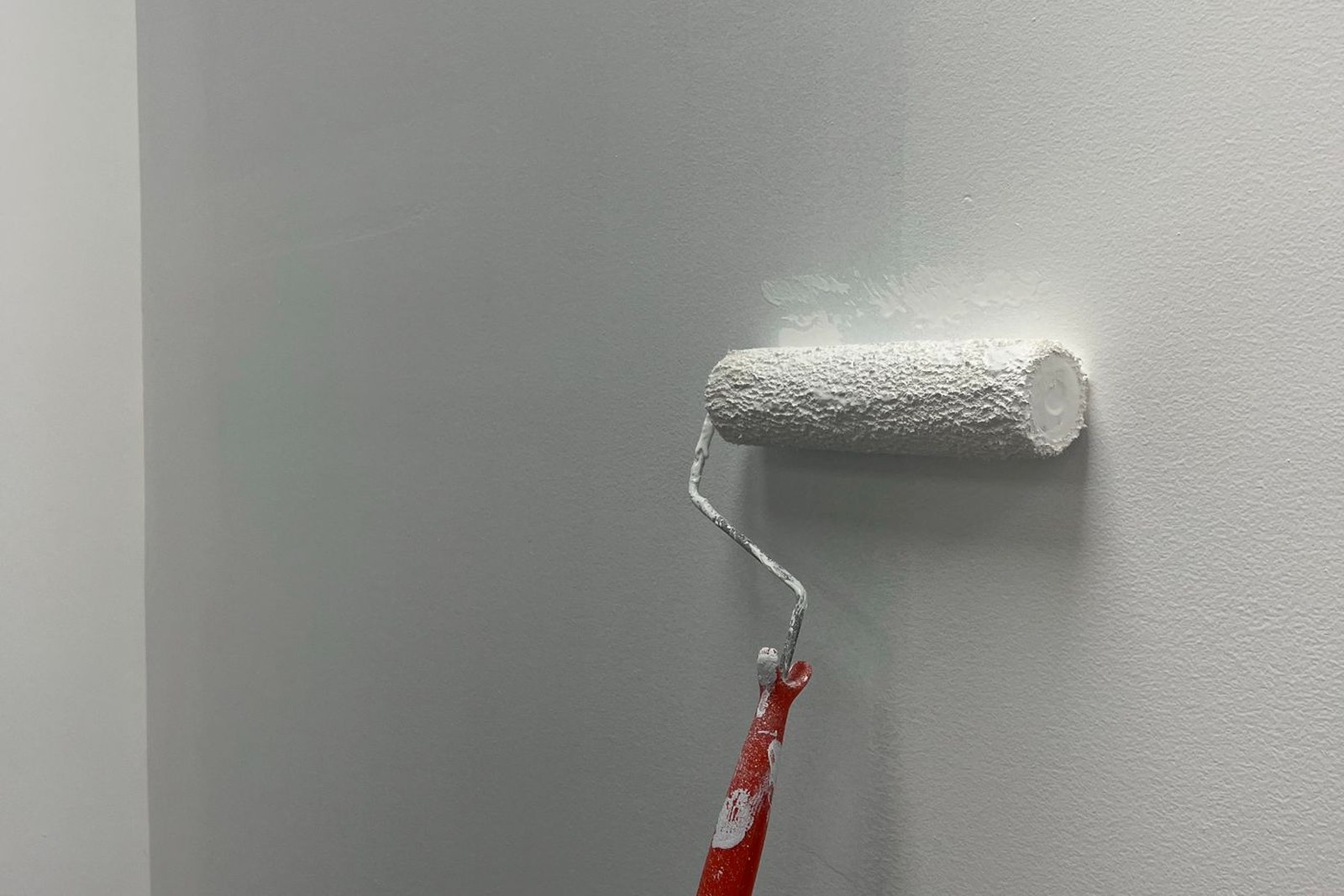
A white wall being roller-coated
Latex paint takes air in during roller coating and application; if the defoamer is not sufficiently compatible with the system, shrinkage cavities and fish eyes are left behind once the foam is broken, the dry film surface comes out mottled, and the appearance of the wall and the acceptance pass rate fall with it.
Chemi Tech supplies defoamers for water-based architectural coatings and latex paint systems, drawn from the defoamer KM-260 series; the dosage is set by the type of emulsion, the pigment volume concentration and the method of application. KM-260 is highly compatible, does not cause shrinkage cavities once added, leaves no fish-eye defects on the film surface, has little effect on gloss and does not haze or cloud. Chemi Tech compares defoaming performance against the appearance and the gloss of the film, and gives the customer the fitted model.
Advantages of Chemi Tech Defoamers
Chemi Tech defoamer KM-260 series is highly compatible, does not cause shrinkage cavities once added, and leaves no fish-eye defects on the film surface; and it clears the micro-foam thoroughly, leaving no pinholes or white spots after the film cures; moreover, it has little effect on gloss and does not haze or cloud, so the appearance of the wall stays consistent; in addition, the suppression lasts, it does not fail through to the baking stage, and both storage of the finished product and application stay stable.
Industry Pain Points and Solutions
Foam in latex paint is mostly not a matter of the roller turning too fast, but of insufficient compatibility between the defoamer and the system; the consequence is shrinkage cavities and fish eyes, and a fall in the appearance of the wall.
The first problem to surface is shrinkage cavities and fish eyes. When the defoamer is not sufficiently compatible, shrinkage cavities and fish-eye defects are left on the film surface once the foam is broken. Chemi Tech's answer is to add the highly compatible KM-260 at the let-down stage, so that the agent is already dispersed before the air is entrained.
Next comes the fall in gloss. Some defoamers haze and cloud after breaking the foam, the gloss of the film falls, and the appearance of the wall suffers. KM-260 from Chemi Tech has little effect on gloss, and the film does not haze or cloud once it is added.
There is one more point in insufficient suppression time. If the foam rises again after application, pinholes and white spots remain in the dry film. Chemi Tech checks suppression performance according to the method of application, and calibrates the dosage of the micro-foam-clearing KM-260 together with the point of addition, so that the dry film surface stays smooth.
Typical Operating Conditions and Verification
Customer: a water-based architectural coatings manufacturer in Guangdong, for the let-down and roller-coating stages of interior latex paint.
At this plant the paint surface came out with rather too many shrinkage cavities and fish eyes after roller coating, the gloss was patchy, and rework was frequent. The solution Chemi Tech defoamer gave for the situation was: taking the type of emulsion and the method of application into account, choose the KM-260 series, set the dosing point at the let-down stage, and grade the dosage by pigment volume concentration. After the adjustment was in place, shrinkage cavities and fish eyes on the paint surface fell noticeably, the gloss returned to even, and the first-pass acceptance rate rose with it.
Frequently Asked Questions
Will adding a defoamer to latex paint cause shrinkage cavities and affect the gloss of the film?
There is such a possibility, since a small number of categories are not sufficiently compatible with the system and leave shrinkage cavities and fish eyes once the foam is broken, with the gloss falling along with them. For water-based architectural coatings, Chemi Tech has completed compatibility and gloss checks with KM-260, and at normal dosage there are no shrinkage cavities and no haze. The dosage is set by the type of emulsion and the method of application, and Chemi Tech gives a recommended range after the film-appearance comparison.