
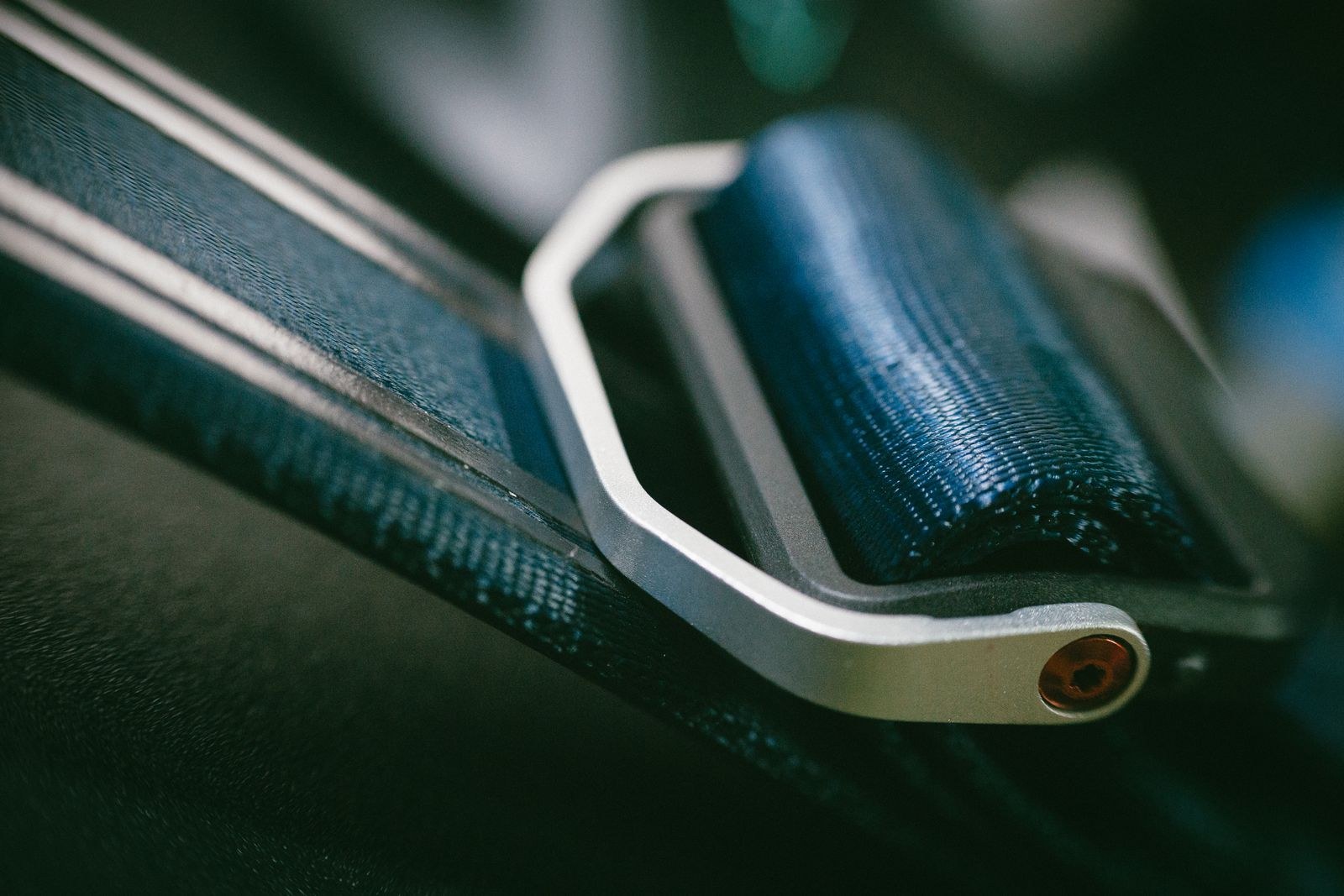
Close-up of neatly arranged webbing and sewing thread
Webbing and sewing thread take on binding and stitching in the finished product; once the capillary channels between the fibres are not filled, water climbs inward along the stitch line, the seams of bags and outdoor gear get wet first, and the water-repellency figure of the whole product is dragged down.
Chemi Tech supplies water repellents for the anti-wicking finishing of webbing, sewing thread and narrow fabric, drawn from the KMF-4401 series; the finishing-liquor ratio is set by the fibre material, the webbing width and the padding method. This grade carries liquor evenly, and both narrow webbing and sewing thread can be covered; Chemi Tech runs measured comparisons of the capillary rise height and the water-repellency performance after washing, and matches a fitted grade for the customer.
Advantages of Chemi Tech Water Repellents
Chemi Tech KMF-4401 series water repellent forms a continuous film on the fibre surface, the capillary channels are filled, and water no longer climbs inward along the stitch line; at the same time, its wash performance is stable, and the anti-wicking effect after repeated washing is still maintained; in addition, its influence on the webbing softness and the sewing thread's sewability is small, and the hand does not turn stiff or rough; moreover, it is compatible in the same bath with common softeners, so the finishing steps need not be split; besides, both padding and dip finishing can be fitted, and both narrow webbing and sewing thread can be covered.
Industry Pain Points and Solutions
Anti-wicking finishing failure mostly stems from the capillary channels of the sewing thread and webbing not being covered, rather than from the fabric's own water repellency failing the standard; the consequence is that the seams get wet first.
The most easily overlooked is the sewing thread. The fabric meets the water-repellency standard across its full width, but the sewing thread is not finished, and water walks inward along the capillary channels of the needle holes and the stitch line. Chemi Tech fixes the KMF-4401 finishing-liquor ratio by the fibre material of the sewing thread, and the thread body is also filled by the finishing liquor.
Second is the edge of the narrow webbing. After weaving and slitting, the webbing has much edge fuzz, the liquor pickup is uneven during padding, and the edge becomes a water-absorbing gap. KMF-4401 carries liquor evenly, and the edge fuzz is likewise covered.
There is also the decay after washing. Some finishes are passable in initial anti-wicking, but after a few washes the film peels off and the capillary rise height climbs again. Chemi Tech checks the film formation against the fibre material and the padding method, and fixes both the finishing-liquor concentration and the curing conditions of KMF-4401, so the capillary rise height after washing stays at a low level.
Typical Operating Conditions and Verification
Customer: a bag-and-luggage accessories enterprise in Fujian, for the anti-wicking finishing line of webbing and sewing thread.
The fabric water repellency had already been done, yet the webbing and sewing thread still seeped water from the seams. The client's rain test first showed wet marks at the stitched positions, and the rework was concentrated in thread change and re-finishing. Chemi Tech switched to KMF-4401 as the water repellent according to the fibre material and the webbing width, fixed the finishing-liquor concentration by the liquor pickup and the curing temperature, and the existing finishing process of the webbing and sewing thread need not be changed. After that, the rain test at the stitched positions no longer showed wet marks; the webbing softness and the sewing thread's sewability were unaffected; and the anti-wicking performance after washing stayed stable.
Frequently Asked Questions
The fabric has already been water-repellent finished; do the sewing thread and webbing still need separate finishing?
They need separate finishing. The full-width fabric finishing does not cover the inside of the thread body of the sewing thread, nor the edge fuzz of the webbing; the capillary channels are still there, and water climbs inward along these positions. KMF-4401 has completed dedicated capillary-rise-height tests for webbing and sewing thread, and within the recommended ratio range the film is continuous and does not peel easily after washing. The finishing-liquor concentration is set by the fibre material, the webbing width and the padding method; Chemi Tech provides a recommended use range through parallel comparison of the rain test and the capillary rise height.