
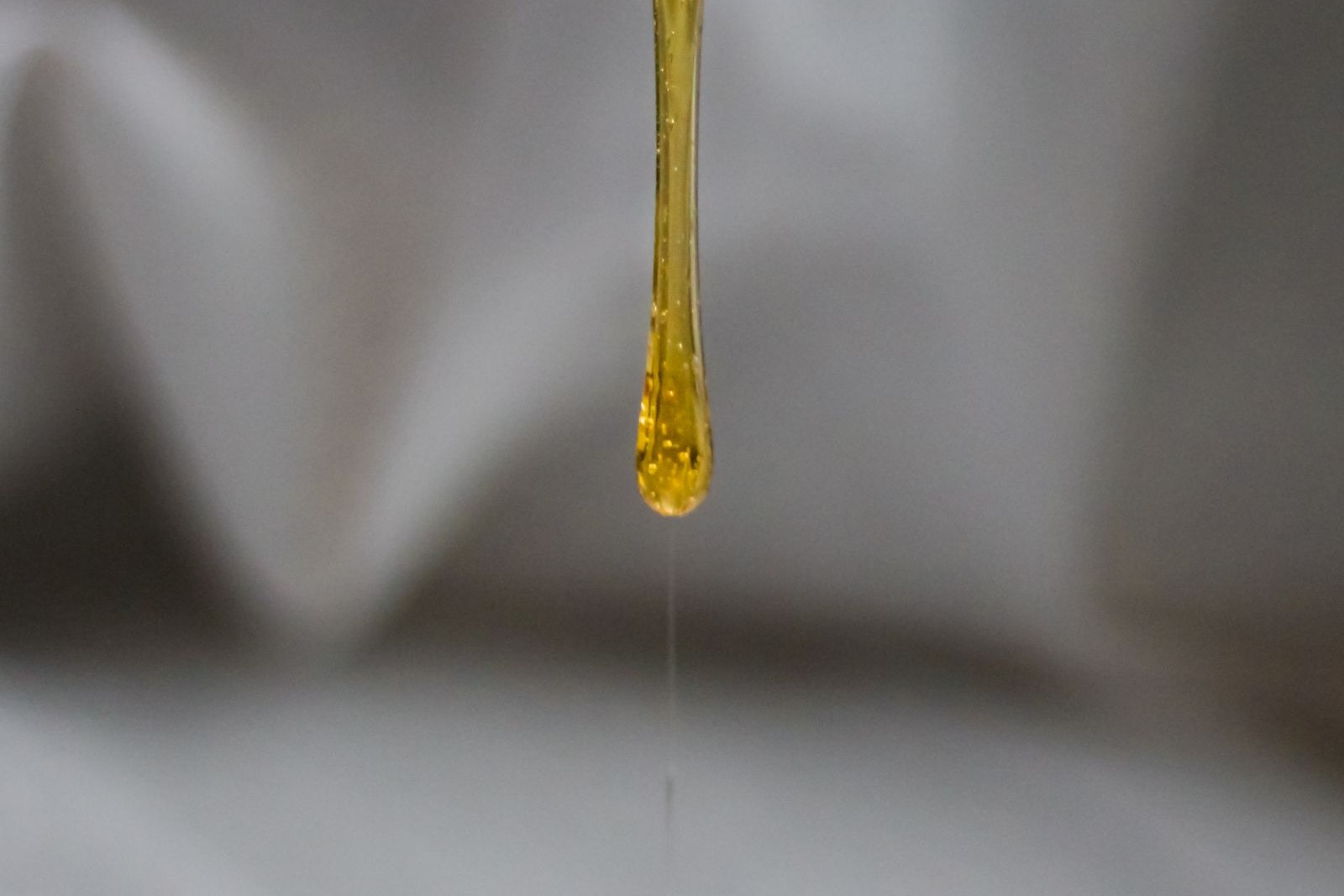
Sugar syrup flowing slowly in a vessel
Sugar juice is heated and churned continuously in the clarification and concentration sections; once foam piles up on the clarifier surface, the overflow outlet loses sugar with it, the filter cloth is fouled by sugar mud, and the evaporator level reading drifts from the true level.
Chemi Tech supplies defoamers for sugar clarification and syrup concentration systems, drawn from the defoamer KM-750 series; the dosage is set by the sugar juice brix, the temperature and the clarification process. This grade is a silicone-free system, available in both one-component and two-component forms, and it spreads and breaks foam on the sugar juice surface through compatibility; Chemi Tech runs measured comparisons of the clarification rate and the filtration flux, and matches a fitted grade for the customer.
Advantages of Chemi Tech Defoamers
Chemi Tech KM-750 series defoamer contains no silicone-oil structure, so the ion-exchange resin and membrane modules in downstream sections are unaffected; at the same time, it introduces no off-colour or off-odour into the sugar juice after breaking foam, and the colour and flavour of the finished sugar stay as they were; moreover, its heat resistance and acid-alkali resistance are stable, and its foam suppression does not decay under the high-temperature conditions of the clarification and evaporation sections; in addition, the dosage is graded by brix and temperature, so high-brix syrup is likewise fitted; besides, the two-component form can be diluted according to the refinery's existing process before use, and the original process need not be changed.
Industry Pain Points and Solutions
Foam in the sugar-making sections mostly comes from a stable foam layer formed when colloids and proteins in the sugar juice are heated, and has little to do with the amount of water added; the consequence is overflow sugar loss and blocked filtration.
The first point to give way is the surface foam in the clarifier. After the sugar juice enters the clarifier, colloids rise with the bubbles and a foam layer that is hard to break on its own forms on the surface, and the overflow outlet loses sugar with it. After the clarification process is checked, Chemi Tech fixes the KM-750 dosage by the sugar juice brix, and the foam is broken within the clarification section.
Next is the distorted level in the evaporator. During syrup concentration, foam occupies the space inside the vessel, the level-gauge reading drifts from the true level, and the evaporation intensity has to be cut back. KM-750 is heat-resistant and acid-alkali resistant, and its foam suppression holds under the high-temperature conditions of the evaporation section; Chemi Tech grades the recommended dosage by the vacuum level.
There is one more point that is easily missed: sugar-mud carry-over in the filtration section. When the foam is unbroken it enters the filter with the sugar juice, the filter cloth pores are soon fouled, and the cloth-change frequency rises with it. Chemi Tech checks the compatibility against the sugar juice brix and the clarification process, sets the recommended KM-750 dosage accordingly, and the filtration flux recovers.
Typical Operating Conditions and Verification
Customer: a sugar-making enterprise in Guangxi, for the clarification and evaporation sections during the crushing season.
After checking the sugar juice brix and the clarification process, Chemi Tech chose KM-750 for this refinery and graded the dosage stepwise by the evaporation-section vacuum, with the dosing still following the original process. Before that, at the peak of the crushing season the thickest surface foam in the clarifier spilled over the overflow outlet, and sugar loss happened from time to time; the evaporator level reading differed markedly from the on-site glass-tube level, and the filter cloth-change frequency was forced up. After the approach was put in place, the change first showed in the clarifier: the surface foam thinned and loosened, and overflow sugar loss no longer appeared; then the evaporator level reading matched the on-site glass tube, the filter cloth-change frequency returned to the level at the start of the crushing season, and the on-shift operator no longer had to keep watch over the overflow outlet.
Frequently Asked Questions
Will adding a defoamer in the sugar clarification and evaporation sections affect the clarification rate and the downstream filtration?
Whether clarification and filtration are affected depends on the compatibility between the defoamer and the sugar juice. KM-750 has completed dedicated compatibility and clarification-rate tests for sugar-making systems, and within the recommended dosage range both the clarification rate and the filtration flux stay stable. The sugar juice brix, temperature and clarification process decide the actual dosage; Chemi Tech gives a recommended use range through parallel comparison of the clarification rate and the filtration flux.