
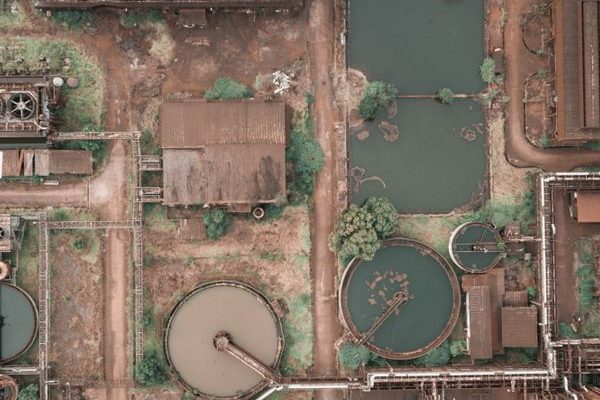
In the steel production process, from sintering, ironmaking, and steelmaking to rolling and circulating cooling, wastewater often contains oils, surfactants, suspended solids, and various auxiliaries. These substances readily cause large amounts of stubborn foam in treatment tanks, aeration tanks, filtration systems, and discharge outlets. Such foam not only overflows, creating environmental and safety hazards, but also seriously affects the accuracy of water quality monitoring, reduces chemical efficiency, hinders solid-liquid separation, and may damage equipment such as pumps and valves, becoming a key pain point constraining production stability and cost control.
Chemi Tech has a deep understanding of the water treatment challenges in the steel industry and is committed to developing targeted solutions. Our defoamer product series is not a generic formula, but is based on in-depth analysis of the complex composition of steel mill wastewater. The products use specially modified polysiloxanes and high-efficiency dispersion technology, offering the dual efficacy of rapid foam breaking and lasting foam suppression. Their features are: they can quickly penetrate and destroy the foam film structure, maintain stable activity under high temperature, high pH, and high electrolyte conditions, and have good compatibility with the wastewater system without negatively affecting subsequent treatment processes.
Our solution steps are clear and easy to implement. First, the technical team will analyze the causes of the foam and the characteristics of the water through sample testing, and recommend the most suitable defoamer model and initial dosing point for you. Second, we provide precise dosage recommendations and dilution guidance, usually suggesting dosing at the source of foam generation or at key nodes of the treatment process (such as the inlet of the aeration tank or the settling tank). Finally, we provide ongoing application follow-up service, fine-tuning the scheme according to actual operating conditions to ensure long-term stable defoaming performance and optimal cost.
For example, we once served an integrated steel enterprise in North China that uses advanced processes. Its hot-rolling wastewater line, due to residual process lubricants, produced large amounts of viscous foam in the regulating tank and the air flotation unit, seriously affecting the scraping of scum and the clarity of the effluent. After on-site diagnosis by the Chemi Tech technical team and laboratory compounding, we recommended our high-temperature and high-shear resistant defoamer KT-321. After the customer continuously dosed it at the inlet of the air flotation unit at a ratio of one part in ten thousand, the foam was significantly controlled within 24 hours, the liquid surface returned to clear, the solid content of the scum increased, the load on the subsequent filtration unit was reduced, the overall water treatment efficiency increased by about 15%, and the overall chemical cost decreased compared with the previous scheme.