
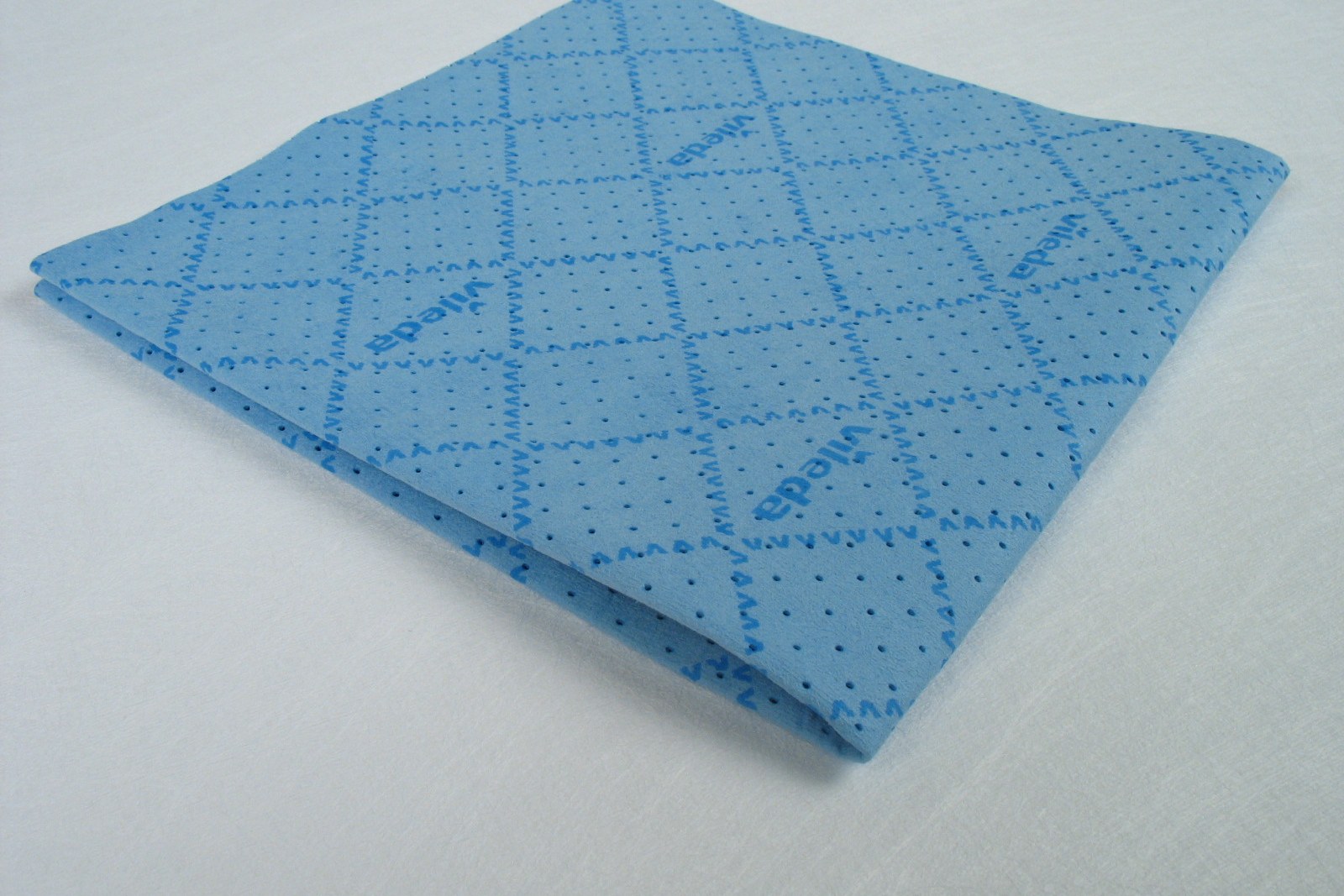
Nonwoven fabric material, photographed on site
Once a nonwoven article takes on water, moisture travels quickly along the gaps between fibres, wet patches blot through the seams of shoe components, the finished article loses its water-repellency rating, and complaints and returns accumulate month after month.
Chemi Tech has introduced the KMF-801 series water repellent for the water-repellent finishing of nonwovens, shoe components and technical textiles, with the dosage adjusted flexibly according to substrate grammage and finishing concentration. This grade forms a continuous water-repellent film on the fibre surface which does not readily fail after washing, and is compatible with common adhesives and softeners in the same bath. Customers can set the adapted KMF-801 dosage on the basis of measured data for water-repellency rating and hand feel.
Advantages of Chemi Tech Water Repellents
Chemi Tech KMF-801 series water repellent is configured for the water-repellent finishing of nonwovens and shoe components. Film formation is continuous, laying a uniform water-repellent film over the fibre surface and closing the capillary channels tightly; wash resistance is outstanding, with repellency still above the order-acceptance threshold after repeated washing; the hand stays soft without boardiness, so the flexibility of the finished nonwoven is unaffected; compatibility with adhesives and softeners in the same bath means the finishing stage needs no extra separation; and the dosage is adjusted flexibly to substrate grammage, covering both light and heavy nonwoven grades.
Industry Pain Points and Solutions
Water-repellent finishing problems in nonwovens stem mostly from an imbalance between discontinuous film formation and a hand that stiffens, and the consequences are concentrated in two places: a fluctuating water-repellency rating and a harder hand feel.
A fluctuating rating leaves articles from the same batch uneven, but once the KMF-801 concentration is set by substrate grammage, spot-check spray tests settle into the qualified band.
A hard hand is the most common source of complaints on nonwoven products, and the touch of masks and wipes suffers with it. KMF-801 forms a soft film, the substrate keeps its original flexibility after finishing, and end-user feedback stays stable and controllable.
The cost of water-repellent finishing is tied directly to rating stability. By tying the dosage range to changes in substrate grammage and finishing concentration, hand feel and repellency can both be secured.
Typical Operating Conditions and Verification
Customer case: a nonwoven manufacturer in Zhejiang, for the water-repellent finishing line of nonwoven shoe components.
The plant added a rain test on shoe-component seams, the existing finishing formulation never improved the wet patches at those seams, and the pressure to correct it fell on the finishing workshop. After a comparison test on water-repellency rating and hand feel, KMF-801 was set as the plant's water repellent on the basis of substrate grammage and finishing concentration, with the dosage set by substrate grammage. After the change, the water-repellency rating held steady at the qualified level; wet patches at the seams were essentially gone; the rating was still within the order-acceptance band after repeated washing, and orders were released on schedule.
Frequently Asked Questions
After water-repellent finishing, does the hand of the nonwoven stiffen noticeably?
Check whether the repellent film forms continuously on the fibre surface and whether it is compatible with softeners in the same bath. KMF-801 has completed hand-feel and wash-resistance comparison tests on nonwovens and shoe components, and within the recommended range softness stays stable. The actual dosage is set on the basis of substrate grammage and finishing concentration; Chemi Tech sets the finishing concentration through a parallel comparison of water-repellency rating and hand feel.