
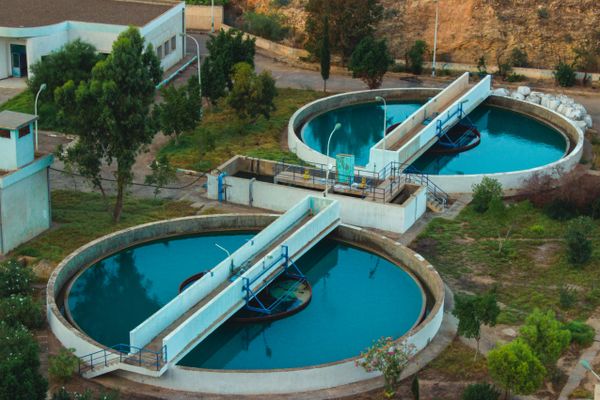
Thick foam on an aeration tank is more than a housekeeping issue. It cuts oxygen transfer, eats usable basin capacity, and can push solids over the weirs into the effluent. Operators who reach straight for a defoamer often treat the symptom while the biology underneath keeps driving the problem, which is why the first step is almost never a chemical.
Biological versus chemical foam
The two main kinds of foam look different and demand different responses. Biological foam from filamentous organisms such as Microthrix parvicella and Nocardia is usually thick, brown or tan, and stubborn. Chemical foam from surfactants and detergents tends to be white, billowy and quicker to collapse. A simple field test helps: shut off air to one cell for a minute. Mechanical foam vanishes, chemical foam thins, biological foam stays put. Read the foam correctly and you avoid dosing the wrong product into the wrong problem.
Defoamer as a bridge, not a cure
A defoamer buys time while you fix the real cause, whether that is excess fats, oils and grease, a long sludge age, or a surfactant slug from upstream. In membrane bioreactors the stakes are higher, because a foam blanket can raise trans-membrane pressure sharply within a day by disrupting air scouring. There, foam control has to sit alongside SRT adjustment and FOG stripping rather than replace them.
Choose for the biology
Not every defoamer is safe for activated sludge. Silicone products knock foam down fast at low dose but can coat biomass or linger into reuse and ZLD systems if overdosed. Fatty-acid and polymer-based defoamers offer a softer environmental profile and better compatibility with sensitive biology, at the price of a slightly higher dose. The right answer depends on what sits downstream, from UV disinfection to RO membranes, so the defoamer should be reviewed with both the chemical supplier and the membrane vendor. Jar testing on the actual plant water, rather than tap water, gives the most realistic dose before any full-scale trial.
Dose steadily, not in slugs
Dosage in wastewater typically lands between a few and a few tens of milligrams per liter, but the key is consistency. Continuous low-level dosing into the foam zone, tied to a level sensor, holds the blanket down without shocking the biomass. Slug dosing wastes chemical and can make foam worse or disturb settling, the classic mistake when an operator chases peaks instead of preventing them.
Foam control in wastewater is a process decision wrapped in a chemical one. Match the defoamer to the foam source, dose consistently, and treat the biology behind the bubbles. That is the difference between a plant that runs steady and one that fights the same foam every week.