
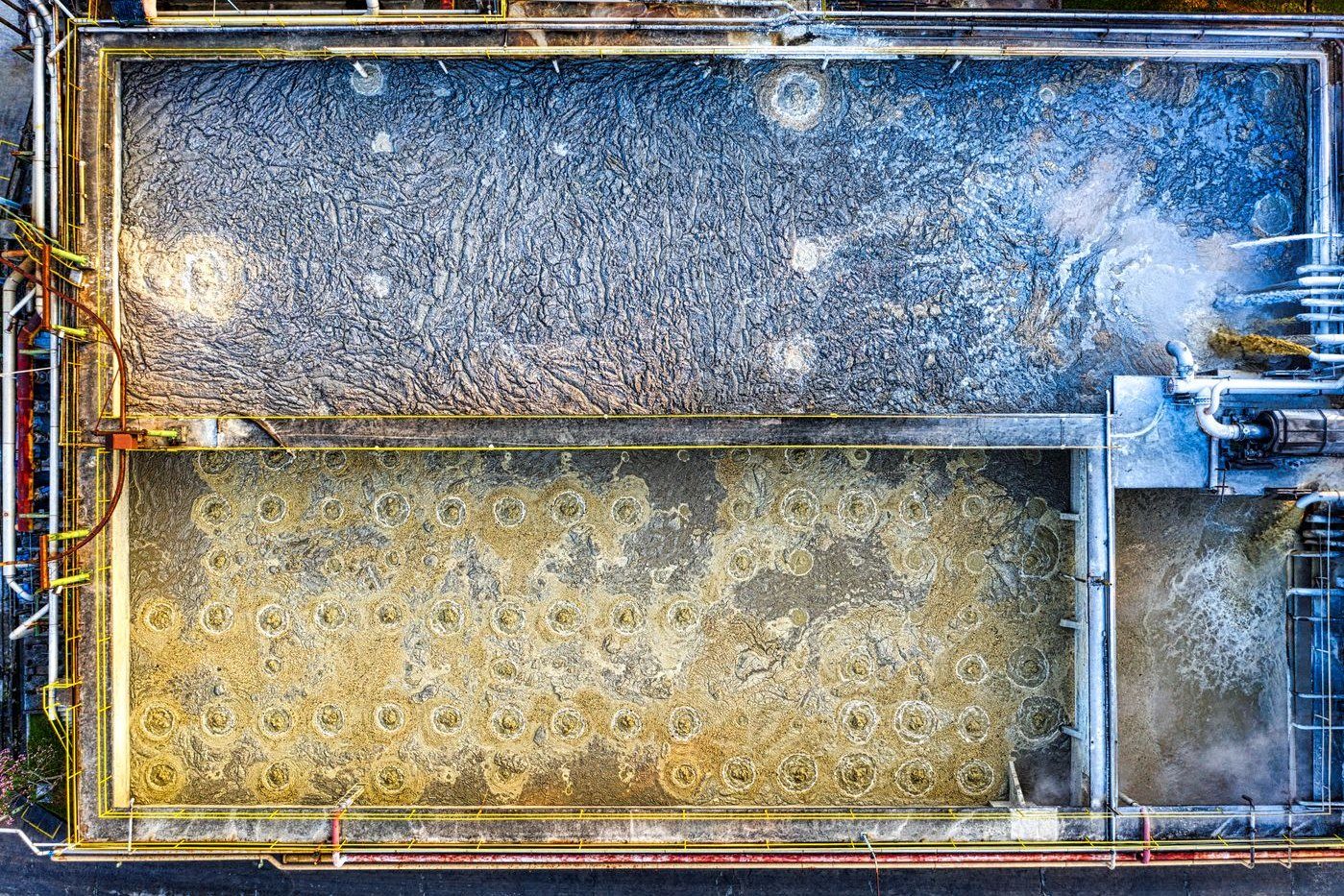
Once the foam layer gets thick enough to blanket the basin, the dissolved oxygen reading stops telling the truth, the sludge blanket in the clarifier climbs, effluent suspended solids swing along with it, and the person who answers for the numbers is the one staring at the tank every day.
Chemi Tech builds water treatment defoamers for municipal wastewater, dyehouse effluent, paper mill white water and landfill leachate systems, drawn from the KM series defoamer line. Which grade fits depends on your aeration method, your mixed liquor concentration and how much surfactant the influent is carrying. Two aerobic basins are not the same job: routine domestic sewage is handled by the long-hold grade, while a leachate stream loaded with surfactants foams hard and needs a different one. Send us your water analysis and aeration layout and we will work out the direction first, then talk about which grade to run. You do not have to burn a trial round finding out on your own.
Chemi Tech Defoamer Advantages
The KM series defoamer grades are water-based, so the dosing room can tip them straight into the metering tank without pre-emulsifying, which is one less job for the shift. Activated sludge safety is something we have verified: nitrification and denitrification are not affected, and that is the one thing a plant cannot afford to get wrong. Foam hold is long as well, so a single dose carries through an aeration cycle instead of breaking down in the morning and climbing back in the afternoon. They resist oxidation and high salinity, so coastal plants running high chloride stay under control. And the concentration ratio is high, which puts the cost per tonne of water at less than half of what constant manual top-ups cost.
A note from Chemi Tech: the figures above come from typical municipal wastewater aeration conditions. Change the influent quality or the mixed liquor concentration and the results move. Run a small-scale trial before scaling up.
Industry Pain Points and Solutions
Foam at a wastewater plant is hard to treat because it does not follow rules. Detergents, cleaning agents and food processing residue arrive in rotation, and a formulation that holds today may not hold tomorrow.
The first problem is a surfactant slug. One tanker of cleaning wastewater comes in and within half an hour the foam is over the walkway; the operator hoses it down until the end of shift and the next day it is back. Our approach is to design routine dosing and shock dosing as two separate paths: everyday dosing follows the flow, and shock dosing is triggered automatically. Nobody has to stand at the basin waiting for it.
The second is damage to the biology. Some chemistries knock the foam down but ammonia nitrogen stops dropping, so you solve one problem and create another. Our approach is to put culture safety first in the verification sequence: protect the process first, then talk about how fast the foam breaks.
The third is an injection point in the wrong place. Dosed directly above the diffusers, the rising bubble stream throws the chemistry aside and the money spent shows no result. Our approach is to move injection to the influent end or the return sludge line and let the flow carry the chemistry in.
Those three steps are ours to walk with you: first a shake-flask comparison on your influent and sludge, then a dosing estimate against your aeration cycle, and finally the injection point and the dosing curve settled together. The control room just runs what it is handed.
Typical Conditions and Verification
Customer: a dyehouse park wastewater treatment plant in Shandong, applied to the biological aeration basin and the secondary clarifier.
Through the winter this plant took surfactant slugs in its influent every few days. The foam had covered the basin surface, solids were washing over the clarifier and effluent suspended solids swung for more than two weeks. The solution Chemi Tech's defoamer team provided was: a shake-flask comparison on water samples and return sludge; a high-salinity, long-hold grade selected from the KM series; the injection point moved from the aeration zone to the influent end; and automatic linked dosing during shock periods. After the change the foam no longer climbed the walls, the sludge blanket in the clarifier returned to its normal band, and effluent suspended solids met permit every batch that month. The fire hose that used to be out every day for washing down the basin went back in the store room.
FAQ
Will a defoamer suppress the bacteria in my activated sludge?
Some operators worry far too much about it and others do not worry at all; both get into trouble. Certain chemistries genuinely are hard on nitrifiers: the foam comes down and ammonia nitrogen stops dropping with it. The grade we supply to wastewater plants is verified for culture safety, and at normal dose rates nitrification is unaffected. Send us three things, your influent analysis, your mixed liquor concentration and your aeration method, and the dosing plan comes back together with the verification data. You just run it.